
Lucic: Telekom Srbija survived in Kosovo thanks to the Brussels Agreement and support from the U.S. administration
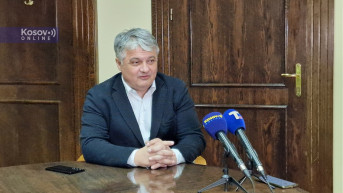
The CEO of Telekom Srbija, Vladimir Lucic, stated that the company managed to survive in Kosovo thanks to the Brussels Agreement and the support of the U.S. administration, but that problems remain in implementing agreed obligations, including Pristina’s duty to announce a tender for a third mobile license, RTV reports.
“We essentially survived in Kosovo thanks to the Brussels Agreement. That document was the basis for preventing the shutdown of our company MTS three years ago, when we had strong support from the U.S. administration. Unfortunately, even 13 years after the agreement was signed, much has not been fulfilled, including Pristina’s obligation to announce a tender for a third mobile license, which they refuse to do because they know that, as the leading telecommunications operator in the Western Balkans, we would certainly win. We have around 30,000 subscribers in Kosovo who use very good internet and the same TV channels as in the rest of Serbia,” he said.
He noted that the development of the mobile network in Kosovo is limited, but Telekom Srbija continues its efforts to participate in a future tender, believing it would win the license as the most competitive bidder.
Lucic said that Telekom Srbija achieved record business results last year, with revenues of €2.3 billion and operating profit reaching €1.3 billion, adding that the complete abolition of roaming charges with the European Union could be possible as early as 2027.
The largest contribution to results comes from Serbia, where revenues amounted to €1.65 billion and operating profit €960 million.
He added that the final audit report confirmed net profit exceeding €200 million in 2025, while based on first-quarter 2026 results, net profit is expected to exceed €300 million this year.
Lucic emphasized that one of Telekom Srbija’s key priorities—benefiting citizens of Serbia and the wider region—is the full abolition of roaming with the European Union.
“We must work intensively with the European Commission so that the Western Balkans and the EU become a single telecommunications market and roaming is abolished. Roaming fees for the EU are already significantly cheaper, but we are moving toward full elimination. We expect a decision from the Commission, hopefully next year. Telekom Srbija strongly supports this,” he said on the TV Prva program “Dan na dan.”
He also recalled the company’s successful transformation.
“In 2018, when we began transforming the company, total revenues were less than €1 billion, and for seven years Telekom faced a strong media, political, and lobbying campaign both in Serbia and in Brussels and Washington. It has been proven, however, that truth prevails and that repeated falsehoods cannot become truth. It has also been confirmed that our market consolidation strategy, including acquiring a large part of the business of United Group, was absolutely correct,” he noted.
According to him, Telekom Srbija now holds over 60% market share in Serbia and is the only operator engaged in media content production, while competitors pay for access to its content and optical infrastructure.
He also stated that by acquiring the diaspora platform NetTV from United Group, Telekom Srbija became the only legal distributor of regional TV channels abroad, offering more than 300 channels of the highest technical quality.
Lucic pointed to piracy issues in TV content distribution, especially in the diaspora, noting that Telekom Srbija cooperates with Europol in combating this problem.
He added that the company’s legal packages are not more expensive than pirated ones, with the advantage of monthly payments and higher quality and reliability.
As a key direction for future development, Lucic highlighted strengthening international partnerships, particularly with institutions and companies from the United States and the European Union.
“The European Investment Bank has selected us as a regional partner. We are the only Western Balkan company with a representative office in Brussels. Global operator Vodafone has been our partner for five years, and we use their procurement system with top global standards, best prices, and maximum transparency. Regarding the U.S., we are working intensively and successfully. In cooperation with Bank of America, we established a partnership with JPMorgan Chase, the world’s number one. In the coming month, we expect to sign a contract for 5G network development with the U.S. Export-Import Bank of the United States, as the only operator in Europe with direct cooperation, which will bring new American investments to the region,” Lucic said.
He emphasized that a special focus will be on artificial intelligence development, where Telekom Srbija sees an opportunity to position itself as a regional partner of the U.S. tech ecosystem.
Lucic assessed that the United States is the global center of AI development and that the company aims to become part of that market through cooperation with major tech firms and institutions.
“We have a chance, particularly in AI, to become a major U.S. partner for all of Europe, given that the EU has made mistakes in defining priorities. I am very satisfied with cooperation with the U.S. administration. We share common priorities such as AI, cybersecurity, and startups. We are welcome guests in Washington, at the State Department and the Department of Commerce, which we use to connect with the largest digital companies,” he said.
Lucic announced that the company plans to enter the U.S. market in the coming months, expanding operations that already include Germany, Switzerland, and Austria.
Telekom Srbija is expected to launch in the U.S. in September, offering services aimed at the Western Balkan diaspora.
The goal is for packages to be up to twice as cheap as competitors on the U.S. market.
Users would have unlimited calls within the United States, as well as to Serbia, Montenegro, and Bosnia and Herzegovina, along with more than 300 regional TV channels.
The company has completed testing and plans to use the network of AT&T, while final regulatory approvals in the U.S. are underway.
Lucic also noted strong user growth in Germany, where Telekom Srbija already has three stores in Munich, with plans to expand to Düsseldorf, Stuttgart, and other cities with large diaspora communities.
Users are offered number portability, free calls, access to around 300 TV channels, and the option to purchase a digital TAG device for easier travel by car to Serbia.
He also highlighted the results of Telekom’s startup investment fund, stating that according to the 2025 audit report, the fund ended the year with multimillion profits.
He added that the value of investments in startup companies is nearly ten times higher than the initial capital invested.
The company currently has no plans to sell stakes in these startups, expecting their value to continue growing.
As an example, he mentioned a Swedish startup that developed a robot for handling berries, already in use in Scandinavian countries.
0 comments