
Naumoski: Prices cannot be defeated by caps, long-term solution is investment in agriculture
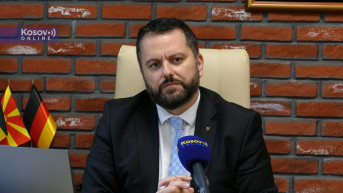
Member of the Board of the University of Heidelberg in Skopje, Sinisa Naumoski, stated that prices cannot be controlled through decisions to cap them, as they are formed on the market, and that it is necessary to identify what is actually causing inflationary pressure and address the problem there.
“We will pay the real price later. If I put myself in the position of Kosovo - you temporarily calm the panic, citizens get the impression that the state is controlling something, but in the end the effect will be long-term, shortages of certain products will appear, there will be resistance among businesses to engage in certain types of production… We need to be careful and see what is really causing inflationary pressure. That is where the problem should be solved. You cannot defeat prices by decree. They are formed on the market,” Naumoski told Kosovo Online.
According to him, the long-term solution is investment in agricultural production.
He explained that the conflict in Iran and the closure of the Strait of Hormuz have not caused problems only with oil, as oil is linked to certain “inputs” in agriculture such as fertilizers, and that production materials needed by farmers to bring their products to market will also become significantly more expensive.
“In the battle for normal prices, the one with a strong agricultural economy will prevail. In the region, both Kosovo and Serbia are stronger in that regard. Macedonia should also look to its own interests there,” Naumoski said.
He assessed that the measures taken by the Macedonian government to reduce excise duties and value-added tax on fuel in order to ease the price shock are logical.
“The measure introduced two weeks ago, reducing VAT from 18 to five percent, is normal and logical. Excise duties can also be reduced by three to four denars. However, after two weeks we also saw adjustments to excise rates,” Naumoski recalled.
In his opinion, there should be a shift toward non-linear measures, because fiscal space is limited, and the use of linear measures could lead to even faster depletion of that already limited space.
“We should have targeted measures and a limited focus on the most vulnerable categories of citizens, with the allocation of vouchers worth 600 to 800 euros. That is where the focus should be, but these measures must be swift, not overly administrative or bureaucratic, because any measure, no matter how ideal, if it comes too late - it becomes unusable,” Naumoski concluded.



0 comments