
Rekovic: Serbia should reconsider the decision on the moratorium on the use of nuclear energy
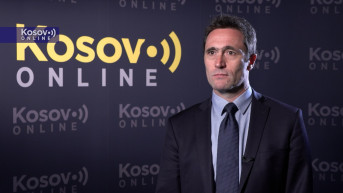
The leader of the research group at the "Vinca" Institute within the European Organization for Nuclear Research in Geneva (CERN), Prof. Dr. Vladimir Rekovic, assesses for Kosovo Online that Serbia should reconsider the decision on the moratorium on nuclear energy use and that this topic is unnecessarily stigmatized.
During a two-day visit to France and a meeting with French President Emmanuel Macron, Serbian President Aleksandar Vucic discussed, among other things, the improvement of Serbia's energy sector.
Rekovic emphasizes the significance of President Vucic's discussion on this topic with the French president because France generates 80% of its electricity using nuclear energy.
"It is very important that the president had a meeting with President Macron precisely because nuclear energy, or the exploitation of nuclear energy in Serbia, has been unnecessarily stigmatized for a long time," Rekovic says.
According to him, the moratorium on the use of this type of energy was imposed in 1989 after the Chernobyl nuclear power plant incident, but research and the technologies used today are technologically far more advanced and safer than back then.
"After the Chernobyl incident, research and development of technologies related to nuclear power plants did not stop in other countries. Moreover, some countries continued with the construction of nuclear power plants that operate very successfully, and an example is the country of France, where nearly 80% of electrical energy is obtained from nuclear power plants," Rekovic points out.
Asked if this means that Serbia should reconsider the decision on the nuclear energy moratorium, Rekovic is categorical that it should be done because third-generation nuclear power plants are now in use.
"The technology used in the seventies is outdated. There are new solutions. All nuclear power plants from the first generation are already closed. Third-generation power plants are used now. For 20 years, the International Agency in Vienna has been working on developing new, fourth-generation nuclear power plants that are designed to almost completely eliminate such types of accidents. Many countries are working on this," Rekovic says.
Asked how much Serbia would be exposed to the danger of nuclear pollution in this way, he explains that the problem lies in the perception of nuclear energy use.
"We are now 36 years later compared to the moratorium that was imposed. Many things are different. I think one of the good indicators is the fact that France itself draws most of its energy precisely from nuclear energy. It is legitimate to ask why some other countries do not use it, such as Germany, which closed a part of its nuclear centers. Not all countries had access to cheap gas. Each country, due to its resources and position, has different conditions, and each of them deserves studies that are specific to the situation they are in," Rekovic says.
He explains that when it comes to nuclear energy use, there are various solutions, and scientific research is currently taking place in six directions.
"There are currently six different accepted directions in which research is conducted, and they differ in cooling technologies, but all of them are much safer than the nuclear power plants were in the past. Some of these plants are still in the prototype phase, and some of them have already been built on a commercial level. This is the case with the nuclear power plant in China. However, other countries are actively working on developing new technologies," Rekovic emphasizes.
Asked whether it is better for Serbia to build more hydroelectric power plants instead of nuclear power plants, Rekovic says that the question of efficiency should be raised.
"Surely, hydroelectric power plants are something that should be worked on, and the capacity and resources that Serbia has should certainly be utilized to the maximum. However, the use of nuclear power plants has improved not only in terms of safety and security but also in terms of fuel efficiency. In other words, much more electricity can be obtained from the same amount of fuel, which means that the amount of waste remaining is at a much lower radioactive level than before. Also, storage technologies have been improved, and we are not talking about the same things as in 1989," Rekovic concludes.
0 comments