
Serbia has ensured a secure energy supply, investors need faster digitization
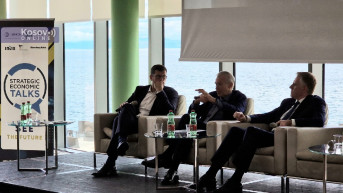
In the race for new investors, the advantage will be given to countries that will be able to provide enough professional staff, digitize more procedures for easier business, but also those that manage to provide more options in the supply chain of basic production raw materials in order to reduce business risks, are the main conclusions of the meeting. "Strategic Economic Dialogue" organized by the Southeast European Business Development Network (SEEBDN) from Vienna.
The president of the Chamber of Commerce of Vojvodina, Bosko Vucurevic, said that the main task of the Chamber was to help companies to supply themselves in the best and cheapest possible way due to the energy crisis affecting the world and rising inflation.
"When the Russia-Ukraine war started, Serbia did not have inflationary pressures, and today we have imported inflation precisely because of gas and oil. Despite this, the GDP in Serbia is growing, it has doubled in the last 10 years," said Vucurevic at the meeting in Savudrija.
Speaking about gas as the basic raw material that companies think about when deciding which country to move production to, he pointed out that large quantities of gas from Russia pass through the EU, and Serbia is in the middle.
"Serbia has done a lot to ensure energy supply, and we are also working a lot on diversification through Azerbaijan, Bulgaria, Greece. At the moment, we are using Russian gas, but also Western companies, for example, German companies that operate in Serbia and employ around 100,000 people use that cheaper gas," said Vucurevic.
He referred to the increasingly demanding regulations in all countries, including Serbia, in the context of climate change and the necessity of introducing an ecological aspect into business.
"Serbia is on the European path and has a responsible approach to green energy. The chamber's task is to make the economy go through the green transition as successfully and with as few costs as possible. We are particularly oriented towards small and medium-sized companies, because large companies have independently prepared an adaptation strategy", Vucurevic said.
At the panel dedicated to digitization as a measure for improving business conditions, NALED Executive Director Violeta Jovanovic pointed out that NALED is proud of the solutions that, in cooperation with the Government of Serbia, it managed to implement.
As a good example, she cited the system of electronic permits, the implementation of which in Serbia was helped by NALED back in 2016.
Senior advisor at the international company "Teneo" Nathalie De Gaulle stated that often the problem of companies when choosing an investment destination is the lack of trained workers.
Speaking about the issue of sustainability, the manager of the company "Intramural Austria at B. Braun Austria", Dorothea Gross, spoke about the importance of reinsurance and risk assessment, and that companies often decide to pay more if it means better quality.
Former Prime Minister of Belgium Yves Leterme and former Prime Minister of Montenegro Igor Luksic participated in this year's meeting of the SEEBDN organization, who spoke about the expansion of the EU to the Western Balkans.

0 comments