
Zusi: Expansion of Serbian goods in both Kosovo and Albania
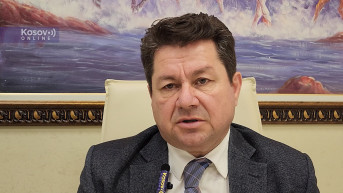
Former Deputy Minister of Agriculture of Albania, Alban Zusi, stated that Serbian goods are expanding in the markets of Kosovo and Albania, attributing this trend to the depreciation of the Albanian lek against the euro and customs duties that disadvantage small and medium-sized enterprises. He also emphasized that increased economic exchange should serve as a bridge for easing political relations.
“The decline in Albanian exports to Kosovo last year and the weakening position of Albanian products is a consequence of the depreciation of the lek against the euro, a trend that has been warned about for the past two years. Albanian goods – food and agricultural products – naturally became less competitive because they increased in price by 20 to 30 percent. In Albania, production and products are paid for in the local currency, while in Kosovo, the euro is used, which automatically made us less competitive in both this and other European markets,” Zusi told Kosovo Online.
The result, he specified, is the expansion of Serbian goods.
“This hasn’t only happened in Kosovo. In recent years, Serbian products have also dominated in Albania, for the same reason – they have been 20 to 30 percent cheaper than two years ago. I must emphasize that Serbia has a very stable exchange rate of its currency against the euro, which makes its products competitive. This is a kind of expansion of Serbian production in the two countries where Albanian is spoken the most, Albania and Kosovo, not because Serbian products have some other advantage, but because our products have lost competitiveness. We are the ones who are no longer competitive in the market,” Zusi stated.
He pointed to customs duties as another major issue that negatively affects small and medium-sized enterprises.
“In general, Serbia operates with large volumes and is interested in such trade. When the value of goods exceeds tens of thousands of euros, customs costs are relatively low. However, due to the economic structure in Albania and Kosovo, where small and medium-sized enterprises dominate, trade transactions are of lower monetary value, making customs costs disproportionately high,” Zusi explained.
He noted that paying €300 or €400 in customs duties is not a burden when exporting goods worth €50,000, but it becomes significant when exports are only around €5,000.
“This remains a major obstacle for 70 to 80 percent of businesses in Kosovo and Albania, as the majority of businesses in these two countries are small or medium-sized. Even if you look at statistical data, there is a significant distortion in the graph illustrating trade between Albania and Kosovo. While there is intense trade between large companies in both countries, trade between small and medium-sized enterprises is fading away,” Zusi emphasized.
He is confident that economic ties contribute to easing political relations between states and expects this to happen.
However, he warned that Kosovo and Serbia have a “specific relationship with an ethno-national burden on both sides.”
“There is a possibility that economic exchange may not have the political impact it would normally be expected to have. Another risk is that this intensification of primarily one-sided economic relations, since Serbia exports significantly more to Kosovo, could affect the national pride of Kosovars and increase a form of ‘national aggressiveness’ among Serbs. Increased economic exchange should serve as a bridge for greater political communication. I truly hope that the latter will happen,” Zusi concluded.



0 comments