
Radonjic: The people living in Kosovo deserve great films and great literature
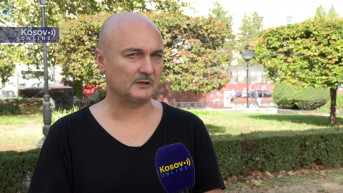
"In our cultural circles, there is a belief that dealing with the topic of Kosovo is some kind of outdated nationalist concept, but it absolutely doesn't have to be that way," says director Predrag Radonjic for Kosovo Online, adding that everyone living in Kosovo deserves great films and great literature.
He notes that it seems to him that certain stereotypes about Serbs from Kosovo are present in the Serbian public, and they mostly fall into two categories: either they are seen as welfare recipients or as being part of a semi-criminal or criminal milieu.
"Actually, most people, like everywhere else, belong to the group of normal people with ordinary human needs, problems, fears, joys, and so on. It seems to me, despite everything that’s happening, because of a media image that is always tense and focused on extremes, that this stereotype about the people down there is still present in our public," says Radonjic.
Speaking about his film "Sporazum" (The Agreement), which premiered in 2016, he explains that he wanted to put the audience in a situation where they would think about how they would act in extreme situations.
"Would they be willing to risk not only their own lives but also the safety of their families and, above all, their children? How much are people really prepared, and how much do they understand someone's sacrifice when they are willing to do that? I believe that the film somewhat managed to achieve that, but I also think it didn’t do enough to help people understand the position of the ordinary person," Radonjic reflects.
In his opinion, there is no need for historical distance when making films about Kosovo.
"We have a case where, practically in the midst of the war in Bosnia, one of the best anti-war films, or war-themed films, like 'Pretty Village, Pretty Flame,' was made. So, that’s absolutely not something necessary. It seems to me that in our art, in literature, which is my narrower profession, after that great epic poetry, our only classic, we don’t actually have a sufficient number of good, quality novels and short stories about Kosovo and Metohija in contemporary literature," he notes.
He adds that some progress has been made with film productions.
"The most famous is 'Enclave,' although it wasn’t filmed directly in Kosovo and Metohija, but it’s entirely about the Kosovo theme. There have been some other attempts, but I find it tragic that the film we made is truly the first and only feature film shot on the ground in Kosovo and Metohija after the war," Radonjic emphasizes, expressing hope that this won’t be the last film.
He stresses that dealing with this topic doesn’t necessarily have to be, though it often is, ideologized.
"In our cultural milieu, especially in cultural circles, there is a certain aversion to dealing with Kosovo and Metohija (KiM) as if it’s some kind of outdated nationalist concept, but it absolutely doesn’t have to be that way. Absolutely any engagement with the Kosovo theme doesn’t have to be ideologized. Unfortunately, it often is, but it seems to me that KiM and the people living there—whether they are Serbs, Albanians, or anyone else—deserve to be approached as human beings. They deserve great films, great literature, and big themes. It’s truly a space that is both wondrous and often sinister," our interviewee explains.
"Sporazum" (The Agreement), as a fiction, a feature film, is unlikely to portray reality; it's more about the need to "express truth."
"No fiction can tackle documentary-style storytelling and remain artistically authentic, in my opinion. But we can use artistic means to approach something that is, at least from my subjective perspective, close to my truth and experience of Kosovo and Metohija. I also felt a responsibility, as someone who worked there as a journalist, studied, and wrote my first stories there, to try and do that. I regret that there aren’t more attempts like this, but there are both objective and subjective reasons. I mentioned the subjective reasons when I told you that our cultural public tends to attach an undeserved stigma to it," says Radonjic.
As for the objective circumstances, the reality is that it’s very difficult to shoot films in Kosovo, and it’s almost impossible to get legal permits for filming.
"We practically shot our film guerrilla-style. When we needed cemetery scenes, we joined a French delegation that was laying wreaths for the 100th anniversary of World War I—I don’t even know what the event was. But we followed them, literally as if we were part of the ceremony. Then we sneaked off to one side of the cemetery and filmed the scene we needed. Even though we had requested permits and tried to obtain them," the director recalls.
He adds that this is just one of many anecdotes from the filming process.
"I fully understand that people are neither willing nor ready to work and film in such an extreme way down there, but on the other hand, that absolutely doesn’t prevent us from having films that deal with the Kosovo theme—films about normal people and the situations they find themselves in. That’s what art is dedicated to, and it should really try to express some kind of artistic truth, above all," Radonjic concludes.

comments