
Djekic: Even today, people in Kosovo are sidelined
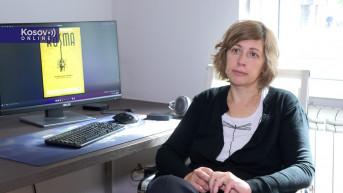
"Even today, everyday life and the people in Kosovo are pushed into the background," says director Sonja Djekic in an interview with Kosovo Online. A decade ago, her film "Kosma" dealt with this very topic, and she adds that more films about Kosovo should be made because "nothing has changed, or things are getting worse."
Regarding her film "Kosma," which follows the work of a radio network of the same name in Kosovo, Djekic explained that it focuses on what is rarely discussed—life outside the realm of news and politics. She believes that the same issue is relevant today: everyday life and the people themselves are being sidelined while the topic is being politicized.
"What was completely fantastic for me were the reactions from the audience here, especially. People abroad accepted the film quite well because it presents a large mosaic of everyday situations, allowing viewers to simply be there, observe, and form their own opinions and emotions in relation to the scenes they witness. The less people knew about the situation abroad, the more openly they accepted it, often in a very emotional way. They found it all quite interesting," Djekic recalls.
Sonja Djekic reflects on the reactions to her film Kosma, particularly from the local audience in Serbia, many of whom had rarely, if ever, had the chance to visit Kosovo.
"They actually experienced some kind of emotional revelation, something akin to healing from trauma. Maybe I’m exaggerating a bit, but there was a real need to experience something that is present in all of our lives in a different, personal way," she explains. Djekic believes the situation regarding Kosovo has worsened, as the issue has become even more politicized and perhaps pushed even further into the background. According to her, simply making another film about Kosovo—no matter the subject—would be a statement in itself. "Why make a film about Kosovo now? Because nothing has changed, or it’s getting worse," she says.
For Kosma, a film that explores life beyond the headlines and politics, Djekic invested both artistically and personally. The idea was to explore how people truly live, a concept unfamiliar to her at the time. She was inspired to document life in Kosovo after frequently being asked, "How is it there?" following her work on her graduation film, part of which was shot in Kosovo.
Although she approached the film without a predefined agenda, she anticipated that the subject would provoke reactions. She was surprised by the fact that, despite positive audience feedback, the film was not shown widely on television or had only small screenings organized by local cinemas. "It was disproportionate to the effort put in and the audience's response, which was a genuine revelation," she recalls, noting that there were few films at the time that dealt with everyday life in Kosovo.
In the world of documentary film, while Kosma was shortlisted by several festivals, it was not featured at the most prestigious ones, a decision Djekic believes was politically motivated. At one ethnographic film festival in Vienna, a member of the audience suggested the film should not be shown freely at a festival, but in a "controlled setting" such as in Pristina, where both Serbian and Albanian audiences could use it as material for debate. "Completely nonsensical things that say more about them than about the film," she says.
She also received feedback from festival selectors who seemed confused after selecting the film, which she attributes to their own unclear political stances or concerns about how their audiences would react.
Discussing the broader challenges of documentary filmmaking, Djekic mentions that many filmmakers avoid such projects due to concerns over profitability or limited audience reach. "People do their financial-moral calculations and then decide whether or not to proceed," she says, offering insight into why there aren’t more films about Kosovo.
Her first trip to Kosovo happened by chance, while she was filming her graduation project, following American clown Joe Mamo, who regularly traveled to Kosovo with his humanitarian circus. She was drawn by "the contrasting scenes, the simplicity, the warmth—a healthy environment, something that perhaps reminds us of childhood."
Her second film, Kosma, focuses on the everyday lives of Serbs in Kosovo, depicted through the work of a radio network. To portray daily life in the film, Djekic lived it alongside the people, spending weeks at a time in the five locations where the radio stations were based, recording both key events and the ongoing reality of life as she observed it.
In the process, she created a personal "map" of what these people experienced, which became central to her own life during the making of the film. To fully understand and convey their stories, Djekic felt the need to "see, live, and feel" it all firsthand.
"It changed me in a beautiful, noble way, in the sense that I decided to engage with something that perhaps went beyond what my world was at the time—a mostly artistic world, somewhat detached from reality. Finding beauty in this real world forced me to confront some unacceptable tragedies and injustices that these people, in a way, have been left to face on their own. And the more they seemed to rely on the state, the worse they fared. I had to come to terms with the fact that this is an open question, and those tragedies may never have a just resolution. There came a moment when I felt that all the red lines people talk about had been crossed and that lawlessness prevailed there, something that would soon spill over. That feeling really scared me, and now it seems we are all living through it," Djekic emphasizes.
Her reflections show how deeply the experiences in Kosovo transformed her perspective, leading her to connect more profoundly with the real-world struggles of the people she encountered, beyond her previous artistic focus.


comments