
Radonjic: The Pristina machinery wants to shut down the Serbian theater in Kosovo
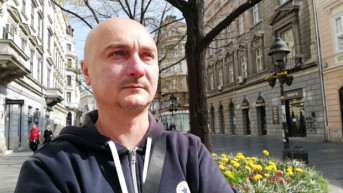
Predrag Radonjic, director of the National Theater in Pristina with temporary headquarters in Gracanica, responding to the allegations of Jeton Neziraj, manager of the "Qendra Multimedia" Theater, pointed out that the Pristina machinery wanted to shut down the Serbian theater in Kosovo, and that the local Serbs were being declared "Great Serbian hegemonists". and thus drew a target on the cultural institutions of the Government of the Republic of Serbia, Novosti reports.
Playwright Jeton Neziraj, who is normally a welcome guest in Belgrade, published two days ago on the "Sbunker" portal an article entitled "Theatre as a political machine (1)" in which he attacked the Serbian theater in Gracanica, which has existed for two decades in exile, and so far about 30 plays have been performed there.
Neziraj, who until a year ago was the artistic director of the National Theater of Kosovo, assessed that the theater in Gracanica "was established for completely ideological reasons, to serve the hegemonic appetites of the Government of Serbia and their efforts to show their ownership of Kosovo".
Referring to an event from, as he states, the "not so famous and even compromising history of that parallel Serbian theater" and the performance of Jelena Bogavac and Nenad Todorovic's "Lift: The Free Show", Neziraj accused the authors of relativizing Milosevic's crimes and pointed out that the play mainly dealt with some ephemeral problems of the Milosevic family, and projected the blame for the wars of the 1990s on "great powers" and "international media propaganda".
Neziraj also claims that in that play, the Serbs are portrayed as the main victims on whom big powers throw bombs "disregarding international conventions", as well as that the official Serbian policy after the 1990s aims to negotiate the role and responsibility of Milosevic and the Serbian state. as well as that "Serbian politics tries to negotiate in different forms, in this case in the form of a theatrical performance".
Radonjic states that he is glad that Neziraj's text was published because, as he says, he is not dealing with them for the first time, but whenever he is a guest at various forums and festivals throughout the region, he is happy to speak on the same topic.
He adds that until now it ended with Neziraj's "oral" stories and the silence of his colleagues who did not speak up while listening to him "spit" on the Serbian theater.
"If Jeton Neziraj, who is reputed to be one of the most liberal Albanians, has these views, what else should we talk about? This statement of Jeton Neziraj as a 'liberal, tolerant intellectual' has more weight than Atifete Jahjaga because she is a politician 'in position', and it is no wonder when she says that the Serbian university and the Serbian theater should be shut down," Radonjic said.
Stating that the National Theater of Pristina is the legitimate heir to the name and everything else in the possession of the theater with its temporary headquarters in Gracanica, Radonjic points out that they were expelled from the home stage, as well as from the building they built in Pristina.
"They are usurpers because they usurped our property and work illegally in it while trying to portray us as 'illegals'. What kind of National Theater in Kosovo?! Two or three years ago, President Atifete Jahjaga spoke from the parliamentary platform about the need to shut down the Serbian "illegal' institutions in Kosovo, apostrophizing precisely the theater. Who are we bothering? If the theater is a problem for the independence of a country, I feel sorry for that country," Radonjic emphasizes.
He points out that the local Serbs in Kosovo cannot be desirable.
"A Serbian producer of beer or wine from Kosovo cannot market its product in any Albanian chain, while the same chain has no problem importing goods from Belgrade. Simply, both economically and culturally, the right to the existence of the Serbs is extinguished. The essence is in the mimicry that few people know how to recognize," he says.
He adds that some of the most famous actors from Belgrade are welcome guests in Pristina, unlike their colleagues from Gracanica.
"That's what people persistently refuse to understand, they go to Pristina and then say: 'Great, I spoke Serbian, drank coffee and no one pointed a finger at me'. Everything looks clean, wonderful, and great. They return to Belgrade, and they didn’t see anything. They didn't see that the children who were born after the war in Gracanica have never been in the center of Pristina, only nine kilometers away from Gracanica. They didn't see that the local Serbs travel in apartheid transport, in 'ethnic' vans, because they don't use Kosovo's public transport." Radonjic said.
The university, health, and education reminds Radonjic, are partially protected by the Ahtisaari Agreement, which was included in the local constitution, but, unfortunately, several important cultural institutions, such as the "Venac" Ensemble, the National Library, the Archives, are not covered by it.
"They are declaring us to be 'Great Serbian hegemonists' and thus drawing a target on the cultural institutions of the Government of the Republic of Serbia. I can only hope that the Serbian theaters, guild associations, and our colleagues will speak out on this occasion, taking us under their protection as they usually do defend the right to artistic work and freedom," Radonjic said.


0 comments