
Due to Self-Determination, the Electoral Complaints and Appeals Panel has its hands full
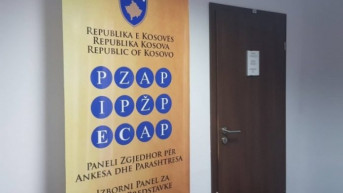
The appeal filed by the Serbian List against the decision of the Central Election Commission (CEC) not to publish the final election results solely for that party is just one in a series of appeals upheld by the Electoral Complaints and Appeals Panel (ECAP), thereby confirming that the CEC often adopts unjustified and unlawful decisions to the detriment of this Serbian party. Nor was this the only appeal following the publication of the final results of the most recent elections—there were seven in total.
Ruling on the Serbian List’s appeal, the Panel assessed that such a position taken by the CEC cannot be accepted as fair and lawful, as it is contrary to the provisions of the Law on General Elections as well as to the standards of the Venice Commission, and that the CEC provided no legal justification whatsoever for refusing to publish the results for the Serbian List, ordering the Commission to do so.
At the same time, the Panel dismissed as unfounded the appeal of DPK parliamentary candidate Bekim Haxhiu regarding the allocation of parliamentary mandates. Haxhiu sought the annulment of the CEC’s decision on the allocation of seats based on the gender quota, claiming that its application had been misinterpreted and that candidates had been incorrectly ranked, resulting in his exclusion from the list of MPs, despite being ranked 20th on the DPK list with 21,520 votes, while the party won 22 seats. The Panel rejected the appeal, and Haxhiu will most likely remain without a mandate.
Over the course of three electoral processes in just the past year—two parliamentary cycles and local elections—the CEC has had its hands full dealing with numerous appeals, not only from the Serbian List. Nevertheless, it appears that the Serbian List has most often been the subject of unfounded CEC decisions, largely due to two members from the ranks of the Self-Determination Movement—Sami Kurteshi and Alban Krasniqi.
Specifically, at the beginning of December, the Central Election Commission decided not to certify the Serbian List for participation in the elections held on 28 December, after only two CEC members voted in favor of certification, two voted against, and five abstained. The Serbian List subsequently filed an appeal, which was upheld, thereby enabling its participation in the elections.
However, several days later, the Commission failed to certify the Serbian List’s candidates for participation in those elections. A new appeal by the Serbian List followed, and once again ECAP overturned the Commission’s decision, explaining that it was “deficient and incomplete, and that it failed to consider key facts and issues related to the assessment of compliance with the legal requirements for the certification of a political entity.”
Ahead of the parliamentary elections, ECAP also overturned a CEC decision concerning voting outside diplomatic missions, upholding an appeal by the Democratic League of Kosovo.
The Commission had decided that polling stations could be opened at “additional locations” outside diplomatic missions, at the proposal of the Ministry of Foreign Affairs. The Panel, however, took a different view and limited voting exclusively to embassy and consular premises. An appeal by the Self-Determination Movement to the Supreme Court did not help—the Court upheld ECAP’s decision.
There were also appeals to ECAP ahead of last year’s local elections.
Once again, the same scenario unfolded: the Central Election Commission refused to certify the Serbian List, which appealed the decision, and the Panel upheld the appeal. The Serbian List was not the only one affected—Serbian Democracy faced the same fate. The Panel also upheld their appeal against the CEC’s decision not to certify their candidate list for the local elections held on 12 October.
At that time, the Serbian List also appealed the composition of polling boards, but the Panel rejected that appeal.
In addition to the Serbian List, ahead of the local elections, media outlets reporting in the Serbian language also encountered problems after being denied accreditation to cover the elections, including the Kosovo Online portal. The portal’s founder, VIM INFO, filed an appeal that the Panel upheld, ordering the CEC to reconsider the accreditation request. However, despite that decision, the CEC did not revisit the accreditation of this portal.
In addition, particular attention was paid to the Panel’s decision regarding last year’s local elections in South Mitrovica.
The DPK filed an appeal seeking the annulment of the second-round results of the local elections in South Mitrovica and a repeat vote due to suspicions of “mixing of ballots between different polling stations, unverified or double-verified ballots (‘Bulgarian train’), discrepancies between polling station codes and ballots, an unusually increased number of voters in the second round, and pressure on citizens on election day.”
The Panel, however, dismissed the appeal as unfounded, assessing that the reported irregularities were the result of a technical shortcoming by the economic operator, that the errors were isolated and did not affect the overall will of the voters, that there was no legal basis for a repeat vote in that municipality, and that the process of counting and managing ballots had been conducted in accordance with all official registers.
At the end of 2024 as well, ahead of the elections held on 9 February last year, the scenario was the same—the CEC did not confirm the Serbian List’s participation in the elections, the party appealed, and the Panel upheld the appeal.
While the CEC is composed of representatives of political parties—among whom members of the Self-Determination Movement stand out for proposing decisions detrimental to the Serbian List—the Electoral Complaints and Appeals Panel is made up of experienced legal professionals.
The institution that plays a key role in resolving electoral disputes and serves as the penultimate instance for appeals by political entities—the Electoral Complaints and Appeals Panel—is an independent body of the CEC, composed of judges appointed by the Kosovo Judicial Council, who are prohibited from political engagement.
The current president of this body is Supreme Court judge Zenel Leku, appointed to the position on 30 May 2024. The Panel has a total of ten members, including the chair, and when deciding on matters of particular importance, a nine-member panel renders decisions by a simple majority.



0 comments