
Pavkovic: Financial targets set during the campaign are unrealistic
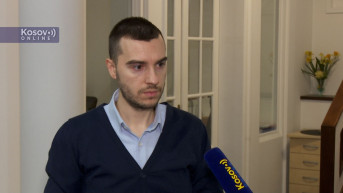
Milos Pavkovic, Director of Strategy at the Center for European Policy in Belgrade, assesses that the promises made by political parties in Kosovo during the campaign—such as increases in wages and pensions—have very little grounding in the budget, especially given that Kosovo’s budget for the coming year has not been adopted.
Even once a new government is formed and a new budget is adopted during 2026, he adds, such ambitious financial targets discussed during the campaign will not be realistic.
“We have plenty of experience in the Balkans with populist politicians and promises that are not based on reality or on actual capabilities. It seems to me that a kind of competition has now started in Kosovo over who can promise more. Even when voters are sometimes aware that these promises are unrealistic, they can be misled or think, ‘well, if everyone is promising something, at least something will be delivered,’ which means that such promises can also be dangerous,” Pavkovic told Kosovo Online.
Pointing out that the budget for the coming year has not been adopted, he notes that Kosovo will operate under a technical budget that can only reflect what was in place in the previous year.
“There is no room there for introducing additional financial mechanisms such as child benefits or a 50 percent increase in wages. That was definitely not envisaged in last year’s budget, and a new one has not been adopted. From that context, the promises are clearly not achievable. Of course, it is possible that a new budget will be adopted during 2026 once a new government is formed, but even with a new government I believe that such ambitious financial targets are not realistic, simply because Kosovo’s economy is not advancing and is not developed enough to be able to provide for such large budgetary allocations,” Pavkovic believes.


0 comments