
All deadlines for constituting Assembly missed: Is Self-Determination the only one benefiting?
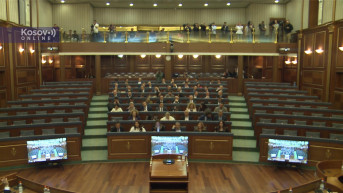
The continuation of the constitutive session of the Kosovo Assembly has been scheduled for September 9 at the initiative of Self-Determination, but all deadlines for constituting the Assembly have already been missed, Kosovo Online’s interlocutors agree, adding that Kosovo will most likely face yet another election by the end of the year.
Written by: Veljko Nestorovic
The agreement between Self-Determination and the LDK on the election of Bekim Sejdiu as President of Kosovo has almost certainly collapsed after six MPs from the party led by Lumir Abdixhiku announced that they would not support his candidacy, meaning that the required majority of 80 votes in the Assembly is lacking.
Meanwhile, another development that could reshape Kosovo’s entire political landscape is the forthcoming decision of the Kosovo Specialist Chambers in The Hague in the case against former KLA leaders, particularly Hashim Thaci. An acquittal would send him back to Kosovo, where he would undoubtedly pose a serious challenge to Albin Kurti’s hold on power, while a conviction would further strengthen Self-Determination.
The question also arises as to whether pressure from Washington and Brussels could resolve the political crisis in Kosovo, despite the fact that all constitutional deadlines for constituting the Assembly have already been missed.
Professor of Constitutional Law Kadri Kryeziu told Kosovo Online that August 7 was the constitutional deadline for constituting the Assembly and that the deadline had expired, but added that the Constitutional Court should not rule on the matter.
Kryeziu said that the Assembly is considered constituted once its governing bodies—the Speaker and five Deputy Speakers—have been elected, meaning that the Assembly has not yet been constituted.
Speaking about why the continuation of the constitutive session had been scheduled for September 9 and how that date had been determined, the law professor described it as a “free and political interpretation.”
Director of Strategy at the European Policy Center Milos Pavkovic said that it was not unusual for Self-Determination to miss even constitutional deadlines, that this had happened before, and that the Constitutional Court had intervened only in certain instances.
Regarding the Assembly session scheduled for September 9, Pavkovic told Kosovo Online that it represented a kind of internal deadline set by Self-Determination, when it would probably put the election of the government and the president to a vote.
“What is problematic is that, although they have a joint candidate with the LDK, the question is whether they have enough votes to elect the president, given the factions within the LDK itself and the dissatisfaction of certain MPs with the proposed candidate. I therefore interpret this as yet another attempt to buy time. As for the Constitutional Court, I am not certain that it will rule unless there is political pressure. First, if one of the actors formally files a constitutional appeal and if, of course, there is political pressure—which we can see exists among the opposition parties, which have attempted certain simulations in parliament and are considering protests—I think that will affect the Court’s position, or rather the possibility of the Constitutional Court ruling on the missed deadlines,” Pavkovic said.
Asked how the opposition might react during the Assembly session scheduled for September 9 and whether there was a risk of incidents, Pavkovic assessed that such a scenario was possible.
“Although I am not sure what the opposition would gain from that. I do not think it serves the opposition’s interests to obstruct the work of parliament and thereby buy Kurti additional time. I think the opposition actually wants to expose Kurti as someone who does not respect the Constitution, someone who does not have a majority, and someone who should be discredited and delegitimized. So I think the opposition’s position is to expose Kurti’s inability in this way—not necessarily his inability to form a government, but his inability to elect a president, which is at the heart of the political problem in Kosovo,” Pavkovic said.
Historian Stefan Radojkovic told Kosovo Online that everyone in Pristina was aware that the deadlines for constituting the Assembly had been missed, particularly Self-Determination.
He stressed that the attempt to reach an agreement with the LDK on the election of the president had been made rather hastily, as though there had been no internal agreement within the LDK on the matter.
“It appears that Self-Determination’s leaders were in a hurry because of the forthcoming first judgments in the Thaci et al. case before the Specialist Chambers in The Hague. All these attempts seem rather theatrical, particularly when we see the opposition coming from within the LDK. We are talking about six MPs without whom a new president of the provisional institutions in Pristina cannot be elected. In that sense, it appears that Kurti attempted, in the best-case scenario, to resolve this institutional crisis in Pristina, and in the worst-case scenario, to run out the deadlines and extend his caretaker mandate as prime minister, potentially postponing the next round of parliamentary elections, which are now being held repeatedly, practically twice a year. They could then be held again sometime in the autumn or, preferably, as early as December, when the Albanian diaspora could once again provide the decisive advantage that potentially benefits Self-Determination and give it an opportunity not only to constitute the Assembly on its own, but also to elect the president of the provisional institutions in Pristina,” Radojkovic said.
Regarding the session scheduled for September 9 and the possibility of incidents occurring during it, Kosovo Online’s interlocutor said that it would not be the first time.
“On the other hand, the international community would prefer new elections, but we can expect further delays and a continuation of this kind of going around in circles, with Albin Kurti likely to attempt to go to new elections during the winter,” Radojkovic concluded.



0 comments