
Radojevic: Kurti is trying to provoke incidents to declare a state of emergency
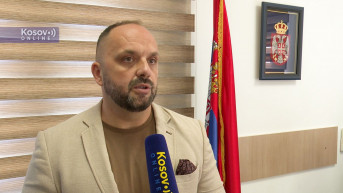
Albin Kurti suffered a decisive defeat in the local elections, while the Serb List continues to gain growing support among citizens. In such circumstances, he may stage an incident in order to remain in power as long as possible, said Milan Radojevic, the newly elected mayor of North Mitrovica.
“The arrival of the so-called KSF (Kosovo Security Force) in North Mitrovica is no coincidence. They are trying in every way to provoke an incident that they would then use to declare a state of emergency,” Radojevic told Kurir, thanking citizens for remaining restrained during all of Pristina’s provocations.
He added that everyone witnesses the difficult conditions in which the Serbian people live, as not a single day passes without Pristina taking some action against the Serbs.
“But I am firmly convinced that, united and determined—Serbs both north and south of the Ibar—we will persevere and build a better future here. The Serbian people are far more resilient and enduring than some in Pristina believe,” said Radojevic, who as the Serb List candidate in North Mitrovica won 60.25 percent of the vote.
Responding to congratulations for the Serb List’s convincing first-round victory in nine of ten Serb-majority municipalities, Radojevic stressed that the credit belongs to the entire Serbian people in Kosovo, who, despite pressure and repression from Albin Kurti’s regime, proudly stand by Serbia.
“In the past three years, the Serb List has gone through a true ordeal that no political party in modern Europe has experienced. They tried to ban our work, to label us a terrorist organization, to prohibit our participation in parliamentary and local elections. The entire leadership of the Serb List faces criminal charges, and some have even been indicted for allegedly attacking the constitutional order of Kosovo. This shows how much of an obstacle the Serb List represents to Albin Kurti’s regime,” said Radojevic.
He repeated that even during the campaign in North Mitrovica, the pressures were constant.
“They banned concerts, cultural events, and sports activities; citizens were under daily pressure. Yet we persevered in our determination to reclaim our municipalities and decide our own future. Citizens recognized that and helped us achieve an excellent result in the parliamentary elections, which we then crowned with a decisive victory in the local ones,” Radojevic underlined.
Asked how important the return of legitimately elected Serbian representatives to institutions in the north is, he replied that it is essential for Serbs to be part of the institutions and decide independently about their future.
“In the past three years, our lives were decided by people who do not even live in Mitrovica and who received barely a hundred votes in the elections. During that period, they closed buildings of Serbian public institutions, took away the sports hall from our children, confiscated houses and apartments from Serbs who had bought them legally and paid honestly, shut down businesses, hurled sexist insults at our wives and mothers, and arrested children merely for wearing shirts with football-club emblems,” Radojevic recalled.
He noted that during that time the international community remained largely silent—issuing only brief statements—without providing Serbs in Kosovo any tangible assistance.
“All this time, our country Serbia and President Aleksandar Vucic stood by us, together with the Office for Kosovo and Metohija, helping as much as circumstances allowed. No one lost their job, salaries and pensions were never delayed, and there were even new employments. Citizens recognized all that—they wanted to bring life back to our city, to revive cultural and sports life, to make our streets safe again, and to decide ourselves what they would be called. That’s why it’s essential that we be part of the institutions and make our own decisions about our destiny,” Radojevic said firmly.
Asked what his first steps as mayor would be, he answered that so much damage had been done to Serbs in the municipality over the past three years that the first step must be to assess the situation.
“We know about some of the decisions that were public, but we are preparing to confront others we didn’t know existed—those made to the detriment of our citizens,” he admitted.
He added that citizens would be kept informed about everything, but time is needed to analyze the situation before making new decisions in the public interest.
“We will reopen the sports hall for our children, organize concerts and theater performances so that citizens can again feel a breath of freedom, because all that was denied to us. And of course, we will continue with the major infrastructure projects we had planned but had to postpone due to blockades by the central authorities and Albin Kurti. We expect further obstructions from the central level, but the citizens have given us their trust and mandate to fight for a better future—and we certainly will fight and work hard,” Radojevic promised.
Asked whether Kurti’s and Self-Determination’s long-term decline means the end of his rule is near and whether the situation for Serbs could improve, Radojevic said that the Serb List, with popular support, has shown that it remains a major political force in Kosovo.
“That’s why Kurti is trying with all available means to break it, but he has failed—twice this year. His nervousness is increasingly visible, both because of his worsening election results and because of the evident lack of international support, as the world shows less and less understanding for his unilateral moves. The only thing left to him is to try to regain his lost political standing at the expense of the Serbian people. But just as he failed in the parliamentary elections, he failed in the local ones too. The more he pressures and attacks the Serbian people and the Serb List, the more united and stronger we become. He keeps trying to place his loyalists—those who follow Pristina’s orders—into positions guaranteed for Serbs, but the Serbian people send him the same clear message in every election: we belong here, and we will not abandon our homes, no matter how hard he tries to make us disappear from these areas,” Radojevic stated.
Speaking about the importance of support from official Belgrade and from Serbs in the rest of the country, Radojevic said that the one constant over the past three years has been precisely the support of official Belgrade, President Aleksandar Vucic, the Government of Serbia, and the Office for Kosovo and Metohija.
“In what has surely been the hardest period for Serbs—especially in the north—the state has provided absolute, unambiguous, and consistent assistance. Salaries and pensions have never been late, there have been new jobs, new houses built, and other forms of aid that Serbs in Kosovo and Metohija know well and remember. Citizens have not forgotten any of this, and that’s why the Serb List’s victory in these elections was so convincing,” Radojevic concluded.


0 comments