
Gogic: Elections returned Kosovo’s political scene to the situation from February last year
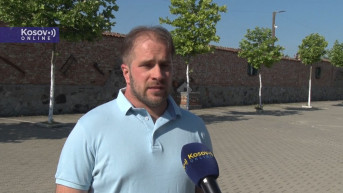
Political scientist Ognjen Gogic stated that the surprise of yesterday’s elections in Kosovo was the low voter turnout, which led to the Self-Determination Movement recording a drop of 200,000 votes, as well as the result of the Democratic League of Kosovo, because the return of Vjosa Osmani did not produce the expected results. He sees the result of the Alliance as a more positive surprise, saying it is the only party that went through reform. Gogic stressed that the legitimacy of one mandate, which according to preliminary results was won by Nenad Rasic’s party, is questionable.
The issue of the Kosovo presidential election, in his assessment, will be a burden for all parties.
“After the parliamentary elections in February last year, we spoke here in Gracanica and I said then something I still stand by, namely that Kosovo entered a period of political instability and that the situation of a stable parliamentary majority is behind it. I myself was not aware how right I was. The political crisis Kosovo is in has lasted for almost a year and a half and will continue. These election results have actually returned Kosovo’s political scene to the situation from February last year. According to preliminary results, the leading Albanian parties have similar results, almost identical to those from February,” Gogic told Kosovo Online.
Gogic believes that Self-Determination leader and acting Kosovo Prime Minister Albin Kurti will not have enough seats to form a government solely with the support of non-majority parties.
“We will see when diaspora votes are counted how the seats will be distributed, but there will be many similarities. It is the same target, same distance. It will again be the same situation in parliament, and Kurti will probably not be able to form a government without Albanian parties. After the December elections, with the support of minority parties, he could form a government without needing the Albanian opposition, but now he will likely be missing a mandate or two,” he said.
He stressed that the biggest surprise of these elections is the low turnout.
“That is worrying and a slap in the face for political parties in Kosovo, because citizens have thereby shown what they think of the prolonged political crisis and of elections that lead nowhere. This is something Albanian parties in particular should reflect on, what would await them in the case of new elections in the autumn if they fail to reach an agreement now,” he said.
He added that the percentages of Albanian parties are similar to the February elections, but that all parties have lost votes.
“The biggest decline was recorded by Self-Determination, the ruling party, which won almost 200,000 fewer votes than in December. Regardless of the fact that they are celebrating victory, this is a serious decline that must be considered. A possibly positive surprise is the success of the Alliance. This is a party that went through reform and rebranding, and it managed to capitalize on that by comfortably entering parliament, although there were doubts whether it could achieve that. And the result of the Democratic League of Kosovo is also a surprise. It was expected that Vjosa Osmani could contribute much more to that party, but that did not happen. They are in third place, they are somewhat better in percentage terms than in December, but they also lost votes compared to December, and they cannot excuse themselves by saying that the diaspora did not support them, as Kurti can. So they have definitely continued to lose support among the local population living in Kosovo,” Gogic said.
According to him, the Serb List has almost identically repeated its December result in terms of votes. However, Gogic adds that, according to preliminary results, one mandate will again be disputed.
“It will certainly have nine of the ten seats allocated to Serbs in the Kosovo parliament, but that one mandate is again disputed. What is concerning is that this mandate, if it goes to the Party for Freedom, Justice and Survival, will not be due to Serbian votes, but due to members of other communities. This is more pronounced in these elections than in previous cycles, with hundreds and even thousands of votes coming from areas where there are almost no Serbs, which means that members of the Albanian community, as well as Bosniak and other communities, voted for this party,” he said.
He points out that the legitimacy of one mandate is questionable if it goes to Nenad Rasic, and that the Serb List faces a legal battle.
“The Serb List will try to challenge this before judicial institutions. In previous cycles, the courts were not inclined toward the Serb List in that regard, meaning they did not overturn results or dispute those votes. However, now this is blatant. It is already being said that roughly half of Rasic’s votes came from non-Serb areas. This then calls into question the existence of those constitutional guarantees in future elections. If this is allowed now, then a larger number of votes, or mandates belonging to Serbs, could go to parties supported by members of other communities. The Serb List faces a legal battle. Politically speaking, one option is that the Serb List could eventually form a coalition with the Albanian opposition, if the Albanian opposition even tries to form a parliamentary majority,” Gogic said.
However, he added, all parties are burdened by the issue of the Kosovo presidential election.
“According to this balance of power in parliament, it is almost certain that the Kosovo president cannot be elected without Self-Determination. They will have enough mandates to block this issue if, for example, the opposition tries to create a broad front that would include the entire Albanian opposition and non-majority parties, meaning Serb and others. But Kurti can then block it. Therefore, the Albanian opposition will probably not even try to make deals with the Serb List. If they form a government with the Serb List, that government would be brought down by Kurti over the issue of the president, and then the Albanian opposition would go into new elections with the burden in the Albanian public that it cooperated with the Serb List. That would cost them quite a lot of votes. So they will likely refrain from that again and will not attempt to make agreements with the Serb List,” Gogic concluded.


0 comments