
Djuric: Kurti leads a hybrid conflict against the Serbs in Kosovo and Metohija
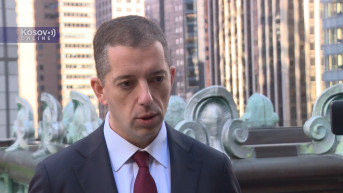
Serbian Ambassador to the United States Marko Djuric emphasized that all those who cared about peace and stability in the Balkans could not sit idly by in the face of what he described as the nationalist aggression of Kosovo Prime Minister Albin Kurti.
"There is not and will not be a shift in US policy towards Kosovo and Metohija when it comes to their view on the status of our southern province. At least not in the short to medium term. That is the reality, although we would all, of course, want things to be different and are working with all our might to align our interests in the long run and raise the level of mutual understanding. The US intervened in Kosovo and Metohija in 1999 during the Clinton administration, but they recognized the unilaterally declared independence in 2008, during the eighth year of President George W. Bush Jr.'s mandate, thus during a Republican administration. Therefore, two to three decades ago, it was a bipartisan project of the US political class," Marko Djuric openly said in an interview with Kurir.
Speaking about the relationship of US administrations toward Kosovo and the earlier period, Djuric says that it was a "completely different time here and there".
"It should be emphasized that much has changed in Serbia, on the ground in Kosovo and Metohija, within the US, and globally since that time, which is not at all favorable to the separatists in Pristina. That is why Kurti's totalitarian regime is in a hurry to rapidly and completely carry out the ethnic cleansing of the Serbs from the territory of Kosovo and Metohija. Despite different views on the status of Kosovo and Metohija, Serbia and the US today cooperate intensively in the fight to protect the individual and collective human rights of the Serbs in Kosovo and Metohija. On the other hand, Albin Kurti's totalitarian regime, through unilateral destructive moves, daily undermines the very foundations of democracy and the multiethnic character of society in Kosovo and Metohija. Kurti's chauvinistic clique is implementing an aggressive ethnonationalist policy of persecuting the Serbs and other non-Albanians. Everything that the international community has invested tens of billions of dollars from US and European taxpayers is being destroyed and disappearing. Therefore, urgent and even stronger and more concrete reactions from international representatives are needed," Djuri added.
Do you expect that concrete measures will be taken against Kurti and Pristina, or will it again remain just a dead letter on paper?
All those who care about stability, peace, and the future of the Balkans must not sit idly by in the face of Kurti's nationalist aggression. For extremely practical reasons, I advocate for sanctioning Kurti, his associates, as well as institutions involved in undermining regional stability and collectively violating the human, political, and economic rights of the Serbs and other communities in Kosovo and Metohija. Kurti and his totalitarian regime are engaged in a hybrid conflict against the Serbs in Kosovo and Metohija and against Serbia. As such, they pose the greatest threat to peace, regional stability, and democracy in our region. Kurti's policies make the region vulnerable to various malign influences. This does not only concern Serbia. Kurti and his helpers actively interfere in the internal political processes in North Macedonia and seek to gain control over a part of the political system of this country, directly undermining its independence. For those who think that Kurti's ambitions end with raising his flag in Serbian communities in northern Kosovo and Metohija, should reconsider the whole case. That's far from true. We must also be fully aware that Kurti's regime interprets signals such as the announcement of the sale of "Javelin" missiles, regardless of the goals and intentions of those who made such a decision, as encouragement for their actions. Between the announcement of this decision and Kurti's ban on dinars, which is on the verge of causing a humanitarian catastrophe of enormous proportions, not even two weeks have passed. It is necessary to understand that Kurti's regime only understands the language of unequivocal messages and sanctions.
Many have described the UN Security Council session as historic. What is the most important thing we heard and what happened there?
President Vucic shed light on the brutality of Kurti's totalitarian regime in front of the entire international community during the UN Security Council session. By insisting on holding this session, Serbia passed an important test, demonstrating that it is a free and independent country that is not afraid to protect its interests at every step using available legal and political means, despite the lies spread by some opponents of the government in Serbia on this topic. President Vucic handled all of this in a very effective manner, as evidenced by the political storm in Pristina and the general assessment that Kurti experienced a debacle before the UN Security Council. Perhaps the best confirmation of the extent of Kurti's diplomatic/political failure lies in the fabrication of a story about an assassination attempt on him in Skopje by Serbian services, which was swiftly debunked by the Macedonian Ministry of Interior and prosecution, further exposing Kurti to embarrassment.
What are the practical results of the session?
It is important that the issue of Kosovo and Metohija was brought back before the highest UN forum after more than two decades, aside from regular sessions on UNMIK's work. This is an achievement in itself, although the circumstances created by Kurti's totalitarian regime are so challenging that perhaps it is not the time to measure diplomatic successes. Additionally, it is significant that Kurti's totalitarian regime found itself in international isolation, at least on the issue of abolishing the dinar, with a clear condemnation from 13 out of 15 Security Council members, including four of the five permanent members.
We also heard from the US Ambassador at the UNSC, who also called on Pristina to reverse its decision to abolish the dinar... However, we still hear Albin Kurti repeating the same sentences and disregarding all these warnings. How will this situation end?
Strategically, Kurti aims for the creation of an ethnically pure Greater Albanian state and his own promotion to the supreme leader of all Albanians, with implicit political control over a range of governments and institutions in the region for members of his radical movement. At a tactical level, fearing possible changes in international circumstances, he seeks to secure another mandate for himself before European and US elections, possibly through snap elections to be held during this year. Operationally, for this purpose, Kurti is intensifying his campaign of persecuting the Serbs and "sovereignizing" Kosovo and Metohija, which is reflected in shutting down Serbian institutions and insidiously pressuring the Serbs to leave and closing Serbian institutions. Additionally, I want to emphasize to the Serbian public that there is one thing Kurti does very skillfully. It is propaganda aimed at the international community. His regime has built a very modern and efficient apparatus for producing and disseminating disinformation, largely aimed at deceiving the international public. This Goebbels-like machinery of lies operates 24/7 with significant resources and covers everything, from daily narrative and story creation to social media, where armies of bots are engaged in posting content in English and targeting key players with an individualized approach. Kurti himself and his associates participate in shaping the narrative, but they also employ specially hired foreign advisors for this purpose. The scale of this disinformation operation is such that we can say it constitutes a key element of the hybrid conflict Kurti's totalitarian regime is waging against us. In such conditions, it is enormously important when we hear messages from representatives of the US and other states that have recognized the so-called independence of Kosovo and Metohija before the UN Security Council that undermine Kurti's tower of lies.
You were with President Vucic in New York, and it was precisely then that he announced your return to Serbia and the important role you would be undertaking. I assume it's related to the executive branch, and some see you as a potential head of diplomacy. How grounded are such speculations?
My return to Serbia is not a matter of speculation; I am indeed returning permanently in a few weeks. Everything else will be subject to decisions by the competent authorities, about which the public will be duly informed. I am very much looking forward to the opportunity to do something good for Serbia.
Now you also have diplomatic experience... How much will that help you in your new role?
I'm not used to and don't like talking too much about myself. I have professional experience, having completed a very substantial term as a diplomatic advisor to the President of Serbia from 2012 to 2014, then as Serbia's negotiator in the Brussels Dialogue through 221 rounds of dialogue, and leading the Office for Kosovo and Metohija, representing Serbian institutions in the province from 2014 to 2020, and this period from 2020 to 2024 in Washington. I feel a part of the President's and the state's team, and the idea of Serbia being steel-strong and brilliantly successful motivates me to give absolutely everything I have and prioritize everything else for that goal.
If you were to summarize your term as the Ambassador to the US in a few sentences, what would be the most important thing you would highlight? What have you achieved from what was planned, how difficult was it, and how many times have you said to yourself - why did I need this?
We have changed the paradigm of Serbian presence and activities in the most important country of Western civilization, which dictates and shapes the course of world politics, economy, security, and pop culture. For future generations, the new embassy building steps away from the White House, as well as the new residence, will remain important hubs of political and cultural life and gatherings of the Serbian community. The number of Serbia's friends in the US Congress has multiplied, and the Serbian-American Business Council has been established, bringing together leading US companies as a group advocating for strengthening the ties between our two countries. Economic exchange has multiplied, especially Serbian exports to the US, where we now have a large surplus and a strong and growing partnership, especially in the field of high technology. We have engaged leading lobbying firms to advocate for our interests before the US political class daily and to contribute to changing Serbia's image. We have begun concrete actions to mobilize the numerous and influential Serbian community in the US by organizing several large conventions in the US capital. "Air Serbia" has launched a direct flight to Chicago. We initiated and started implementing exchange programs between the Ministry of Foreign Affairs and the State Department, and for the first time, we have our diplomats on internship in the US diplomatic service... In terms of sports diplomacy, we organized the first Serbian Heritage Nights in the NBA in Washington, and this year we hope for the first visit of a famous NBA team to Serbia... We have laid a strong foundation for further action, a serious political infrastructure, and taken control over shaping this crucial relationship for the interests of our country.
The European Parliament adopted a resolution that is quite negative for the country... It is not legally binding, but assessments are that it will be a tool in the hands of the EU that it can always use. What consequences do you expect?
Everyone who follows public opinion in Serbia can clearly see that Dragan Djilas can only win in elections if he changes his name to Aleksandar Vucic. Since the group around the mentioned politician is lobbying for the ban on the use of the name Aleksandar Vucic, I wouldn't be surprised if they request a European Parliament resolution of such content. Jokes aside, I respect all political leaders for whom people voted, but it is sad that in such circumstances, instead of working for the state's interests, there are people who invest so much money and effort in selfish goals.
President Vucic said a few days ago that now is the right time to form a large popular movement for Serbia... When can we expect that and why is now the right time?
President Vucic is a man who not only has a vision for the development and steady progress of Serbia in key areas but also has rich experience in its extraordinarily successful realization. The external view of Serbia and international circumstances show that unity has never been more necessary. Bringing society together around clearly defined common goals is the best formula for the rapid growth and development of Serbia. The movement could help us formulate and achieve common goals and dreams.
What are your realistic expectations for the US elections? What are the chances for Donald Trump? And how could the outcome of the elections generally affect Serbia... In simple terms, is it more beneficial for us to root for Trump?
In the US elections, we should root for Serbia and all those who are committed to positive relations with our country, regardless of party affiliation. Involvement in any foreign ideological divides cannot benefit us. We must create new friends everywhere. So, whoever wins, it will be good for us.
The constitutive session of the Belgrade Assembly is scheduled for Monday, but it is still not crystal clear whether there is a majority. What will happen at that session tomorrow? Will Belgrade get a government or will new elections be called?
To be completely honest, at the moment I have a better understanding of what is happening in the local government of the city of Washington and the relations between Mayor Muriel Bowser and the Washington City Council. I also notice that Belgrade is progressing at lightning speed, which is one of the main impressions of all foreigners who visit our city. This fills me with pride. I also followed when a small group of individuals tried to vandalize the City Assembly. I think that was destructive for the credibility of the opposition in the international arena. It certainly did not help the image of Serbia either.

comments