
Drecun: Kurti creates the appearance of de-escalation in the north of Kosovo
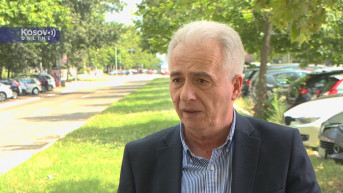
The President of the Parliamentary Committee for Kosovo and Metohija, Milovan Drecun, assessed that in order to create the conditions for the continuation of the dialogue between Belgrade and Pristina, a true de-escalation of the situation in the north of Kosovo was necessary, Blic reports.
In an interview with TV Blic, Drecun pointed out that Kosovo Prime Minister Albin Kurti was only creating the appearance of de-escalation, and that he had absolutely no intention of returning the situation to the previous situation, which had been before the Serbs had left the institutions.
After a summer in which there were several controversial moves by the Government in Pristina, can the dialogue be continued, and what is the first question now?
The intention of the leading Western countries and the European Union is to continue the dialogue as soon as possible, to create the conditions to increase the pressure on Belgrade to implement what the West considers an agreement, which for us is only a proposal for an agreement because there are two problematic points that we cannot and will not accept at any price. De-escalation in the north of Kosovo is necessary in order to create the conditions for the continuation of the dialogue. It is possible that there will be discussions not only at the technical level but also at the highest level, regarding several other matters in the North. Because the behavior of Albin Kurti shows that he is only creating the appearance of de-escalation, he absolutely does not intend to return the situation to the previous situation, which was before the Serbs left the temporary institutions of self-government. I expect that the whole story about the continuation of the dialogue will now be redirected into a very, very strong, in some aspects brutal pressure on Belgrade to accept to implement what is required of it by that EU proposal, which are those two points: that the relations with Pristina, are built on the principles of territorial integrity and sovereignty, and what is de facto recognition, and secondly, Kosovo's membership in international organizations. Therefore, I think that dialogue, if this atmosphere continues, has no perspective.
The EU does not stop calling for de-escalation and demanding the holding of elections. Pristina has initiated some procedures, but do we have the situation to maintain them and is this a solution?
The conditions may be created, but Pristina will not create them, because the West will not be ready to apply any serious measures to force Pristina to do so. Why did the Serbs leave the institutions of temporary self-government? Because they demanded that the members of the special parapolice units completely withdraw from the north of Kosovo, who are terrorizing the Serbs, they demanded that the arrests, false indictments, and the release of the arrested Serbs be stopped. Have any of these been fulfilled? It has not. They asked for the Community of Serb-majority Municipalities based on the Brussels Agreement, and what do they get from that to return? Kurti allegedly withdrew 25 percent of the police officers twice, no one counted them, but that doesn't mean anything. And now it will be, here Kurti pulled the policemen, he pulled them out of the municipal buildings. The key reason why all this is happening is being forgotten, which is the presence of the police in the north of Kosovo. It's a demand that Kurti will not fulfill; he will not withdraw them.
What does that mean, will the Serbs participate in the elections?
I don't see the possibility of creating the conditions for the Serbs to participate in the elections, because he won't withdraw those policemen, and what should the Serbs do now? If they agree to that kind of petition for the removal of the mayors, which Kurti insists on even though there is no legal basis, instead of the mayors resigning, which is the easiest way, so if they agree to that, then it becomes pointless to decide on a new boycott of the elections, because he would say - well, you asked for it yourself, you signed it, and he would be at an advantage, because he could dictate the terms. And the second key thing that speaks in favor of this, that conditions will not be created for holding elections, is the Community of Serb-majority Municipalities. So, three key conditions: special units in the north, the holding of new elections, and the Community of Serb-majority Municipalities - none of these will happen in order to say that there are conditions for elections. I think it would really be a big failure if, under such circumstances, it was accepted that the Serbs participate in the new elections.
Pristina is under a certain type of EU sanctions, Albin Kurti had a meeting with representatives of the Quint and the EU, and there is also a threat of tougher measures. Do you expect any results?
Well, we don't see that the result was achieved. Only if someone thinks that the result is that Kurti created the appearance of some kind of de-escalation. But I see that EU officials also say that it is not enough, that it is some sort of initial, half-step, but that the agreement they reached in Bratislava must be fulfilled. However, in order to have serious sanctions, we need to have a strong political will on the part of the West to implement such a thing. I don't see it at the moment.
President Aleksandar Vucic will meet with the President of Turkey Recep Tayyip Erdogan in Budapest. Good relations with that country were shaken by its help in arming Kosovo. Will that be the topic of the meeting?
Undoubtedly, Turkey is a regional power, but with those neo-Ottoman ideas to restore something of that Ottoman empire here, not in terms of territory, but in terms of influence. Turkey is one of the most important countries that supports the self-proclaimed Kosovo and arms the so-called Kosovo army. Turkey, the USA, Great Britain, and Germany - are key countries not only for arming Kosovo but also for training. Turkey will continue such a policy of maximum support for the strengthening of self-proclaimed independence and especially for the formation of those armed forces. It is no coincidence that Turkey received the Commander of KFOR and that Turkey has the largest contingent in KFOR.
I think that Turkey will not change its behavior when it comes to its attitude towards the self-proclaimed independence of Kosovo and that it will not stop with further support for equipping and training members of the KSF. And it certainly has a negative effect on our relationships. What Turkey is doing now with the arming of the Kosovo army is leading to the destabilization of the region. Each creation of such a formation leads to the completion of the project of Greater Albania. The key foundation stone for a Greater Albania has been laid - it is the unilateral declaration of the independence of Kosovo and anyone who supports an independent Kosovo actually supports the concept of a Greater Albania. It is an illusion to think that if Kosovo became a member of the UN, it would not unite with Albania, and then all the doors would be open for that. And then no one would be able to save either North Macedonia or Montenegro. Regardless of the fact that they are in NATO. Of course, on the other hand, they may manage to find common denominators on the economic front, because many Turkish companies work in Serbia. These are good companies and employ a large number of people. And that is a way to improve bilateral relations, but I think that Turkey has taken a huge step back here by giving a powerful, offensive tool to that Kosovo army.
0 comments