
Lajcak: Kosovo should start establishing the Community of Serb Municipalities (CSM) and accept the European Draft Statute
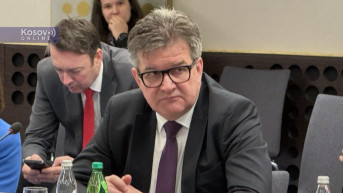
The European Union's special representative for the Serbia-Kosovo dialogue, Miroslav Lajcak, stated that the focus should now be on progress in fully implementing the agreement without preconditions or delays. For Kosovo, this means starting the establishment of the Community of Serb Municipalities (CSM) and accepting the European draft statute.
He added that Serbia should concurrently fulfill its obligations, starting with recognizing Kosovo's symbols, documents, and institutions as outlined in the implementation sequence plan.
“Both sides and their constructive behavior will be measured solely based on progress in implementation, not on the actions or public statements of the other side. The ball is in the court of Serbia and Kosovo, and we are waiting for them to start fulfilling what was agreed,” Lajcak said in an interview with Nova.
He added that discussions are currently underway on how to mitigate the impact of the cash payment regulation on people's daily lives, which detracts attention from advancing the implementation of the Agreement on the Path to Normalization.
“The EU’s position remains that we must reach a temporary solution without further delay to refocus on normalizing relations, and a permanent solution must be found in parallel with implementing the relevant provisions of the Agreement on the Path to Normalization. In the coming months, we hope that both parties will focus on making progress in implementing the agreement itself,” Lajcak added.
With extensive experience working with Balkan countries, having been in Montenegro, Bosnia and Herzegovina, and involved in negotiations between Belgrade and Pristina, Lajcak shared his impressions of the region. Can the Western Balkans integrate into the EU?
The Western Balkans hold a special place in my heart. I've spent over 20 years of my career working in or dealing with the region. I was Slovakia’s ambassador to the former Federal Republic of Yugoslavia in the early 2000s, and I was simultaneously accredited in Macedonia and Albania. I served as Javier Solana’s personal envoy for Montenegro’s independence referendum in 2006 and as EU High Representative/Special Representative in Bosnia and Herzegovina from 2007 to 2009. Since 2020, I have been the EU Special Representative for the Belgrade-Pristina dialogue and other regional issues in the Western Balkans.
My personal wish is for the Western Balkans to succeed and eventually become part of the EU because the region belongs there geographically, economically, and culturally. There’s no doubt about it: the EU is your home too. At the same time, much work remains, with a great deal of untapped economic, social, and cultural potential that needs to be harnessed. The region must work better together to show the EU and its member states that cooperation with immediate neighbors is possible and that coexistence within an expanded EU will not be a challenge.
Unfortunately, history in this part of the world is still too present in daily politics, which hinders progress toward a shared future. This region has seen violent conflicts, and it’s essential to deal with and learn from that, but not at the expense of moving forward. Look at Germany and France, for example, in 1974, 29 years after World War II. They decided to work together for the future of their people despite two world wars, building one of today's most successful peace projects.
So now you need to roll up your sleeves and achieve this because the people in the region deserve it. When I say now, I mean right now. The doors to European integration for the Western Balkans are open. There have been periods of unfulfilled promises when those doors weren't fully open, but now they are, and this opportunity mustn't be missed. The war in Ukraine has changed everything. Although enlargement is a buzzword these days, it's also wrong to believe that momentum alone will bring the region into the EU because it won't.
The region must demonstrate readiness to meet the EU’s expectations for new members. Meeting reforms is still essential, and there will be no compromise on this. This requires a change in how politics is conducted and the adoption of a new political culture to speed up reforms and facilitate resolving bilateral disputes. Allow me to emphasize this: the EU will not import unresolved bilateral issues. You must address them before joining the club.
The new Western Balkans Growth Fund is a clear signal of the EU’s commitment to integrating the region. We’re not just talking about 6 billion euros of EU taxpayers’ money but about gradual EU membership. The message is clear: we want you, but we also expect you to do your part and undertake necessary reforms and actions.
To answer your question, yes, I believe the region can integrate into the EU, and recent events have shown the EU is ready for that. But the ball is now in the region’s court, and it must show that it's prepared.
It has been announced that you will not extend your mandate as the EU Special Representative for the Belgrade-Pristina Dialogue. Why?
My mandate as the EU Special Representative will end on August 31st of this year. It has already been extended twice, in 2021 and 2022. EU Special Representatives typically serve four-year terms, like most diplomatic services, and by August, I will have served in this role for four and a half years. Good diplomatic practice calls for personnel changes after that period, and I personally believe that change is healthy.
Overall, given the mandate, it was always clear that the task is very challenging and depends on many factors. In my view, this is not a sprint but rather a long-distance relay, and I will hold the baton until the end of August. There have been breakthroughs and setbacks, frustrations and joys along the way. Last year's Path to Normalization Agreement, which Kosovo and Serbia concluded in Ohrid, is worth highlighting. This agreement provides a clear framework for the future of the normalization process, to which both sides have agreed, paving the way for comprehensive normalization. It's regrettable that both sides have not yet agreed on how to implement it. The EU has done everything it could, but we can't want normalization more than Kosovo and Serbia.
Both parties are the owners of this process and must make tough political decisions. I will continue my efforts to start implementing the Agreement until my last day in office. Afterward, I will pass the baton to my successor, whoever that may be, as it is up to the EU member states and the High Representative for Foreign Affairs and Security Policy to decide. Given my emotional and professional commitment to the region, leaving this position is not the end of my interest or involvement in the Western Balkans. As long as I'm involved in diplomacy and politics, I'll remain a strong advocate for integrating the Western Balkans into the EU.
Is the Kosovo dialogue at an impasse?
I wouldn't say that the dialogue is at an impasse, but any difficult and politically sensitive process has its ups and downs. As you know, the talks on normalizing relations between Kosovo and Serbia began in 2011. I've been responsible for this process since 2020, almost 10 years after it started.
Of course, I would have liked to see it through to a comprehensive, legally binding agreement on normalization. That wasn't possible, but I also want to emphasize that significant progress has been made. Last year, we agreed on two documents: the Path to Normalization Agreement and its Implementation Annex. If we pause and analyze this, it's a significant achievement because there's no longer any question of what or how to do things—only the question of when remains. We now have a clear framework for the future path that both parties agreed on, and naturally, we're disappointed that implementation was very limited a year later. Discussions about implementation were often disrupted by tensions that required crisis management. We had several major crises last year, which made progress toward normalization difficult.
But, as I've said, we achieved something very important, and there is no going back. In the current geopolitical context and at this moment, there is no better agreement for either side, so they must focus on implementation. Kosovo and Serbia know exactly what they need to do—they just need to implement what was agreed. In parallel, we have made important steps and found concrete solutions that benefit people on the ground. For example, recognizing personal documents and license plates has ended the so-called “sticker regime.” We also managed to regulate the energy issue in northern Kosovo, which had been unresolved for over 20 years.
We are currently discussing how to mitigate the impact of the cash payment regulation on people's daily lives, which unfortunately distracts from advancing the implementation of the Path to Normalization Agreement. The EU's position remains that we must reach a temporary solution without further delay to refocus on normalizing relations, while a permanent solution must be found in parallel with implementing the relevant provisions of the Path to Normalization Agreement. In the coming months, we hope both sides will focus on progress in implementing the agreement itself.
How far (or close) are Belgrade and Pristina from reaching a final agreement?
That really depends on both sides. The process is in their hands, and we're talking about their future. Both sides have European integration as a strategic priority, and progress in normalizing their relations is crucial for progress toward the EU. The EU has been very clear that the doors are open, and if they are seriously interested in their European future, both Serbia and Kosovo know they must reach a comprehensive and legally binding normalization agreement. Implementing the Path to Normalization Agreement paves the way for this, and Kosovo and Serbia must make an extra effort to see the process through. We can advise, suggest, and assist every step of the way, and we do. However, in the end, both sides must normalize their relations.
We often hear Serbian President Aleksandar Vucic say that Serbia respects agreements while Pristina does not, and that is why there is no progress. What's the truth?
As a mediator, I try to avoid being drawn into a discussion of mutual accusations over who did what, who didn't do what, and who is to blame for the lack of progress. The reality is that both Kosovo and Serbia have lists of unfulfilled obligations from past agreements, and neither side has yet started implementing the Path to Normalization Agreement. Implementation should start immediately by having Kosovo and Serbia fulfill their obligations step by step, based on the principle that both sides must contribute to receive benefits. The focus should now be on progress in fully implementing the Agreement without preconditions or delays.
Both sides' responsibilities are clear: Kosovo must initiate the establishment of the Association/Community of Serb-majority municipalities and accept the European draft statute, while Serbia must fulfill its numerous obligations in parallel, starting with recognizing Kosovo's symbols, documents, and institutions as outlined in the implementation sequence plan. Both sides and their constructive behavior will be measured solely on progress in implementation, not on the actions or public statements of the other side. The ball is in the court of Serbia and Kosovo, and we are waiting for them to start fulfilling what was agreed.
What impressions have you formed of Aleksandar Vucic and Albin Kurti after all these discussions? Do they have the capacity to reach an agreement?
Both leaders have strong mandates to make the tough political decisions that the dialogue process inevitably requires. I have already mentioned that normalization is crucial for Kosovo and Serbia to advance on their European path, so the dialogue is not just about normalizing relations but also about the future of Kosovo and Serbia. Citizens want to be in the EU, and leaders have a responsibility and obligation to meet their demands. I don't doubt that both want EU integration. Otherwise, what is the alternative? Conflicts? Violence? Both leaders clearly have very different views on what normalization means, and it's clear that this is a very sensitive issue politically. However, it's evident that neither side will get 100% of what they want in the end. Compromises and flexibility are necessary, as well as strategic vision and statesmanship, to advance normalization. That's what the EU expects leaders to show.
If you could describe Western Balkan leaders in three words, which ones would you use?
As an experienced diplomat, I prefer to avoid personal qualifications or descriptions. It's not up to EU representatives to characterize regional leaders but their voters.
comments