
Italian General Iubini: I fear new tensions in Kosovo; Serbs have the right to live where their roots are
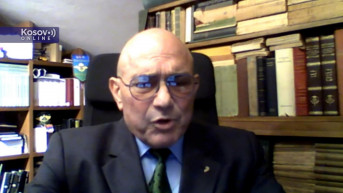
Retired Italian Brigadier General Raffaele Iubini assesses in an interview with Kosovo Online that the world in 2024 is facing serious security challenges that also affect the Kosovo region. He emphasizes that Serbs have impressed him with their persistence in preserving their traditions and places of worship and that Italy has a moral duty to do everything in its power to untangle the political knots that hinder an honest discussion between Belgrade and Pristina.
General Iubini was the commander of one of the elite Italian special forces units, the 183rd Paratrooper Regiment "NEMBO," within the Italian contingent of the multinational KFOR forces in 2003. The tactical name of this unit in Kosovo was Task Force "Aquila."
Thanks to these forces, the exodus of Serbs from enclaves was prevented, and the Patriarchate of Pec was protected.
Due to this heroic act, in 2004, the Holy Synod of the Serbian Orthodox Church honored the "Folgore Brigade," which belonged to the 183rd NEMBO Regiment, with the Order of Saint Sava. It was the first time that a foreign military unit received an award from the Serbian Orthodox Church.
General Iubini recalls those years and analyzes the current security situation, both in the region and globally.
He describes 2024 on a global level as a year of choices and conflicts.
"The year 2024 will be essentially characterized by the political elections that will take place all over the world. In fact, more than half of the world's population will be called to the polls. In addition to the European elections - that will call about 400 million voters - voting will also take place in some of the most populous countries of the world such as Brazil, India, Mexico, Russia, and the United States. In 2024 the current conflicts could spread and escalate to an increasingly dangerous level, involving maritime traffic in the Red Sea, where attacks by the Houthi - allied with Iran - are taking place these days. Also, there is a real danger of an extension of the conflict, at the regional level, due to Herzbollah's actions against Israel from the southern part of Lebanon. However, it must also be said that the area has long been subject to moments of serious crisis. In the Far East, the island of Taiwan, which is under pressure from China and where the risks of conflict are almost permanent, will go also to the polls. On the African continent too, there are conflicts that will certainly last and perhaps intensify in 2024. As you can see, the situation we are facing does not really lead to optimistic forecasts."
Is the world closer to another great war? Do you see peace?
I think the world is not close to another conflict – World War III - and I believe we have to be optimistic about that. I do not share the view of those who consider the sum of the wars currently underway to be a low-intensity world war. I strongly trust in the ability of great powers such as the United States, the Russian Federation, and China to keep these "frictions" on reasonable terms.
What do you think are the biggest security challenges in 2024 in Kosovo?
As far as security in Kosovo is concerned, I believe that the greatest risks are related to political hardening on both sides. Unfortunately, strong tensions still remain in the northern part of the region, which will hopefully be eased in 2024. We have to admit that tensions between the Serbian and Albanian communities in Kosovo can erupt without warning and turn into serious unrest. In theoretical terms, security should be provided by the Kosovo Police, by EULEX (civil and criminal justice), and by the multinational military contingent KFOR. In practical terms, it is very difficult to predict the locations and characteristics of protests and riots sufficiently in advance.
General Ulutash, commander of KFOR, recently described the security situation in Kosovo as "more peaceful but still fragile." What does the term "fragile situation" mean to you as a soldier?
I would say that the word fragile is quite good to describe a situation that, for the moment, is relatively stable but that could degenerate in a matter of hours. Fragile is not a military term, but KFOR Commander has found a word that depicts a situation in precarious balance and always at risk of breaking down. However, there are signs of goodwill on the part of Serbia, which has recently allowed vehicles with Kosovar license plates to circulate on its territory. Kosovo's Prime Minister Albin Kurti has said he will adopt the same measure for cars with Serbian license plates entering Kosovo. Of course, the situation remains very complex, and achieving a condition that satisfies all parties is, in my opinion, still a long way off.
Due to the worsening situation, KFOR and NATO have increased the number of troops, especially in the north. Can Serbs feel safe now?
As I said before, the situation is quite complicated. We hope that the deployment of troops will be a deterrent to the outbreak of unrest. The visible presence of KFOR soldiers should deter provocations and acts of violence against the Serbian minority.
How do you assess the position of the Serbian community in Kosovo?
I believe that the Serbs in Kosovo are in a very difficult moment. They surely have the right to live where their traditions and their roots are. When a people is forced to leave their land because of conditions that make life impossible, it is always a tragedy. From a rational point of view, it would be necessary to avoid emigrating so as not to further impoverish the number of residents but, in addition to the need to live in a quieter atmosphere, families also need to have economic and social perspectives. Children need schools and a future of job opportunities.
Let's go back to your military engagement in Kosovo. In 2003, you were the commander of the Italian KFOR contingent in Kosovo. What was the biggest challenge for you and your soldiers then?
I was in Kosovo in 2003 with my unit, in PEC. I was immediately struck by the natural beauty of the region and by the wealth of Churches and Monuments. Looking at the ancient buildings, you can feel the breath of history and the deep religiosity of the Serbian people. I immediately felt a duty and responsibility to protect those places from any threat. Unfortunately, in Kosovo, it is not understood by everyone that historical-religious heritage is a cultural richness that goes far beyond political or religious affiliation. At that time, KFOR also faced a low to medium intensity crime that was widespread in the country. I hope that today that phase is left behind.
What made the strongest impression on you personally at that time?
Before answering this question, I would like to say that I was in Kosovo in the years 2000, 2001, 2002, and 2003 on missions under KFOR command. I got to get in touch with the local people. Everyone was very friendly and fair to me. In particular, the Serbs have impressed me with the tenacity with which they guard their traditions and their places of worship. I had the great honor of meeting the Orthodox Bishop Jovan Culibrk, who was a monk at the time. He frequently visited the Patriarchate of Pec, and I met with him regularly. From him, I learned many things about the history of the Patriarchate and its importance as a religious symbol of the Serbian people.
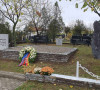
Recently, when the monument to the Serbian warriors in Pristina was moved, you said that it should be returned so that "the souls of the warriors can find peace." This was done after public pressure. How important is it to get to know the history of a nation and country before making such decisions?
Knowing the origins and history of a people is essential if you want to rule with balance and respect for the soul of that people. Political and religious extremism must be left out of government action, which must take into account all the different sensitivities. As a soldier, I also want to emphasize that respect for soldiers who died defending their country is the basis of all human civilizations. Moving a simple plaque may seem like a gesture of little importance to those who do not share these values. But it is of great political importance if the action is directed against those who are considered enemies, even if they are already buried underground.
0 comments