
Kapchan: I do not expect Kurti to make an effort in the dialogue with Serbia
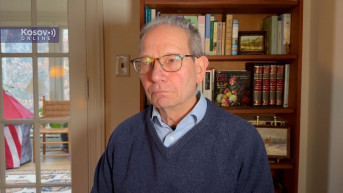
American foreign policy expert Charles Kupchan of the Council on Foreign Relations in Washington says in an interview with Kosovo Online that, following the elections in Kosovo and the formation of a new government, the Serbian community will face the same pressures as before. He assesses that Albin Kurti will not make an effort to advance the dialogue with Serbia and that the new government will continue confrontations with the United States and the EU, which, he says, will lead Kosovo into isolation from the international community.
In the interview, Kupchan said he believes that Vjosa Osmani will succeed in securing the required number of votes for a second presidential term. He also noted that a more cooperative approach toward Serbs is necessary for improving Pristina’s relations with the EU and the United States.
After the elections in Kosovo, Albin Kurti will likely become prime minister again, with an estimated 67–68 seats, relying on the support of non-Serb minority parties. What does this outcome mean for political stability and governance in Kosovo in the period ahead?
I would say there is both good and bad news. The good news is that Kurti exceeded expectations and is in a position to form a government with a significant majority. The bad news is that Kurti exceeded expectations and will likely become prime minister. By this I mean that Kosovo spent much of the past year in a political limbo because the last elections did not lead to the formation of a government. Now you have elections that will likely result in a government being formed, but I assume it will continue to be in conflict with the United States and the European Union, which will, as a consequence, lead to isolation from the international community. I would expect that Kurti, as he has done in the past, will not do much to advance the dialogue with Serbia and, as a result, I worry that over the next several years there will be no progress in the dialogue process.
Self-Determination emerged as the clear winner of the elections. What should the Kosovo Serb community realistically expect from a Kurti-led government in terms of political inclusion, security, and dialogue?
I think it is too early to say, and there are different theories about the direction in which the courts and the world will move. One option is that he has won, and quite convincingly, and as a result will not need to play the card of ethno-nationalism in the same way as before. I do not expect that, partly because I believe Kurti’s approach to this issue is less about political instrumentalism—that is, using it as a good way to win votes—and more about his sincerely held views on issues of ethnicity, multiculturalism, and Kosovo’s right to dismantle parallel institutions. Therefore, my best guess is that we are moving into a period in which the Serbian minority will face the same pressures it has faced since Kurti came to power. Again, we do not know whether this will be the case, but that would be my forecast.
The mandate of Kosovo’s president is nearing its end, and the election of a new president requires a two-thirds majority (81 MPs)—a threshold the current majority does not meet. How serious is the risk of a new institutional crisis, and what options exist to avoid it?
We have gone through a period of political paralysis because the Self-Determination Movement and the opposition parties were unable to reach agreement. I think President Osmani is someone who will likely be able to secure two-thirds of the vote, in part because she has, in a way, tried to rise above politics and has not closely tied herself to a specific political platform or party. It is possible that parliament has learned the lesson that paralysis does not work well and that it is better to have a functioning government. Therefore, my best guess is that this will not be another period of paralysis when it comes to electing a president.
What should a new Kosovo government do to reset and improve relations with the United States under a Trump administration, especially given that many American policymakers, experts, and former officials in Washington have expressed critical views of Mr. Kurti, and that the Strategic Agreement remains on hold?
Kurti appears somewhat immune to external criticism and somewhat immune to the extent to which both the EU and the United States are actually stepping back from various forms of partnership—the Strategic Dialogue in the case of the United States, economic assistance in the case of the EU—partly because of what they have seen as a discourteous, unnecessarily provocative approach toward certain communities and his reluctance to take steps that would open the door to cooperation with Belgrade. Advancing the dialogue and launching the normalization process were envisaged by the Ohrid Agreement. I think it would be in Kosovo’s interest to cooperate with the EU and the United States, but that will likely require a more cooperative approach to addressing the issue of the Serbian minority and a relaunch of constructive dialogue with Belgrade. Whether Kurti is ready to take that path or not, I think we will simply have to wait and see.



comments