
Katz: Progress in Pristina-Washington relations also depends on fulfilling commitments made in the dialogue with Belgrade
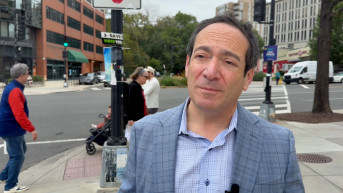
Kosovo still needs to improve its relations with the United States, and there is considerable room for progress. Some of that progress will depend on issues between Belgrade and Pristina, as well as on fulfilling commitments made previously, Jonathan Katz, a fellow in governance studies at Brookings who has also held senior positions in the State Department and Congress, said in an interview with Kosovo Online.
According to Katz, the election of Kosovo's president brings stability, but he noted that it is important for Justina Shiroka Pula to truly assume the responsibility that comes with her promise to be the president of all citizens, whether they are Serbs in the north or members of other communities across Kosovo.
After a prolonged institutional deadlock and repeated elections, Kosovo finally has a new president and functioning institutions. Does the election truly mark the end of the political crisis, or has it merely resolved the immediate institutional problem while deeper political divisions remain?
It was important to move forward in this direction. Internal divisions in Kosovo certainly remain. Challenges in relations with Belgrade also persist. Relations with the United States still need to be improved. Of course, the most important relationship, the one with Brussels, is challenged. This is also evident when we talk about the Specialist Chambers, which deal with war crimes, and the question of how to hold those responsible accountable. The EU has expressed concern about possible amendments concerning that court. That is why I believe many challenges still lie ahead, but everything must be addressed step by step. Kosovo is taking a step forward today. Hopefully, that will lead to the ability to address some very difficult challenges.
With the institutional deadlock resolved, do you see an opportunity for Pristina to improve its relations with Washington? What concrete steps would the United States expect Kosovo's leadership to take, particularly regarding political stability, dialogue with Belgrade and relations with the Serbian community?
The election of a president brings stability. It is the beginning of stability. The US-Kosovo relationship have existed for many years beyond just where we are today. But the fact that this strategic dialogue, or this engagement, has been frozen is significant. So is the fact that, in my view, the current US administration has found fault with how Pristina has engaged, particularly in northern Kosovo and in its treatment of Serbs. This is an opportunity to try to work towards addressing some of those challenges. It will not be easy. One thing I look to is that this administration, the Trump administration, like previous administrations, strongly supports the people of Kosovo and wants to see their future through further Euro-Atlantic integration. But steps have to be taken. Of course, each administration brings its own recipe to addressing these challenges. And of course this is nothing new for the Trump administration. During Trump's first term, the issue of Serbia and Kosovo was at the very top of the agenda for that administration.
Shortly before the election of the new president, the Kosovo Assembly adopted amendments to the Law on the Specialist Chambers, while the EU says the changes are contrary to Kosovo's international obligations. At the same time, there is strong political opposition to the court and its recent verdicts in Kosovo. How serious a challenge does this pose to the authority and independence of the Specialist Chambers, and could it create new tensions between Pristina and its Western partners, including Washington?
I think this decision, or the move in this direction, is not only about Pristina and Washington, but also between Pristina and Brussels. How do you move forward on the rule of law, how do you move forward on accountability, in the Western Balkans as well. I understand the sensitivity for those that are in Kosovo to this specific issue. But if you look across the Western Balkans and what took place, that accountability, holding those accountable for wrongdoing, is particularly important. I think it is very relevant, especially for Brussels, which is considering what the European Union enlargement process will look like and any type of amendments to that process. We will know more about this in the coming weeks. Kosovo wants to be there in that seat moving forward. As for Washington, it looks to me like their main objective for this administration is more economic, regional integration, and continuing to find stability versus spending its time.
Despite the fact that Americans are involved in the work of this court and tribunal, this administration is placing a heavier emphasis on other issues in the relationship. These include energy, economic engagement and stability, which the administration considers more important than correcting past injustices.
Kosovo Serbs, particularly those living in the north, have faced years of political and security tensions and deep mistrust of the institutions in Pristina. What can they realistically expect from the new president? Can the president play a significant role in rebuilding trust, protecting the rights and security of the Serbian community, and ensuring that its concerns are heard at the highest institutional level?
Although the office of president is largely symbolic and its powers are limited, what she said is important: “I will be the president of all citizens.” That promise will be put to the test very soon. Of course, this particular issue is a stumbling block, or a serious challenge, in relations between Pristina and Belgrade. It is also an issue of great importance to the United States. This administration is focused on addressing these challenges so that Kosovo and other countries in the region do not return to historical problems. This is not easy. Nor is it easy in any country or region that has experienced tragedies such as those that occurred there. But it is extremely important for the president to genuinely assume the responsibility that comes with her promise to be the president of all citizens, whether they are Serbs in the north or members of other communities throughout Kosovo.
Now that Kosovo's institutions are finally functioning, should we expect stronger efforts by the United States and the EU to relaunch the normalization dialogue between Belgrade and Pristina? And how important will the implementation of previously agreed commitments, including arrangements concerning the Serbian community, be in achieving meaningful progress?
The commitments are critical, including past commitments, particularly those negotiated or engaged with during President Trump's first administration. So I think what we’re going to see is that, when we talk about the potential for the relationship between Pristina and Washington to improve,and there is room for tremendous amount of work for improvement, some of this is going to lie exactly with these issues between Belgrade and Pristina, and also fulfilling previous obligations. And I think you want to give an opening to the Trump administration given their interest in this issue and solving this issue previously. So, I hope there is that opportunity to tap into US leadership. But that means it is not just about a new president, it is also about fulfilling commitments, agreements, and actually the proof will be in what actually takes place rather that the rhetoric.
0 comments