
Kupchan: Kosovo has long been politically paralyzed; a government is needed also for progress in normalizing relations with Serbia
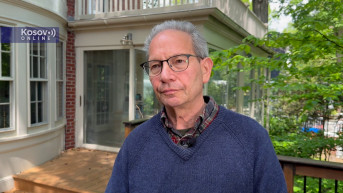
Senior Fellow at the Council on Foreign Relations in Washington, Charles Kupchan, stated that Kosovo has been politically paralyzed for quite some time, even though it cannot afford such a situation, and expressed hope that parties will be able to reach a compromise after the upcoming elections. Kosovo, he stressed, must have a functional government and demonstrate to its partners that it has leadership guiding it in the right direction.
He underlined that the process of normalizing relations with Belgrade cannot advance without a government in Pristina capable of addressing issues such as the Community of Serb-majority Municipalities and other matters, in order to protect the rights of the Serbian community, which remains in a sensitive position.
In an interview with Kosovo Online, Kupchan said that the U.S. administration may have preferred outcomes in elections, but ultimately seeks a functional government it can cooperate with on numerous issues, particularly the normalization of relations between Kosovo and Serbia.
He also noted that U.S. President Donald Trump, especially after the war with Iran and a decline in approval ratings in the United States, will want to achieve a foreign policy success. In that sense, Kosovo and Serbia could provide such an opportunity, but he emphasized that the process cannot move forward without a government in Pristina.
He added that the Serbian community is in a sensitive position, making the urgent formation of a government necessary—one that can address issues such as the Community of Serb-majority Municipalities and other topics on the agenda, in order to safeguard the rights and well-being of Serbs and other communities.
How do you assess the failure to elect a president in Kosovo and the decision to call new elections—what does this say about the depth of the current political crisis?
On the one hand, one could say that Kosovo has become a “normal” country, because if you look at American politics, it is deeply polarized and dysfunctional. If you look at France, you see how governments change frequently and face major difficulties staying in power. Kosovo is now facing its third elections in just over a year. The country has effectively been politically paralyzed for quite some time. The key point is that Kosovo cannot afford this. We have seen an unwillingness—both from the authorities and other actors—to compromise. And compromise is a key ingredient of democracy. That is how democracies function. Therefore, I hope that at some point, perhaps after the next elections, political parties will be able to come together, reach a compromise, and find common ground. However, a small country facing challenges like Kosovo must have a functional government. It must show its partners—Europe and the United States—that it has leadership taking the country in the right direction. At present, the situation is the opposite.
Do you expect the United States to have a preferred outcome or an informal “favorite” in the upcoming elections, or will Washington remain neutral?
Generally, Washington remains neutral when it comes to foreign elections. That has not always been the case under the administration of Donald Trump. We know that the Trump administration was frustrated with Prime Minister Albin Kurti, perceiving him as unnecessarily provocative in relations with minorities and with Serbia. We saw public statements to that effect, as well as a certain suspension of cooperation with Kosovo. However, from the U.S. perspective, while the administration may have preferences, what it truly seeks is a functional government it can work with on a range of issues, especially the normalization of relations between Kosovo and Serbia.
How could this new political crisis affect the already fragile relations between Kosovo and the United States?
I think the main effect in Washington, as well as among European partners and supporters of Kosovo, would be frustration. Donald Trump wants to be seen as a peacemaker. He frequently mentions the Balkans and the dialogue between Kosovo and Serbia—this is an issue that remains in his focus. Particularly after the war with Iran and declining approval ratings in the U.S., he will want to secure a foreign policy success. Kosovo and Serbia could provide that opportunity, but the process cannot move forward without a capable and functional government in Pristina.
Kosovo has already faced multiple elections in a short period—how do you assess the financial and institutional costs of organizing new elections, especially if the result could again be a deadlock?
In general, as a young state—one that has not yet been recognized by a significant number of countries and is trying to build an economy that delivers results for its citizens—such paralysis is extremely dangerous. Citizens elect their representatives to enter institutions, work, and deliver results, but instead they engage in conflicts and disputes over who should be president and how the government should function. What does this mean? It simply erodes public trust in democratic institutions. That is why it is high time that whoever wins the next elections steps forward, extends a hand to the opposition, and finds a way to ensure effective governance.
How does this ongoing political instability affect the security and position of the Serbian community in Kosovo, particularly in the absence of fully functional institutions?
I believe that the Serbian minority, even under the best circumstances, finds itself in a sensitive position. This is a state that aspires to be a multiethnic and pluralistic democracy, with a majority Albanian population, but Serbs are not the only minority—there are others as well. That is why it is essential to have an inclusive government. In recent years, certain steps have been taken, which are somewhat understandable, as the authorities in Pristina sought to reduce Serbia’s influence over the Serbian community in Kosovo. However, this has, in a way, left the Serbian community in a political vacuum, in a kind of “no man’s land.” Therefore, the urgent formation of a functional government is needed—one capable of addressing issues such as the Community of Serb-majority Municipalities and other matters on the table, in order to protect the rights and well-being of Serbs and other minorities, and—perhaps even more importantly—to work on stabilizing relations with Serbia.


0 comments