
Lajcak: My work continues; I am confident the CSM will be established, we have taken into account the red lines of both sides
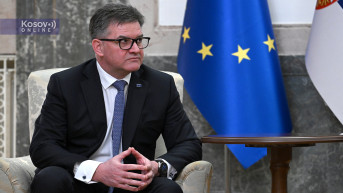
I have been asked to stay a little longer in this position, so my work continues. Our latest proposal is for Kosovo to initiate the process of establishing the Association/Community of Serb-majority Municipalities, and for Serbia to begin implementing the obligation to recognize Kosovo's documents, institutions, and symbols. Regarding the decision of the Central Bank of Kosovo on cash transactions, we suggested creating a temporary new body or business that would handle the distribution of financial support to the most vulnerable. Unfortunately, it was not possible to find common ground on what this new entity would be allowed to do and how we could handle financial assistance from Serbia to Serbia-supported institutions in Kosovo. The goal of this temporary solution would also be to enable Serbian-funded institutions, such as schools and hospitals, to receive funds from Serbia until a permanent solution is found, EU Special Representative Miroslav Lajcak said in an interview with Kosovo Online.
In the conversation with our portal, Lajcak also touched on the issue of the main bridge on the Ibar, the establishment of the Community of Serb Municipalities, the actions of the Kosovo Police regarding the Postal Savings Bank, solutions for the dinar, and a possible new meeting in Brussels between Vucic and Kurti…
At the end of your mandate, a new crisis is on the horizon, this time regarding the main bridge on the Ibar. Although the EU stated that the issue must be resolved through the Dialogue, what will be your reaction if the municipal government in North or South Mitrovica, as requested by Self-Determination, opens the bridge anyway, and is it even possible to do so outside the Dialogue in Brussels?
We repeatedly call on both Kosovo and Serbia to address issues in the Dialogue and refrain from uncoordinated actions. It is never good if international partners are taken by surprise. In this case, an uncoordinated opening of the main Ibar Bridge may result in security incidents and further complicate the normalisation process. The opening of the Bridge in Mitrovica is the subject of two agreements within the EU-facilitated Dialogue - from 2015 and 2016. While I agree that the Bridge should be opened and we have long called for it, it needs to be done in coordinated and agreed manner. Any decision related to the Bridge should be first discussed and taken in the Dialogue. Should the Parties be interested, I am happy to put this issue on the agenda of the next Chief Negotiators’ meeting.
Why is there still no Community of Serbian Municipalities, and do you think it will ever be established?
This is more a question for the Kosovo Government than for me. I honestly do not see a reason not to move ahead, especially now, after the presentation of the European Draft Statute. This Statute has been drafted very carefully, in an elaborate and lengthy process, with the support and help of Germany, France, Italy, and the United States as well as the input of independent international legal experts and the opinion of subject matter experts from the Council of Europe. I am convinced that the European Draft Statute fully respects the Kosovo legal order. We also took into consideration to the maximum extent possible the red lines of both Parties. It is a European way to address the sensitive issue of minority rights and protection and it reflects best European practices. So I would argue what works for Member States of the EU and the Council of Europe – two international organisations Kosovo seeks to join – should certainly also be acceptable to the Kosovo Government. Furthermore, the procedure foreseen by the Agreements of 2013 and 2015 contains two “security checks” regarding the constitutionality of the Statute of the A/CSM - if you want an emergency break. After agreeing in the framework of the Dialogue, where first the Government has a say the Statute will be sent to Kosovo’s Constitutional Court for review, which means that also the guardian of Kosovo’s constitution has a say. Therefore, I am asking you – what can possibly go wrong? How could the A/CSM risk being harmful or dangerous to Kosovo if the Constitutional Court has the final say over the Statute?
To answer the second part of your question – I am confident that ultimately the A/CSM will be established because Kosovo is obliged to do so under international law. The Government cannot avoid the fulfillment of this obligation forever. It is an obligation the then-Government entered into voluntarily in 2013. The Brussels Agreement 2013 was also ratified by the Kosovo Assembly with a two-thirds majority. The international community also sees the (non-)establishment of the A/CSM as a rule-of-law issue and has reacted accordingly, in the context of Kosovo’s membership application to the CoE. Without disregarding other Dialogue commitments, the issue of the A/CSM is bigger than a “simple” Dialogue obligation. It reflects the Government’s approach to the protection of human rights, rights of non-majority communities, and the rule of law.
How do you view the closure of the Postal Savings Bank in the north during the recent actions of the authorities in Pristina? Why was there no agreement on the CBK regulation and the dinar between the Belgrade and Pristina delegations in the Brussels negotiations, and who is to blame for that? What do you think would be the solution for the dinar in Kosovo?
From the moment we learned about the CBK regulation, we warned about the consequences that it might have on the daily life of the Kosovo Serbs and other communities. Since January, we have facilitated seven meetings of the Chief negotiators dedicated to finding a temporary sustainable solution for the people most affected by the decision on cash operations. In the process, we also presented a temporary compromise proposal that accommodated the Parties’ positions to the maximum extent possible. However, the Parties could not agree on several elements of it. As part of our proposal, we suggested creating a temporary new body or business dealing with the distribution of financial support to the most vulnerable. Unfortunately, it was not possible to find common ground on what this new business is allowed to do and what not, who can ultimately use it, and how could we handle financial assistance from Serbia to Serbia-supported institutions in Kosovo. The objective of the temporary solution would have been to enable eligible Kosovo Serbs and other communities as well as Serbia-financed institutions such as schools and hospitals to receive funds from Serbia until a permanent solution is found. Let me remind you that the issue of Serbia’s support to structures and services in Kosovo is foreseen to be addressed and resolved in the EU-facilitated Dialogue in connection with the establishment of the Association/Community of Serb-Majority municipalities and it is regrettable that there is an attempt to circumvent such discussion. Of course, we stand ready to convene another meeting on this subject as soon as the Parties signal readiness to find a mutually acceptable solution. Unfortunately, this is not the case at the moment, which is ultimately harming the people in Kosovo. We expressed our concerns about the closure and confiscation of the Serbian Postal Savings Bank offices in the north of Kosovo without prior notice or coordination and only a few days after the last Dialogue meeting on this subject took place. The action at that moment was unnecessary and can be categorized as escalatory. It went against the spirit of normalization and jeopardized the ongoing negotiations on a temporary solution for people negatively affected by the CBK regulation. It is very unfortunate that Kosovo in this case prioritised unilateral and uncoordinated actions rather than cooperation with its friends and allies and we hope and expect that a situation like this one will be handled differently in the future.
How would you rate your mandate as the EU Special Envoy for the Belgrade-Pristina dialogue, successful or unsuccessful?
First, you need to remember the situation in the Dialogue when I took it over in 2020 – the Dialogue was at a standstill and there had been no progress in a long time. My first task was to revive the Dialogue, which we succeeded in doing very quickly. After this initial success, it is clear that there have been ups and downs during the last 4 years due to repeated escalations on the ground, but also elections, government changes, and geopolitical developments. Nevertheless, I would argue that the overall balance is positive given that we have had many tangible achievements in the Dialogue during my mandate, for example in areas of energy, freedom of movement, and missing persons among others. The most significant achievement, however, is clearly the Agreement on the Path to Normalisation, which was concluded in Ohrid last year with significant help and support of EU Member States and the US. For the first time, the Agreement provides a clear framework for the future of the Dialogue and sets the trajectory towards the final comprehensive Agreement on normalisation of relations. It is a landmark Agreement in a true sense of the word and it puts the focus on positive forward-looking actions that ultimately benefit the citizens. However, one year later, the Agreement remains unimplemented, which is also the most significant challenge that lies in front of progress in the Dialogue. I believe that from the EU side, we have really done everything possible to facilitate implementation of the Agreement – including drafting the European Draft Statute for establishing the Association/Community of Serb-majority Municipalities after it was clear that the Parties were unable to do it on their own, and tabling countless proposals of an implementation plan to help the Parties in implementing their obligations stemming from the Agreement in an organized fashion.
I must say it is regrettable that the Parties have not shown the required flexibility and political will to fulfill what they promised to do in Ohrid. To use the old metaphor, we have brought the horses to the water but they still refuse to drink. I do not think that the Dialogue or the EU can be blamed for this because the responsibility to honour obligations and consequently to choose the future path for their citizens lie with the leaders of Kosovo and Serbia – particularly when their European futures are directly linked with progress in normalisation of relations. From my perspective, this is shortsighted as now - with Ukraine and Moldova joining in the enlargement process - we finally have a real chance for the Western Balkans to join the European Union. But as things stand, Kosovo and Serbia may not benefit from this new dynamics given their inability to make progress on normalization. But we are patient and once the Parties are ready to move forward, we are here to support them. However, let us be very clear here, the initiative needs to come from them.
You have often stated that you are optimistic about reaching an agreement. Do you think an agreement will be reached during your successor's mandate?
My initial optimism turned out to be warranted, and a landmark Agreement was concluded last year in Ohrid – namely the Agreement on the Path to Normalisation. With this Agreement, we have for the first time a clear framework for the way forward on normalisation of relations, which also paves the way for the negotiations on the final Agreement between Kosovo and Serbia. I think with this we achieved the maximum possible in the current context. However, it also requires that the Parties fully implement what they agreed in Ohrid, which unfortunately still has not happened. As for myself, I was asked to stay a little longer in this job, so my work continues. I visited both Kosovo and Serbia this week to discuss the next steps and work programme for the coming period – and the focus was on unblocking the implementation of the Agreement on the Path to Normalisation. I am confident that the Agreement will be implemented eventually, but how and when are the key questions that only the Parties can answer – I will definitely keep working hard until the end of my mandate to make it happen. As for the comprehensive Agreement, neither Kosovo nor Serbia can become Members of the EU before this Agreement has been reached, so why lose precious time by not implementing the Agreement on the Path to Normalisation as the necessary first step? Given the new momentum for EU enlargement, the door for new Members is now open – and it is again up to Kosovo and Serbia if they want to use this opportunity. I would like to be optimistic and anticipate that they do – but again, only Kosovo and Serbia themselves can answer this question. If they do, the EU is here to support them in their efforts.
How do you view the agreements in Ohrid and Brussels, to what extent have Belgrade and Pristina fulfilled their obligations?
As I mentioned before, the Agreement on the Path to Normalisation is a landmark Agreement that sets the framework for the way forward on the normalisation process. The leaders of Kosovo and Serbia actually deserve praise from their own citizens for taking this bold step and concluding the Agreement. It takes political courage and leadership to do so. But unfortunately I have only seen them being criticised for it back home. Instead, the leaders should be encouraged to take the process forward as the Dialogue has a direct link with the strategic direction of where Kosovo and Serbia want to be in the future – which is as members of the EU. Without progress in normalisation, there will be no progress on their respective European paths. In any case, the next challenge is for the Parties to agree on a mechanism on how the different provisions of the Agreement could be implemented in a sequenced manner – this has not yet happened despite our efforts to develop an implementation plan that would aid the Parties to fulfill what they have promised to do. The principle that should be followed, in our view, is a coordinated step-by-step approach where both Parties get something once they do something – an approach, which would provide both Parties sufficient guarantees that agreed actions are taken. This means that the Parties would implement what’s in the Agreement in parallel – and our latest proposal is that Kosovo launches the process to establish the Association/Community of Serb-majority municipalities while Serbia starts implementing the commitment to recognise Kosovo’s documents, institutions, and symbols. I expect the negotiations to continue in the coming weeks – and it is clear that they will not be easy given that the positions of the Parties on what the implementation process should look like remain far apart and both have hitherto set unilateral preconditions and reservations for implementing their obligations.
Will there be another high-level meeting before the end of your term?
HR/VP Borrell and I certainly would like to convene another High-level meeting. There are certain issues, which can only be addressed at the level of leaders and the implementation of the Agreement on the Path to Normalisation, as well as the way forward, are among them. It is for the leaders to give political steering, which will then be followed up on different levels. There is also a need to stake stock of what has been achieved in the past period. So we absolutely see the need for continuing our work on the High-level. But ultimately, it is also up to the two leaders if they want to demonstrate constructive engagement in the Dialogue.

0 comments