
Murphy: Western Balkan economies should align with European regulations
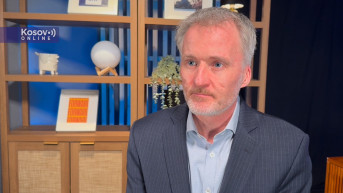
Damian Murphy, Senior Vice President for National Security and International Policy at the Center for American Progress in Washington, assessed that while it may currently be tempting to take advantage of cheap Russian oil on the market, the economies of the Western Balkans should align with European regulations, as, he emphasized, the future of the region lies in Europe.
How should Western Balkan countries respond if U.S. policy allows the purchase of Russian oil, while the EU continues to oppose the easing of sanctions?
That is indeed a very good question, and I think, overall, I genuinely feel quite sorry for the countries in the region, because this is a very confusing time. There have been conflicting messages from Washington over the past year—on the one hand, the lifting of sanctions on (Milorad) Dodik, and then the signing of the Western Balkans Democracy Act, which would ostensibly reintroduce those sanctions; the imposition of sanctions on NIS in Serbia, while at the same time lifting sanctions or granting exemptions in relation to Russia in the context of what is currently happening in Iran.
So I believe this is a very confusing moment for people in the region who are trying to determine what the path forward should be, especially regarding something as sensitive as energy, which can be very costly and can generate serious political challenges. From my perspective, the decisions taken by this administration have been political decisions, which means they can change at any moment. The President could wake up tomorrow and say: we will reimpose sanctions on Russia, or we will not allow this sale to continue, referring to oil currently at sea, while European regulations are embedded in legislation.
Should governments in the region prioritize alignment with EU sanctions policy or follow signals from the U.S. and focus on securing cheaper energy sources?
The law adopted at the European level in January 2026 codifies this. It is on the books. It is not merely a political decision—it is a legal one. And if countries in the region genuinely aspire to EU membership, if that is their ultimate goal, then they should remain focused on that, rather than on short-term gains that could be achieved through the purchase of cheaper Russian oil.
How vulnerable are Western Balkan economies to volatility in global oil prices, particularly in the context of the war in Ukraine and tensions in the Middle East?
I would say they should align with European regulations. The future of the region is in Europe. If they wish to continue gaining favor and aligning with Brussels’ foreign policy priorities, they should adhere to those rules. Again, I understand how difficult this is. It is tempting to see cheap Russian oil on the market right now, given the energy crisis many of these countries are facing, but I believe that the short-term benefits derived from that will only have long-term negative consequences for them.
Could this situation accelerate the need for the Western Balkans to diversify energy sources and reduce dependence both on Russian energy and unstable global markets?
I believe this concerns not only oil but also gas, and this is an area where countries in the region could truly feel the crisis, given that gas is currently unable to pass through the Strait of Hormuz, which is driving up gas prices globally, particularly in Europe. Therefore, I think they will face this crisis in a significant way. Hopefully, we will see progress and developments in the Strait of Hormuz so that it reopens. Until then, I believe prices will remain high and that this will be difficult for countries in the region.
The U.S. Office of Foreign Assets Control has extended the license for the Petroleum Industry of Serbia (NIS) until April 17, allowing it to continue operations despite sanctions. Does this decision signal a more pragmatic approach by Washington to Serbia’s energy security, particularly amid rising global oil prices and instability caused by the conflict in the Middle East?
I think it reflects a policy of instability, doesn’t it? This is a war of choice initiated by the President in Iran. The objectives of the war remain unclear to people here in the United States and around the world, and that uncertainty is reflected in the way these energy decisions are being made. Countries across the world, as they try to respond and plan ahead, are left to rely on the whims of this administration.
Again, the decision to lift sanctions related to NIS is a political decision—one that can be reversed or reconsidered in the future. I would not view these decisions as indicative of any consistent strategy or as providing any form of certainty. They have been quite erratic so far. And frankly, I feel for the ministries of energy across the region that are trying to plan and shape the future, because predicting how this administration will approach these issues is extremely difficult.
Given that the refinery in Pancevo continues to operate and ensure stable supply for Serbia, can the extension of the NIS license be seen as a positive signal for the wider Western Balkan region in terms of energy stability during a turbulent period marked by the conflict in the Middle East? Could this also position Serbia as a key regional energy hub?
I really do not think too much confidence should be placed in this decision. Over the past few weeks since the war in Iran began, the decisions made by the administration, the chaotic manner in which the war’s objectives have been defined, and subsequent actions have demonstrated a lack of consistency and predictability.
If I were an energy minister in the region, I would not engage in any long-term planning beyond April 17, because it is simply impossible to know which direction this administration will take. It is very difficult to see a clear path forward. If there is progress in reopening the Strait of Hormuz and energy resources can return to normal flows, then perhaps we will see some degree of planning and consistency from the administration. But until then, every decision being made is political in nature, and I do not believe that people can place much trust in them.



0 comments