
Petkovska: The free labor market will bring positive changes for all members of the Open Balkan
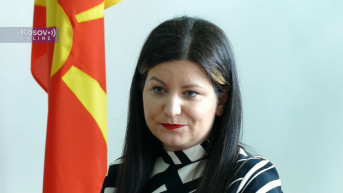
Frosina Velkovska Petkovska, a member of the working group of the Employment Agency for the smooth implementation of the free labor market within the Open Balkan initiative, stated in an interview for Kosovo Online that this initiative would bring positive effects for both workers and employers, as well as in terms of increasing competition, positive effects on the economy, and conditions in the labor market in Serbia, Albania, and North Macedonia.
"Within the Open Balkan initiative, free access to the labor market for citizens of Macedonia, Albania, and Serbia has been enabled. This, as a result of the efforts of these three countries, goes towards further cooperation and towards the free movement of workers in the territory of these three countries. As we have seen, by signing the appropriate protocols, the process of providing conditions for facilitated access to the labor market has been completed, thus achieving the goal set within these three countries, with the initial conclusion of free access to the labor market, primarily facilitating procedures for free movement, i.e., enabling employment between these three states," Petkovska stated.
Furthermore, Petkovska says, this is the main benefit for the citizens of these three countries, towards easier access to employment through the use of electronic services, unlike previous procedures for employing foreigners, which previously involved steps and additional procedures for regulating residency or issuing work permits.
Access to the unified labor market in the "Open Balkan" has been facilitated for almost a month now. What is the interest and how does the system work, are there any difficulties?
When it comes to electronic services, we can say that access to the labor market within the Open Balkan initiative is mostly achieved in two steps. Firstly, a person needs to register on the portal for electronic services in the country of which they are a citizen and request the issuance of an Open Balkan ID number. After obtaining the number, they need to register on the portal for electronic services in the country where they are seeking employment. Therefore, citizens of Serbia and Albania who want to work in Macedonia, first need to register on the uslugi.gov.mk portal to submit a request for access to the labor market. Such a request is initially forwarded to the Ministry of Interior for processing within legal competencies and for issuing a temporary identification number to the foreigner. After this identification number is issued, it is forwarded to the Employment Agency, which is responsible for issuing the certificate for the free labor market, where this identification number is recorded for the foreigner. It is important that the person obtains this certificate through their profile on uslugi.gov.mk.
This certificate confirms that the interested party can be employed and seek employment in a specific country. However, in general, the benefit of this right is realized after obtaining specific employment with an employer. Therefore, since the implementation of this decision began on March 5, at this point, we can only talk about the interest in the issued Open Balkan ID numbers.
It is still too early to analyze the numbers, but what we definitely expect in the future is the issuance of certificates for the free labor market, and in the next phase, employment based on this. As for the functioning of the system in this short period, we can say that the services are available on the uslugi.gov.mk portal and that in the future, depending on the needs, further adaptations can be made.
How many citizens of Serbia and Albania have expressed interest in working in Macedonia and vice versa?
I think it's still too early to talk about analyses and numbers or assess interest in applying for such a labor market. However, it should take at least a certain period of several months to assess interest in this new labor market. This is the period that will help us assess the effect of the measure itself, and then of course, to see the actual numbers of people planning to be employed in one of the neighboring countries. At this point, what we can say is that a total of 2,000 Open Balkan ID numbers have been issued across the three countries, but again, these are just people who have applied and requested this identification number to be issued to them in this initial period of the measure's implementation. As for how many people will seek a certificate or employment in any of the three countries, we will have to wait and see in the coming period. Employment and access for citizens from the three countries have also been implemented in the three countries, but within the regular employment procedures that involve additional steps and checks. The main novelty that comes with the Open Balkan is the simplification of the procedures themselves, and based on this, we expect greater interest.
In recent days, Macedonian media reports indicate that companies in Struga and Kumanovo are expecting workers from border areas of Serbia and Albania. For which sector is there the greatest interest in workers from Serbia and Albania?
Perhaps we will be able to see or assess that in the coming period after such announced employment or the needs expressed by employers are realized. On the other hand, the free movement of workers or the practice of this facilitated access to the labor market may be most logical to implement on a larger scale in these border regions, considering that cross-border labor migration has its additional specificities, but also additional advantages such as proximity to the place of residence.
In any case, regarding more detailed analyses of industries, occupations, and overall figures for utilizing the benefits of the Open Balkan, we will be able to see them in the coming period, waiting for the moment when the first employment will be realized. But what we as an agency can say, based on the data we have from job postings by employers or data from the skills needs survey conducted by the agency as a regular activity every year, is that analyzed by sectors and based on the expressed needs of employers in the private sector, the largest number of expressed needs or expectations for new employment are in the manufacturing industry, wholesale and retail trade, as well as construction, but also in "other sectors" as well. We hope that the benefits of the Open Balkan will be positive for all three countries, both for workers and employers.
Which market is more attractive for Macedonians, the Albanian or the Serbian?
It's difficult to answer this question. Naturally, every country tries to take measures to retain or motivate its workforce to stay in their own country. We know that among other factors, one of the main motives for seeking employment abroad or working in another country is primarily the living and working conditions, as well as the level of wages. In this regard, measures should be designed to be as attractive as possible for job seekers. But what is also important is that in the future, when we analyze the numbers or the effects of the implementation of free access to the labor market, we take into account the characteristics of each of these three countries. This includes the size of each country, the population, of course, the economy, and the characteristics of the labor market, by which characteristics these three countries actually differ from each other. In any case, we expect that the free access to the labor market within the Open Balkan initiative will bring positive effects for both workers and employers, as well as in terms of increasing competition, positive effects on the economy, and conditions in the labor market in all three countries.
comments