
Riker: Kosovo needs a government that can cooperate with the United States
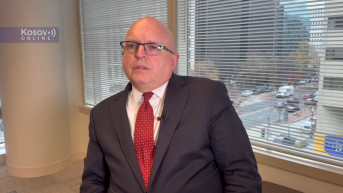
Former U.S. Assistant Secretary of State for European and Eurasian Affairs and former U.S. Ambassador to North Macedonia Philip Reeker stated that Kosovo needs a government capable of cooperating with the United States and willing to implement what has been agreed. Regarding the proceedings before the Specialist Chambers in The Hague against former KLA leaders, he said that the testimony of General Wesley Clark and Ambassador Christopher Hill could be very significant for the defense and will reignite interest in the process.
In an interview for Kosovo Online, Reeker noted that very little has been achieved in the Belgrade–Pristina dialogue over the past ten years and that both sides should make use of the engagement of the EU’s Special Representative for the dialogue, Peter Sorensen.
General Wesley Clark and Ambassador Christopher Hill have testified as defense witnesses in the trial in The Hague. How significant is their participation and what message does it send?
First, I think this is an important reminder that this process before the Specialist Chambers has continued after so many years with very little activity. You have people detained in The Hague as part of this process, and nothing has happened that would bring prominent Americans into focus. This reminds us that two or three decades ago we were heavily engaged in the Balkans and that the story has not yet been concluded, so I think this will rekindle interest in the process. Their participation—their testimony for the defense—I believe could potentially be very significant.
What impact could their testimony have on the overall perception of the trial—both legally and politically?
This is a legal process that is ongoing. I believe their testimony, given that they were high-ranking officials who were deeply involved at the time in what was happening between Serbia and Kosovo during the war, will be seen as an important step. The fact that they were invited and agreed to appear as defense witnesses, I think, will enable the defense to present strong arguments regarding the allegations in the case.
Given their direct involvement during the Kosovo war and in diplomatic negotiations, what insights or context could they bring to the defense of Hashim Thaçi?
As I understand it, the indictment concerns Hashim Thaçi’s command responsibility during that period, and I believe that both General Clark and Ambassador Hill will have deep insights into what was really happening, into the structure of the KLA at that time—before, during, and after the Rambouillet negotiations. That is why I think they will bring strong, fact-based views and may help the process. Looking ahead, I think it is high time for the process to move forward. These individuals are detained, their lives have been put on hold and disrupted. Their families have also been affected by a process that has gone on for so long. Therefore, I hope things will progress more quickly.
What could be the potential impact on the Brussels dialogue between Pristina and Belgrade?
Ten years ago, when I was involved in the Pristina–Belgrade dialogue, it was a process under EU auspices led by High Representative Catherine Ashton, and we made some progress with the Brussels Agreement. More than ten years later, very little progress has been made since one of the EU’s top diplomats, Peter Sorensen, took over. This is an opportunity for both Belgrade and Pristina to try to achieve some progress. Of course, in Pristina there is the problem of lacking a functioning government. They have been unable to form a government for a long time, and that certainly does not help diplomacy. But again, they should take advantage of the opportunity they have with someone like Peter Sorensen, who is so knowledgeable about the region, such a strong professional diplomat, and use this tool to help resolve some of these outstanding issues.
Could this be a moment for stronger U.S. engagement—specifically from the Trump administration—in addressing political instability in Kosovo?
I do not think this is currently at the top of the administration’s agenda, and for good reason. We dealt with these issues more than 25 years ago. As I said, we had strong momentum in the EU-led dialogue, where the United States supported the process. We achieved some progress back in 2013, but nothing truly tangible has happened since then. There are so many other issues in the world that I do not believe the Balkans are at the top of the agenda of the Trump administration.
Kosovo has failed to form a government even after a second attempt, nine months after parliamentary elections, and new elections appear likely. How do you view this?
I think Kosovo and its citizens are losing the opportunity to move forward and have a functional government that can not only address international issues, work on the dialogue, and on Kosovo’s international standing, but also meet the needs of its voters—citizens who deserve a government that will make their lives better, more prosperous, and safer. This long delay in forming a government is, in my view, an unfortunate development for the people of Kosovo. It also gives Belgrade the opportunity to say, “We do not have a partner with whom we can address these issues.” So, it is high time for a government to be formed, and for both sides then to use the good offices of the EU-led dialogue to try to make progress on their outstanding issues.
Implementation of past agreements has faced significant challenges in both Serbia and Kosovo. What should both sides do differently to move forward, and how can the United States help facilitate this process?
It is an EU-led process. It is a process run by the EU. The United States supported it—certainly when I was working on this more than a decade ago, we had an excellent partnership with Catherine Ashton under her leadership. And there was an agreement that both sides accepted, but as you rightly point out, not all of those agreements have been fully implemented. If one side does not implement something, it should seize the opportunity to propose something else, devise better options, and continue talking and negotiating. But that is very difficult to do when you do not have a government capable of officially participating. As I said earlier, this process has been stalled for too long. People across the region—let alone in Kosovo—deserve something better, and they deserve to put these long-standing issues behind them. When you stop and think that more than a quarter century has passed since the Kosovo war, it is time to move on and try again to make progress. As for the United States, we have so many issues on our agenda. We have offered and provided support. We have certainly supported Kosovo. Again, Kosovo needs a government that can cooperate with us and be ready to implement what has been agreed and to try to negotiate or come up with new ideas for the remaining issues.


0 comments