
Ristuccia: KFOR prevented the situation in Banjska from escalating into an even more serious one
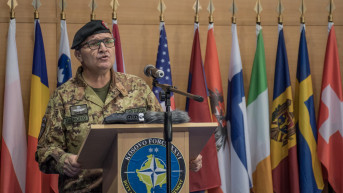
The presence of KFOR troops in the Banjska area prevented events from escalating into an even more serious situation, outgoing KFOR commander Angelo Michele Ristuccia emphasized in an interview with Kosovo Online. He mentioned that he had been in regular contact with all relevant colleagues, including EULEX, representatives of Kosovo institutions and security organizations, as well as with the Chief of the General Staff of the Serbian Armed Forces.
Ristuccia will be replaced by Turkish General Ozkan Ulutas as the head of KFOR, and the handover of duties is scheduled for October 10th. The current KFOR commander still highlights the need for Belgrade and Pristina to return to dialogue.
When asked if KFOR could have done more in Banjska, if similar events could occur in the future, and whether KFOR is involved in the investigations of the events in Banjska, Ristuccia said:
"After the attack on the Kosovo Police in Banjska, the Kosovo Police intervened as the first responders in line with their law enforcement responsibilities. The presence of KFOR troops in that area prevented events from escalating into a more serious situation. I have been in regular contact with all my relevant colleagues, including EULEX, representatives of Kosovo institutions and security organizations, as well as with the Chief of the General Staff of the Serbian Armed Forces."
How do you comment on Belgrade's request for KFOR to take over security in the north?
KFOR remains fully committed to carrying out its mandate impartially based on United Nations Security Council Resolution 1244 from 1999, to maintain a safe and secure environment and freedom of movement for all communities in Kosovo. KFOR does not conduct law enforcement activities, which are the exclusive prerogative of the Kosovo Police, acting as the first responders. These activities are monitored by the European Union Rule of Law Mission in Kosovo (EULEX), as the second responder. KFOR is the third responder. In light of recent events, KFOR has increased its presence and activities in northern Kosovo. We continue to urge Belgrade and Pristina to engage in dialogue mediated by the EU as the only way to address outstanding issues and find solutions that respect the rights of all communities. This is crucial for long-term security in Kosovo and stability in the region.
Do you expect the number of KFOR troops to increase in the coming period?
In response to tensions in late May, in June, we deployed approximately 500 Turkish troops. The Turkish battalion has been replaced by troops from Bulgaria and Greece. In light of recent events in September, KFOR has increased its presence and activities in northern Kosovo, and the North Atlantic Council has authorized the deployment of additional forces to address the situation. Troops have been drawn from NATO's strategic reserve for the Western Balkans. The United Kingdom is deploying additional troops, and further reinforcements from other allies, including Romania, will follow soon. These are prudent steps to ensure that KFOR has the forces, capabilities, and flexibility needed to impartially fulfill its UN mandate to maintain a safe and secure environment and freedom of movement for all people living in Kosovo.
You have repeatedly emphasized that the situation in Kosovo can only be resolved through political dialogue. Do you still believe in that?
Absolutely. Only a political solution can bring lasting peace and stability to the region. Therefore, as I mentioned, NATO and KFOR continue to fully support the dialogue between Belgrade and Pristina mediated by the EU, for the benefit of all communities and future generations.
If KFOR had not been present in Zvecan, would there have been bloodshed between the Kosovo Police and Serbs?
KFOR was present on May 29, 2023, to prevent the escalation of protests that were ongoing in Zvecan. KFOR soldiers were subjected to a violent and entirely unjustified attack, which resulted in the injury of 93 KFOR members, including severely injured Italian and Hungarian colleagues. I thank everyone for their services and wish them a speedy recovery. Thanks to the professionalism demonstrated by our soldiers, it was possible to rescue 15 Kosovo Police officers who were trapped in their vehicles and surrounded by demonstrators. Through the actions of our soldiers, we avoided further escalation. Belgrade and Pristina must behave responsibly and with restraint. Violence risks setting back the entire region. Therefore, KFOR continues to provide the necessary framework for the progress of the dialogue between Belgrade and Pristina, mediated by the EU. This is the only way to ensure lasting peace for the benefit of all people in Kosovo.
What will you remember about your time in Kosovo?
It was an extremely challenging and demanding period in which KFOR had to operate in the context of an ongoing crisis management situation, where multiple events threatened stability in Kosovo and the wider region. Every time a crisis erupted, it required significant military and diplomatic efforts to restore a calmer and more balanced situation. A lot of hard work and tremendous effort were invested, and we faced many difficulties due to a variety of intertwined factors. My soldiers operated with the utmost professionalism and impartiality throughout. I will carry many memories and emotions with me. Among them are the expressions on the faces of the children I met during my school visits. This is a vivid reminder of our commitment to helping create conditions for peace and prosperity for future generations.

0 comments