
Schulte-Borghoff: NALT’s mandate is to support KSF in civil protection; we have no role in their transformation into armed forces
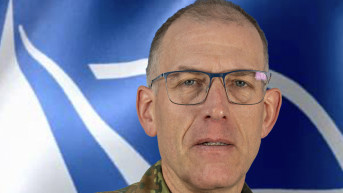
Brigadier General Thomas Schulte-Borghoff, Director of NATO’s Advisory and Liaison Team (NALT), stressed in an interview with Kosovo Online that the team has no role whatsoever in the process of transforming the Kosovo Security Force (KSF) into armed forces and that its mandate is limited to supporting the KSF’s development in line with its original civil-protection mandate. He also commended the KSF for respecting its commitment not to deploy to northern Kosovo without the approval of the KFOR Commander.
Written by: Veljko Nestorovic
According to Brigadier General Thomas Schulte-Borghoff, NATO has a long history of engagement with security organizations in Kosovo, extending well beyond the ten-year anniversary that NALT is marking today.
“NATO supported the dissolution of the Kosovo Protection Corps and the establishment of the Kosovo Security Force (KSF), whose mandate was focused on civil protection. NALT emerged from the merger of two previous NATO missions—one that supported the development of the KSF and another tasked with establishing civilian oversight of the force. Bringing these activities together created a unified approach to NATO support and improved coordination of that support. Our mandate remains the same today as it was ten years ago: to provide support and advice on the development of security institutions in Kosovo, ranging from the establishment of effective democratic oversight to the development of an appropriate force structure,” Brigadier General Thomas Schulte-Borghoff said.
What is NALT’s role in supporting the Kosovo Security Force?
We were established at a time when the KSF’s mandate was limited to assisting civilian authorities in emergency situations. That was before the KSF began its transformation process, which is still ongoing and is aimed at developing territorial defense capabilities. We have no role whatsoever in that process. We therefore continue to provide support in accordance with the KSF’s original mandate, which concerns civil protection.
The KSF has developed significant emergency-response capabilities that have also received international recognition. These capabilities benefit Kosovo and the wider region. The KSF plays an important first-response role in numerous civilian emergencies. We continue to provide advice on developing and maintaining those capabilities. It is important that Kosovo does not lose sight of the importance of emergency-response functions, which serve the interests of all communities.
How does NALT cooperate with KFOR and other international security actors in Kosovo?
NALT and KFOR are tangible demonstrations of NATO’s firm commitment to lasting security in Kosovo. We have separate but interconnected and complementary mandates. We are based at Camp Film City in Pristina, which is also home to KFOR Headquarters, and we work closely with KFOR and coordinate our activities on a daily basis.
KFOR Commander Major General Vergori has his mandate, and I have mine. I also regularly speak with representatives of NATO member states and partner countries present in Kosovo in order to coordinate activities. At the same time, I make the specific framework governing NALT’s activities very clear.
How does NALT assess the current security situation in Kosovo? From your mission’s perspective, what are the greatest security challenges in the period ahead?
The security situation in Kosovo has improved over the past several years and is generally stable. Of course, it is essential that all actors behave constructively, transparently and in good faith so that all communities living in Kosovo can enjoy security.
From my mission’s perspective, I would again emphasize the important role that effective and sustainable KSF emergency-response capabilities can play in maintaining stability. This year alone, we have seen the KSF respond successfully to wildfires and floods.
I also support efforts to ensure that the development of civilian oversight functions keeps pace with the development of the KSF. Institutions in Kosovo, as elsewhere, recognize the importance of effective democratic control over security organizations.
The transformation of the KSF into armed forces is envisaged as a process to be completed by 2028. How does NATO view this process, and what are the limitations of your mandate when it comes to providing support?
NALT has no role whatsoever in the transformation of the KSF. Our mandate is limited to supporting the development of the KSF in accordance with its original civil-protection mandate.
We also monitor the transformation process so that we can provide advice on any potential implications it may have for the KSF’s civil-protection capabilities.
In your assessment, is the KSF developing in accordance with its original civil-protection mandate?
As a civil-protection organization, the KSF is internationally recognized. Its personnel have participated in emergency-response activities throughout the region, thereby contributing to the stability of the Western Balkans.
They have also participated in previous exercises involving KFOR, Kosovo Police and the European Union Rule of Law Mission in Kosovo (EULEX).
For me, preserving these capabilities is crucial. This means continuing to ensure that the right people are in the right positions and that they have the appropriate equipment. That requires careful planning, which is something we are currently working on together with our KSF counterparts.
How important is adequate representation of members of the Serbian community in security institutions, and does NALT provide support in this regard?
It is crucial for every security organization to reflect the composition of the society it serves. This is one of the important foundations for building trust.
NALT supports the KSF’s efforts to develop an inclusive force in which members of all communities are represented. Having the right people means ensuring the broadest possible participation.
My advisory team has a specific task to help security organizations in Kosovo maximize the participation of members of all communities in the KSF. As part of our activities, we therefore regularly engage with representatives of all communities.
The KSF is still not permitted to enter northern Kosovo without the approval of the KFOR Commander.
How do you view this arrangement?
The KSF continues to respect this commitment, and I commend them for doing so. This mechanism works and benefits all communities, including those living in northern Kosovo.
0 comments