
Sentic: Serbian language is one of the two equal official languages in Kosovo
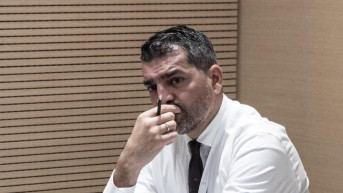
Serbian language is clearly defined as one of the two equal official languages at all levels, and Cyrillic is the official script of the Serbian language, Srdjan Sentic, deputy ombudsman of Kosovo, commenting on the removal of Cyrillic traffic signs in northern Kosovo in said an interview for Kosovo Online.
Sentic emphasizes that changes affecting language rights should be carefully considered, with full respect for both legal frameworks and the cultural and identity aspects of communities in Kosovo.
Regarding the removal of Cyrillic traffic signs in northern Kosovo and the installation of bilingual signs, and whether this violates the Constitution and laws, the deputy ombudsman states that the legal framework related to language rights is defined by the Constitution in Articles 5 and 59, as well as the Language Use Law.
"This law, besides guaranteeing bilingualism, further regulates the official use of languages at various levels of government, adjusting to the demographic structure and allowing other languages to obtain official status or language in official use, in accordance with the percentage of the population at the local level. The Serbian language is clearly defined as one of the two equal official languages at all levels. Cyrillic is the official script of the Serbian language. Therefore, I consider the arbitrary decision to ignore these rules and regulations, without consulting the Office of the Language Commissioner, to be a bad and unproductive practice, which sends an inadequate message and does not respect relevant institutions dealing with language issues," Sentic emphasizes.
According to him, arbitrary changes in script and language policy, without prior consultation with relevant bodies such as the Office of the Language Commissioner, can be understood as a violation of existing legal norms and a disregard for institutional procedures.
"Such actions can not only be interpreted as a violation of Article 59 of the Constitution and the Language Use Law but also as potentially undermining the rights and identity of the Serbian community in Kosovo. Reactions from the international community, including statements from the EU and OSCE ambassadors, emphasize the importance of an institutional approach to addressing language rights issues. The guidelines of the Office of the Language Commissioner should be the basis for all changes regarding language policy, including the placement of traffic signs, to ensure that every action complies with the law and the rights of communities," our interlocutor emphasizes.
He stresses that the importance of language as a key element of national identity cannot be underestimated.
"Language is more than a means of communication; it reflects the culture, history, values, and tradition of people. Therefore, the attitude towards language rights also reflects and extends to the broader attitude towards the communities themselves. In this regard, changes affecting language rights should be carefully considered, with full respect for both legal frameworks and the cultural and identity aspects of communities in Kosovo," Sentic states.
This is not the first time that the Language Use Law has been violated in Kosovo. What can the Ombudsman institution do about this issue?
Non-compliance with language rights in Kosovo is not a new problem and has often been the focus of reports from numerous international and local civil society organizations. The main causes of this issue lie in the lack of political will, resistance within the majority community, and the absence of an effective punitive policy for violations related to language rights. Additionally, technical challenges such as insufficient numbers of qualified translators and proofreaders further exacerbate the situation. Although the Law on the Use of Language is satisfactory in terms of the rights it grants, its implementation in reality remains challenging and often inadequate. There are positive examples showing progress, but they are rare and insufficient.
How important is respecting language rights?
It is crucial that in the future, efforts intensify to ensure effective equality of official languages, in accordance with standards established by the constitution and law. Respecting language rights is crucial for enabling the equal participation of all communities in public affairs, which is the foundation of a democratic and multicultural society. The Ombudsman institution plays a significant role in promoting and protecting these rights, contributing to the construction of a more inclusive and fairer society. The Ombudsman institution pays special attention to issues related to the right to language use. An agreement has been reached with the Office of the Language Commissioner on joint activities aimed at promoting language rights, including coordinated visits to institutions at the central and local levels to assess the factual situation and formulate recommendations. Although the Office of the Language Commissioner is the primary body for filing complaints and resolving language use issues, the Ombudsman institution intervenes after the Office encounters obstacles from institutions that refuse to adhere to their guidelines or when they do not receive a response to their recommendations or requests. In such cases, the Ombudsman institution takes steps or initiates proceedings against institutions that do not cooperate or do not respond positively to the requests of the primary instance. It is also important to note that the Ombudsman institution has sent multiple recommendations to institutions at all levels to ensure the implementation of their constitutional and legal obligations regarding language rights. Last December, ex-officio reports of the Ombudsman institution addressing the topic of discrimination on protected grounds, including language use, were published. These reports contain recommendations regarding improving the quality of translations of legal documents and addressing language inconsistencies, especially in the Serbian language. The Ombudsman institution plans to publish a report on an ex-officio basis this year regarding the right to language use, and undoubtedly, all current issues related to violations of language use rights and discrimination on this issue will be addressed.
We have a situation where Albanian place names on new signs in northern Kosovo were soon crossed out and cleaned, but the same is not happening in areas where signs in Serbian are crossed out. What does this show us?
The crossing out of Albanian place names on newly installed signs in northern Kosovo, which were soon after cleaned, in contrast to situations where Serbian inscriptions in other parts of Kosovo remain crossed out, raises concerns and is contradictory to the principles of equality and non-discrimination. For the Ombudsman Institution, as well as for me personally, such behavior is absolutely unacceptable. It is crucial to maintain the principle that there should be no discrimination or selective application of rules and laws regulating the placement of traffic signs, according to the instructions of the Office of the Language Commissioner. If signs in one or both languages are crossed out, the reaction must be swift and non-discriminatory. Any other approach clearly indicates discriminatory practice by the competent institutions.
After meeting with Abbot Janjic, you commented on the decision to return the land to the Visoki Decani Monastery. Everyone agrees that this decision is good and should have happened long ago. How do you comment on Pristina's loud explanations that they did it because of membership in the Council of Europe?
Firstly, it should be emphasized that the Constitutional Court functions as an independent institution, whose decisions are final, binding, and above all pressures or political calculations. Ignoring or delaying the implementation of Constitutional Court judgments not only constitutes a criminal offense but also fundamentally undermines the foundations of the rule of law. Personally, I have no doubt that the 2016 judgment is fair, just, and the only correct one and it should have been implemented immediately after it was made without delay. I have emphasized this stance on several occasions both publicly and in all meetings with officials of Kosovo institutions and the international community, which shared the same stance.
How much does bringing a Constitutional Court judgment by individuals constitute interference in the work of judicial institutions?
However, to better understand the Constitutional Court's judgment, it's important to take a few steps back. As far back as 2002, the municipal court in Decani ruled in favor of social enterprises, ordering the transfer of 24 hectares of land from the Visoki Decani Monastery to these enterprises. However, in 2005, the District Court annulled this ruling of the municipal court. Then, in 2008, the Special Representative of the UN Secretary-General signed an executive decision confirming the monastery's right to undisturbed possession of the disputed land and ordered its re-registration in the cadaster under the monastery's name. I know this firsthand, as I was a part of the Special Representative's cabinet at the time. However, after the signing of this decision, the Kosovo Cadastre Agency refused to carry out the transfer. We have a series of decisions from all relevant judicial instances that were in favor of the Visoki Decani Monastery, dating from 2005 up to the Constitutional Court's judgment. This includes numerous decisions of the Supreme Court, as well as its appellate panels, which clearly affirmed the finality and binding nature of these decisions. It's important to emphasize that this is the principle of res judicata, meaning that these decisions are binding on all parties and all courts and cannot be called into question. The Constitutional Court's judgment was unequivocal and only confirmed the decisions of all previous instances, including the District Court, the Special Representative of the Secretary-General, the Supreme Court, and its appellate panels. This is not just about one judgment but a continuous series of decisions in favor of the Visoki Decani Monastery, made by various judicial bodies. Questioning the Constitutional Court's judgment constitutes unacceptable interference in the work of all judicial institutions. Claims by certain officials that the implementation of this judgment is motivated by foreign policy ambitions, rather than a commitment to the rule of law, justice, legal certainty, and respect for basic principles of democracy and human rights, cast a shadow over the authenticity of that process and indicate the need for a fundamental reassessment of the institutions' relationship with judicial decisions, as well as their relationship with the Serbian Orthodox Church and its faithful. This stance not only reflects the state of affairs regarding a specific judicial decision but also serves as a reflection of broader issues concerning the rule of law, legal certainty, and respect for human rights within society.



comments