
Shabiu: Over 2,900 cases of violence against women reported in Kosovo last year
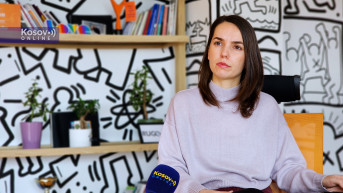
During the past year, more than 2,900 cases of violence against women were reported in Kosovo, said Marigona Shabiu, Executive Director of the Youth Initiative for Human Rights in Kosovo (YIHR), in an interview for Kosovo Online. She also warned that femicide is on the rise, noting that since 2010, a total of 59 women have been killed in Kosovo.
Shabiu emphasized that violence against women is one of the biggest problems Kosovo's society faces and that women are exposed to different types of violence.
She pointed out that institutions have repeatedly failed when it comes to addressing violence against women, but still encourages women to report any form of abuse.
What is the position of women in Kosovo? How prevalent is violence against women?
Violence against women is one of the biggest problems facing Kosovo’s society. It has been a constant issue for many years. Although there have been certain improvements in addressing violence, both at the community level and through the regulation of different laws and policies, the problem remains widespread and persistent, unfortunately. Year after year, we see an increasing number of reported cases of violence by women, typically committed by men — partners, fathers, or brothers. Just last year, for example, over 2,900 cases were reported to the Kosovo Police, which is a considerable increase compared to the previous year.
Even though this is a significant number, we believe there are even more cases of violence that go unreported due to stigma, distrust in security institutions in Kosovo, especially among non-majority communities. Moreover, violence is still often normalized, considered a private family matter rather than something that should be reported and addressed, so that all perpetrators can be properly punished.
Sadly, we have had many cases that ended tragically for women. Recently, there was a case of femicide — a woman killed by a man. From 2010 until now, we have recorded 59 cases where women were killed by their male partners or other men, such as brothers or fathers. There have also been cases where police and other institutions failed in their duties, and women were killed despite being under police protection. Some cases were resolved by the Constitutional Court, stating that the state violated the women's right to life because the institutions responsible for preventing these crimes failed to do their job, making the state accountable.
A lot of work is being done, primarily by civil society organizations, to raise awareness on this issue, especially among communities and younger generations. Efforts are being made to combat violence in schools. However, even with the rising number of cases reported to the police, violence is still seen as a way to resolve conflicts. This is the result of patriarchal values that are deeply rooted in Kosovo society, where women are often objectified by their male partners. Women are perceived as weaker, and are beaten if they fail to comply with or meet the demands of their husbands or partners.
This is the reality, and there is much work to be done for women to feel like equal members of society and to have equal social, economic, and political standing so they are not exposed to violence from various sources.
What types of violence are women exposed to?
Women are exposed to all forms of violence. And this is very important because when we think of violence, we often think only of physical violence. But physical violence is just one type. There is also economic violence and psychological violence, which is often not talked about or recognized as a problem. However, both economic and psychological violence are punishable offenses under Kosovo’s Criminal Code.
So women are faced with all these types of violence in different ways. The most frequently reported, though, is physical violence. It is crucial for women, men, and everyone in our society to be aware that no one has the right to commit any kind of violence — physical, psychological, economic, or any other — against another person. It’s important to understand that psychological violence against women or any person is also a crime and must be punished. It should definitely be reported to the police.
Of course, there are measures that the police will take, and then the prosecution and courts will decide on the case. Previously, we mentioned the lack of trust in institutions, and this happens because in many cases, according to women, the police do not handle the cases professionally or seriously enough. There are also issues with maintaining confidentiality, and even when cases move to prosecution and court, the decisions are often not based properly on the Criminal Code. Perpetrators usually receive very light sentences or just financial fines. We have seen many cases of domestic violence where offenders received very lenient punishments, and in some tragic cases where women were killed by their male partners, the women had previously reported violence to the police, but due to institutional negligence, the cases ended fatally.
Still, this does not mean that women should not report violence. Women must absolutely report it, because I believe that the more violence is reported, both in private and public spaces, the more future cases and violence overall can be prevented.
Is there a specific profile of women who are victims of violence?
Anyone can be a victim of violence. There was an idea that women in rural areas are more exposed to violence, and that is somewhat true because of the very low social, political, and economic status of women in villages. However, violence can happen to anyone, and we all need to be aware, empowered, and ready to seek support — whether from family, the broader community, friends, or safety institutions — when we recognize patterns of violence coming from our partners, and we should truly report these cases and seek help and support.
So, definitely, I believe there is no specific profile, but there are greater numbers of women in lower economic positions who are exposed to violence. There’s also the issue of women lacking economic independence — they may not have jobs, income, property, or inheritance from their parents or family. Many victims, having nowhere to go, do not report cases of violence, or when they do, they often return to their partners because they simply have no means to support themselves or their children.
Thus, economic empowerment is also a very important factor that needs to be addressed for women who have survived domestic violence. But in general, women should be supported in becoming economically independent so that they are not exposed to violence and so they have the foundation to be free, to be equal, and to have an equal position in society compared to their male partners.
What are the penalties for perpetrators?
The Criminal Code prescribes very high prison sentences for perpetrators, especially for those who commit murder — the highest penalty can be life imprisonment. We have had several cases where those who killed their partners are now serving life sentences. Also, for any type of violence — physical or psychological — one can be imprisoned for years. So, according to the Criminal Code, the penalties are indeed very strict.
However, when it comes to the courts... In many cases, sentences have been lower than what the Criminal Code prescribes, but then civil society organizations and activists have followed these cases to expose judges who were issuing sentences lower than what the law stipulates.
That led, in a way, to community mobilization to oppose these lenient sentences. In recent years, we now have more severe penalties for perpetrators, which is a good thing because we believe that stricter punishments can serve as a lesson to other would-be offenders. So, it’s like a prevention mechanism. Of course, it depends on the type of crime, the type of violence, and ultimately, the courts decide.
Femicide has increased in Kosovo. What do the numbers show?
Yes, femicide has increased. The numbers have been rising year after year because every year we have women who are murdered. As activists, we are calling on public institutions in Kosovo to treat this phenomenon as an urgent matter and for the Government of Kosovo to truly take the necessary steps to prevent future cases of femicide, to prevent gender-based violence, and to prevent domestic violence.
It’s very sad — Kosovo is still a very patriarchal society, like the rest of the region, where this type of violence is still widely accepted and normalized. So, it is very important for Kosovo to address this with the greatest urgency and seriousness. The Ministry of Justice has done quite a bit on this matter over the past four years under Kurti’s government, but it is still not enough. There seem to be many actors and institutions that need to strengthen their capacities and raise their professionalism to address this issue with the highest priority.
What was the purpose of the forum "Joint Strategies for Ending Femicide" held in Pristina?
We believe that violence is truly widespread across all communities in Kosovo. It is a problem faced by women from all communities — Serbian, Albanian, Roma, Egyptian, Ashkali — and we wanted to bring together activists from different communities, organizations working with various communities in Kosovo, institutions, public institutions, and the media to discuss this issue and truly try to come up with strategies and recommendations on how we can prevent gender-based violence, domestic violence, and ultimately, femicide.
It was a very good forum where we had the opportunity to discuss and give recommendations. But what was most important was to increase interethnic solidarity and the need and urgency for activists, especially from the Albanian and Serbian communities in Kosovo, to come together and support each other in addressing this issue.
We know that, due to the security situation and the political situation, Kosovo Serb women face many more difficulties and discrimination when it comes to reporting their cases. There is either a lack of trust, a lack of police officers from the Serbian community in Kosovo, or the fact that they do not have access to their mother tongue when reporting their cases. All of this is an issue, and we believe that Albanian activists could really provide greater support to our fellow activists to better support the community, to work more with the community.
We truly want to show that we are here for each other, that we support one another, because regardless of ethnic affiliation, we can find common ground where we can work together. Therefore, I believe this is very important for strengthening solidarity among activists from the Albanian and Serbian communities and for working together to prevent violence, as well as to support survivors and victims of domestic violence from all ethnic groups.


comments