
Macanovic: There are no official data on femicide in the region, it is concerning that women do not report violence
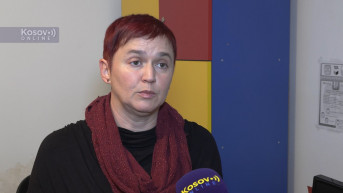
Vanja Macanovic from the Belgrade Autonomous Women's Center says that there are no official data on femicide, both for Serbia and the entire Western Balkans region, but a similar situation exists in other parts of the world.
"The issue of femicide is a global, worldwide problem, the solution of which depends on the states only in terms of how successful they have been in eradicating what is called traditional values, which is why femicide happens. Why certain men feel entitled to kill a woman or a child, and that is because of the belief that they are the property of a man. Then they believe that a woman cannot decide to leave an abuser or get divorced. This comes from a serious traditionalism that varies in different countries", Macanovic stated for Kosovo Online, adding that mostly women's organizations collected data on femicide, and in that case, the number of femicides was observed in relation to the population.
"In Italy, for example, 106 women have been killed so far this year, but there are ten times more inhabitants there than in Serbia. That is the serious difference that shows we have three times more killed women when looking at the number of inhabitants. However many mistakes may happen there, there are fewer of them. As an organization, we conducted research with data for 2020 and 2021, and according to that, Serbia, unfortunately, leads in the number of killed women, followed by Albania, then Bosnia, Croatia, Macedonia, and finally Montenegro", Macanovic says.
She notes that no new research has been conducted in the meantime.
"We currently do not have data on the number of femicides from other countries for the year 2023, but what the data in Serbia show us is that we have had 28 cases of femicides so far. When we compare this to 2021, which ended with 20 cases of femicide, for us, this is a serious increase. We monitor how much violence against women was previously reported in these cases, whether women sought help from institutions, and whether institutions made a mistake and did not protect them, which we had four cases of this year. In other cases, practically, women did not turn to institutions for help and support, even though it was clear from everything that could be read in the media that their surroundings, family, and close ones knew that the woman was living in violence, but they were not encouraged to report it. This is a worrying fact for us that women in Serbia have lost confidence in reporting violence to institutions. It is worrying because we in women's organizations are losing confidence that women's lives will be protected when they report violence to institutions", Macanovic says, explaining that in four cases that ended tragically, individual responsibility was lacking due to the wrong assessment by professionals from the relevant institutions.
Therefore, she emphasizes that a global initiative has been launched to establish a national body called "Femicide Watch" to monitor cases of femicide. In this way, she explains, much more concrete data could be obtained than those offered by official statistics, which always show a smaller number of cases of violence against women than those reported by NGOs collecting information from the media or citizens.
"State statistics do not count cases committed by perpetrators who have committed suicide. This does not enter femicide statistics because you have a perpetrator who has killed himself, and our criminal offenses are recorded according to the perpetrator. When you don't have a living perpetrator, you basically don't have that offense. This year, we had some cases that wouldn't even enter the criminal offense of murder or aggravated murder. A few days ago, news was published that a 90-year-old woman died from severe injuries after an attempted rape, as determined by the higher public prosecutor in Pancevo. In fact, the perpetrator is prosecuted for rape that ended in a fatal outcome. This has entered our femicide statistics, but you won't find it in the criminal offenses of murder or aggravated murder", Macanovic says.
Commenting on existing legal provisions that sanction this type of crime, Macanovic believes that the certainty of punishment is much more important for reducing femicide than increasing penalties.
"What is the best prevention when it comes to any form of violence against women is the certainty of punishment. Not how severe the punishment will be, but that those who are perpetrators of these crimes know that they will be held accountable for their actions and will face punishment. Unfortunately, we see that this is not the case in Serbia, and we have perpetrators who receive very lenient sentences. The problem is not lenient sentences; the problem is that there is no supervision over them. For the criminal offense of domestic violence, we have a conditional sentence imposed in 70 percent of cases. This conditional sentence has no control. Then women tell us, 'Why did I go through that process that lasted three or four years for him to get a conditional sentence that no one monitors, and the situation remains the same?'" Macanovic says.
She emphasizes that when proceedings are initiated due to violence against women, or when physical violence stops, other forms of violence, especially psychological violence, which is much harder to prove, come into play.
"In some other cases, you can see that even in sexual offenses, the penalties are sometimes so minimal. If we have a monetary fine for the criminal offense of prohibited sexual acts, then it is clear why we have a large number of perpetrators of more serious sexual offenses. Some criminal offenses are still missing, such as revenge porn. So, not just the severity of the penalty, but the certainty of punishment should discourage perpetrators", Macanovic explains.



0 comments