
Stoilkovic: Headquarters of the "Greater Albania" project is in Pristina, not Tirana
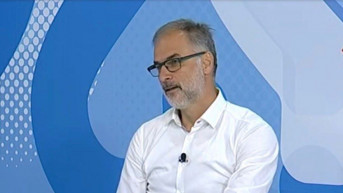
Ivan Stoilkovic, President of the Democratic Party of Serbs and the sole Serbian representative in the Assembly of North Macedonia believes that the visit of Kosovo's Prime Minister Albin Kurti to North Macedonia has only confirmed that the headquarters of the "Greater Albania" project is in Pristina, not Tirana, that he has supporters in North Macedonia as well, that their numbers are substantial, and that Macedonian state institutions can no longer turn a blind eye to this situation for the sake of "domestic peace."
Stoilkovic further states in an interview with "Novosti" that the scenarios seen during the violent separation of Kosovo from Serbia, with the endorsement of parts of the international community, are repeating themselves - this is indisputable.
"The only question is the role of the current international community, without whose support, whether explicit or tacit, this project could not have existed, let alone survived for so long," Stoilkovic says.
Why are both the EU and NATO silent about all this?
Because Kurti, thankfully, has exposed the hypocrisy of the EU and NATO's policies towards the Western Balkan countries like never before. Not just hypocrisy, but there's solidarity within EU and NATO administrations to never question their decisions, even when time proves them to be completely wrong and deeply unjust. From the moment these decisions are made, EU officials do everything to present them as the only correct ones, most cunningly pressing legally elected representatives of the people in candidate countries for EU membership to "align" with them. Thus, only those Balkan politicians who "align" are considered "desirable," with little concern for their capacity - which is mostly reduced to mere sycophancy toward the aforementioned administration. This practice, established in certain countries like North Macedonia, leads to the appointment of unqualified and incompetent personnel, massive corruption, unprecedented animosity of the people toward their state leadership, and a sense of hopelessness that drives the most capable young individuals away - especially those who could drive progress. With such an attitude, the EU has exposed North Macedonia to the predation of its neighbors, turning it into prey in a relentless hunt, where so-called Kosovo and Bulgaria compete to wrest more sovereignty and territory from the agonizing prey. Meanwhile, the EU continues to play deaf, completely disregarding the desperate pleas of its victim. The EU remains brutally deaf to the arguments put forth by the Macedonian side in the dispute with Bulgaria, even though there is no other dignified way to resolve this issue until these arguments are acknowledged.
Why do you think Kurti chose this particular moment and place to once again promote a dangerous project that threatens the entire region?
Kurti doesn't have a say in this matter; he was sent to do this a few days before the scheduled session of the Macedonian Assembly regarding constitutional changes that would introduce Bulgarians into the preamble as a constituent nation. Since numerous emissaries from the international community failed to persuade the patriotic Macedonian opposition to commit political suicide both for their country and themselves, they had to resort to intimidation of both the Macedonian and Serbian people here. This gives us an alibi in front of the voter base to make that "difficult decision," effectively absolving the current government not only from this but also from all the disastrous moves that have brought the state to the brink of collapse. Let's be clear, this is crucially necessary for Kurti in order to conclude his career as a bad actor in the international theater of the "state of Kosovo," crowned as a battle-hardened fighter for the Albanian cause. This is why Demaci was chosen, to make the victim more sacrosanct.
How does the government in North Macedonia, which has often been lenient toward Kurti's actions, interpret his call to Skopje to get closer to Pristina, Albania, and Bulgaria, and distance itself from Serbia?
The backbone of the current government in North Macedonia consists of Albanians, without whom it would collapse immediately. Therefore, expecting any kind of reaction from the Macedonian authorities is futile. However, governments come and go; in the end, the people have their say. The stance of the Macedonian people toward Serbs and Serbia is unequivocal and more positive than ever. As a longtime representative of Serbs in North Macedonia's Assembly, I am immensely pleased that the Serbian people in Serbia, through legitimate means such as elections, have ousted various global manipulators and cronies from Boris Tadic's quisling administration who had begun to meddle in Macedonia as well. They established parallel "Serbian" associations and even parties here, some of which tied Serbian flags alongside the flags of those who just a few days ago were hoisting "Greater Albania" flags. The current Serbian Government, the president, and the Serbian Orthodox Church are all working to assist the Macedonian people in surviving these undoubtedly challenging times. The Macedonian people and history will surely know how to appreciate that.
How are Serbs living in North Macedonia, and is there a chance of increasing the number of representatives in the Assembly?
The position of Serbs in Macedonia is regulated by the Constitution, with fundamental principles in place. Now, we need to build upon that foundation, requiring personnel, resources, and much broader collaboration with institutions from Serbia, primarily in the fields of culture, education, and regional initiatives. Progress is already underway, and the results are becoming increasingly evident. By their numbers, Serbs are the most educated ethnic group in Macedonia, and increasing our presence not only in the Assembly but also in all levels of government, both locally and nationally, will be mutually beneficial.


0 comments