
Ulutas: Optimizing KFOR is not a withdrawal, we remain ready to increase our presence in Kosovo
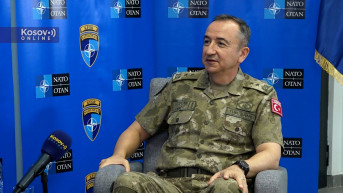
KFOR Commander Major General Ozkan Ulutas said in an exclusive interview with Kosovo Online that KFOR optimization does not constitute a transfer of KFOR’s mandate or responsibilities to the Kosovo Police, nor does it represent a withdrawal or reduction of NATO’s commitments to Kosovo. He emphasized that KFOR retains its security mandate and will continue to implement it fully and impartially, taking into account the concerns of all communities in Kosovo, including the Serb community.
By: Veljko Nestorovic
Ulutas said that NATO has supported peace and stability in the Western Balkans since the 1990s, and that KFOR is a tangible demonstration of the Alliance’s efforts in this regard. He added that since 1999, KFOR has continuously adjusted its posture and force configuration to ensure that the mission remains fit for purpose, and that the current optimization of KFOR should be understood in this context. He said that, according to NATO’s assessment, the security situation in Kosovo, despite tensions and violence during 2023, has remained generally stable, which is why the Alliance suspended the deployment of reserve forces in January and began gradually adjusting KFOR’s composition and posture.
The KFOR commander further noted that this process does not represent a disengagement or reduction of NATO’s commitments to Kosovo and the protection of its communities.
“On the contrary, this is a process that will allow NATO troops to redeploy and strengthen their presence in areas where they are most needed. KFOR optimization is being implemented gradually and transparently, in close coordination with all relevant stakeholders. It is conditions-based, and it is reversible should security developments warrant it. KFOR will remain a steadfast guarantor of stability by continuing to contribute to a safe and secure environment for all people living in Kosovo, and freedom of movement, in accordance with its longstanding United Nations mandate. It does so impartially and in close coordination with the Kosovo Police and the European Union Rule of Law Mission in Kosovo (EULEX), in their respective roles as security responders. Overall, KFOR will remain appropriately staffed, equipped, trained, and organized to implement its mandate. It will retain the capabilities, readiness, and flexibility required to address a range of security scenarios,” he said.
Why did KFOR assess that the security situation is now sufficiently stable for it to withdraw from the main bridge over the Ibar River and involve the Kosovo Police in securing Visoki Decani Monastery, given that these issues continue to cause serious political tensions?
The gradual transition of KFOR’s permanent presence at the Ibar bridge and the integration of the Kosovo Police in the KFOR security architecture at the Visoki Decani Monastery are part of the wider optimization process, which I have just explained. Regarding the Ibar bridge, the transition of KFOR’s permanent presence is conditions-based and closely coordinated with the Kosovo Police, EULEX and other relevant stakeholders. KFOR will continue to maintain a visible presence in North and South Mitrovica and throughout northern Kosovo.
During the course of its mandate, KFOR has successfully handed over security tasks related to other protected religious sites to institutions in Kosovo. The integration of Kosovo Police in KFOR’s security architecture at Visoki Decani Monastery is, again, a gradual, and conditions-based process. It is being closely coordinated with representatives of the Serbian Orthodox Church, institutions in Kosovo, the Kosovo Police, and EULEX. KFOR personnel remain well positioned to respond to relevant security developments affecting the monastery and surrounding communities. KFOR’s commitment to the security of Visoki Decani Monastery and the safety of the surrounding communities is steadfast. Ultimately, as with other cultural and religious properties previously guarded by KFOR, a total withdrawal of KFOR personnel from Visoki Decani Monastery is a decision made by the North Atlantic Council.
Recently, there have been several incidents in which Serbs reported attacks, threats or pressure from Kosovo institutions, as well as the latest case involving the beating of Raskovic, for which the Police Inspectorate of Kosovo recommended the suspension of two Kosovo police officers. Does KFOR follow these specific cases?
KFOR follows every incident that may have an impact on a safe and secure environment for all communities in Kosovo. Law enforcement is not part of KFOR’s mandate. However, KFOR continues to cooperate closely with security organizations in Kosovo, including the Kosovo Police, in accordance with the highest operational standards and the principle of fair and equal treatment of all communities. The Kosovo Police is the lawful local law enforcement institution. Its institutional origins derive from the policy framework established under the United Nations Mission in Kosovo, in accordance with United Nations Security Council Resolution 1244 of 1999. Its capabilities and responsibilities developed within this framework, and today it acts as the first security responder for civil law enforcement and public safety.
This role predates the current KFOR optimization process, which does not constitute a transfer of KFOR’s mandate or responsibilities to the Kosovo Police. KFOR retains its separate security mandate under United Nations Security Council Resolution 1244 of 1999 and will continue to implement its longstanding mandate fully and impartially. KFOR maintains a robust and visible presence in northern Kosovo, for the benefit of all communities, including the Serb community. KFOR’s Liaison and Monitoring Teams also continue their daily activities throughout Kosovo through regular engagements with all local communities. This helps ensure that KFOR remains well placed to respond to local security needs, in accordance with its longstanding UN mandate.
The investigation of offenses, collection of evidence, disciplinary decisions, and possible suspensions fall within the responsibilities of the competent authorities, including relevant investigative and judicial bodies. Should an incident create a significant security threat, KFOR is prepared to act in accordance with its mandate. For operational and procedural reasons, we do not comment on the details of individual cases or the authorities responsible for investigations.
How do you assess the security situation in Kosovo from the perspective of the Serb community, which often says that it does not feel sufficiently safe?
Security is not measured only by general indicators. It is also measured by the confidence people have in their protection and in their ability to live, work, and move freely. KFOR’s commitment to the security of all people living in Kosovo is steadfast, as attested by the continued and visible presence of our personnel on the ground, including regular patrols, observation posts, and also engagement with local communities. As always, our daily activities will be conducted while taking into consideration the needs and concerns of all communities.
We take seriously the concerns expressed by the Kosovo Serb community, just as we take seriously the concerns of all other communities. The fact that the overall situation has improved does not mean that every person already feels sufficiently secure, nor that incidents cannot occur, as they do everywhere in the world. We maintain a robust and visible presence throughout Kosovo, particularly in northern Kosovo, and conduct daily liaison and monitoring activities with local communities. Our aim is to understand local communities' concerns directly. KFOR’s mandate is to contribute to a safe and secure environment for all people living in Kosovo, impartially and without favoring one institution or community over another.
While KFOR continues to provide important military contributions, the path to lasting stability is political. That is why NATO continues to fully support the EU-facilitated dialogue between Belgrade and Pristina as a framework for resolving all pending issues, with respect for the rights of all communities.
How does KFOR respond when conflicts or tensions arise between Kosovo institutions and the Serb community, and is there a clear line between maintaining public order and protecting the rights and security of the local population?
KFOR applies a clear distinction between the roles of the respective security responders. Under the established security responder framework, the Kosovo Police is the first security responder, EULEX is the second responder, and KFOR is the third responder. KFOR does not replace the Kosovo Police. Our role is to contribute to a safe and secure environment for all communities in Kosovo, in accordance with our longstanding United Nations mandate. We will continue to implement our mandate at all times, fully and impartially. We expect all institutions to act professionally, proportionately, transparently, and in good faith. At the same time, we call on all parties to avoid unilateral and escalatory actions that could undermine security and to use the EU-facilitated dialogue to address outstanding political issues.
As I have consistently said, the path to lasting security is political, not military. KFOR’s presence creates space for political dialogue to move forward. That is why we continue to fully support the EU-facilitated dialogue between Belgrade and Pristina as a framework for resolving all outstanding issues, with full respect for the rights of all communities.
The Serb community often expresses concern about the presence and activities of the Kosovo Police and other security structures in the north. How does KFOR assess their activities, and are there situations in which it believes their actions could further undermine stability?
KFOR maintains close coordination with the Kosovo Police and EULEX, in accordance with their respective roles as security responders, and KFOR continues to monitor developments across Kosovo, including northern Kosovo. The Kosovo Police is independent of KFOR and operates throughout Kosovo without KFOR’s prior approval. Nevertheless, KFOR expects timely and substantive coordination regarding activities that could affect the security environment or regional stability. KFOR remains vigilant and maintains a robust and visible presence all across Kosovo through regular patrols, observation posts, and engagement with all communities.
What would you say today to Serbs living in Kosovo who feel that their security and future are uncertain - can KFOR guarantee that the KFOR optimization process will not lead to a reduction in the level of security in areas where Serbs live?
KFOR respects the concerns of all communities in Kosovo, including the Serb community. This principle informs all our daily activities. This is a point I always emphasize at my regular meetings with all my counterparts. The ongoing process to optimize KFOR is a well-calculated, considered, and gradual adjustment of KFOR’s size, composition, and posture, based on continuous assessments of the security environment and operational requirements.
KFOR will remain appropriately staffed, equipped, trained, and organized to implement its mandate; it will maintain and retain the necessary responsive capabilities, readiness, and flexibility, and it will continue to maintain a visible and mobile presence in northern Kosovo; and it will modify, pause, or reverse its adjustments if developments require it. NATO also retains the ability to reinforce KFOR if developments affecting security in Kosovo or regional stability make this necessary. KFOR will continue to communicate and cooperate closely with all our counterparts, including representatives of the Serb community and the Serbian Armed Forces, the Kosovo Police, EULEX, institutions in Kosovo, and the international community, for the benefit of lasting security for all people living in Kosovo, and for the regional stability.

0 comments