
Zukorlic: We do not have a Bosniak National Council in Kosovo that we have in Serbia
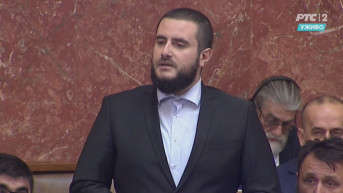
The president of the Justice and Reconciliation Party, Usame Zukorlic, says that the position of Bosniaks in Serbia is better than it was ten years ago, that his party wants an even greater level of rights for Bosniaks, but that he does not think that Pristina is the place where the issue should be resolved.
In an interview for Kosovo Online, Zukorlic states that the Justice and Reconciliation Party does not want to interfere in the Serbian-Albanian conflict in that way and that it supports efforts to reach a justice-based agreement.
How do you assess the position of Bosniaks in Serbia?
It is better than it was ten years ago, but we believe that it can improve even more in the next ten years. Proportional national representation in public institutions is currently the most problematic issue that needs to be resolved.
The president of the Party of Democratic Action of Sandzak, Sulejman Ugljanin, asked the president of Serbia, as well as international factors, that the Bosniaks in Serbia get the same rights that are demanded for the Serbs in Kosovo; do you agree with that request, and are there any parallels between the positions of the Serbs in Kosovo and the Bosniaks in central Serbia?
No. We demand that Bosniaks in Serbia have the same rights as Serbs in Serbia. We want an even greater degree of rights for Bosniaks living in Serbia. We are the autochthonous constituent people of this country. We want our people not to be treated any differently when we ask for the rights to more serious political participation in public life. We stand for decentralization and reform in the area of regionalization. We view Sandzak, where the majority of Bosniaks live, as a place that brings people and countries together.
How do you view the idea of the Community of Bosniak Municipalities in Kosovo, and what do you think about the position of Bosniaks in Kosovo?
I heard about this idea from some of the political representatives of Kosovo Bosniaks. The idea is ambitious; however, the problem is that Bosniaks in Kosovo do not have any municipality, whereas Mamusha Municipality has about 5,000 Kosovo Turks on 1,000 hectares. If Mamusha could get municipality status, Zupa, Gora, and even Vitomirica could get it too. In Kosovo, we still do not have a solution based on the Bosniak National Council model that we have in Serbia, Montenegro, and Croatia.
At the end of last year, an agreement was signed between Sulejman Ugljanin's Party of Democratic Action (SDA) and your party. How is that cooperation progressing, and in what areas?
That cooperation takes place within the framework of the Bosniak National Council. Cooperation is at an appropriate level. Any party with councilors in a municipality, legitimate and legal representatives of the people, no matter how politically different, can sit down and decide on program points that can be agreed upon and implemented on the ground for the benefit of the people.
Ugljanin was at a meeting in Pristina with Albin Kurti, where the reciprocity of minority rights was discussed, but you were not. Do you think that Pristina is the place for discussions about the rights of Bosniaks in Serbia?
We do not think that Pristina is the place for the rights of Bosniaks in Serbia. As the Justice and Reconciliation Party, we do not want to interfere in the Serbian-Albanian conflict in that way. We support efforts to reach an agreement. We would like for a justice-based agreement to be reached, and for the conditions for reconciliation to be created. We get involved and raise our voices when it comes to the rights of Kosovo Bosniaks.


0 comments