
Adem Demaci - the "armed prophet" of the Albanian national movement in Kosovo (10)
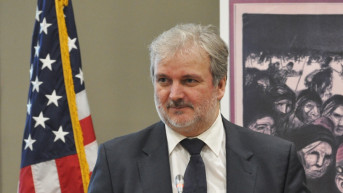
Writing for Kosovo Online: Dragan Bisenic, a journalist
Free in Belgrade as in Pristina
After the end of the war in Kosovo, Demaci criticized the Albanians for their treatment of members of minority communities, particularly highlighting the killings of the Serbs. Later, he called on the Serbs to "take the risk to enjoy the freedom of movement", using the period from 1998 to 1999 as an example when he freely roamed the streets of Pristina despite the danger to his life.
Demaci always had a reconciliatory rhetoric but a radical stance. Besides, he felt like he was on the winning side, and, as Churchill advised, a victor should be magnanimous. Unlike other Kosovo Albanians, he felt quite comfortable in Belgrade. He attended conferences, walked alone or with others on Knez Mihailova Street, stayed in Belgrade hotels, and dined in the city's restaurants. There is no record of provocations during his visits, and he never mentioned any. He regularly appeared in the media. In Belgrade, he publicly said the same things he said in Pristina. Perhaps for him, the statement of the famous French lawyer Robert Badinter, who was the head of the renowned "Badinter Commission" that developed criteria and conditions for the breakup of Yugoslavia, applied. Badinter believed that even prisoners, even those accused of the most serious crimes, can change their lives. "If a person is free in their mind, they are free everywhere", Badinter used to say.
Demaci was in Belgrade in 1992 and appeared on RTS. He considered that visit extremely important for Belgrade-Pristina relations because it was a "missed opportunity" to establish "special relations". Later, he said, "It was not accepted when I came to Belgrade in February 1992 and had an encounter with the viewers of TV Belgrade. I was a guest in that show for about 100 minutes. It was the last chance for Serbia to establish special relations with Kosovo. I proposed: 'Let's come to an agreement. You did not bring Kosovo when you came across the Carpathians; you found it here. You have the right to love Kosovo; it doesn't bother us. But that territory is primarily Albanian and belongs to those who have lived there and are willing to live together with us".
In 1993, during an appearance on TV Studio B, he said, "Serbia is occupying Kosovo, and it is the most severe form of occupation. I'm not making threats here; I'm just warning and asking the Serbs to stop this policy before it leads to bloodshed before we cross the 'red line'. Who are the Serbs to give away our rights? We exist in our land; we don't live in Serbia; we live in Kosovo. Kosovo is in Kosovo, and our territory is there because we are there. As long as we are there, Kosovo cannot be Serbian".
It's not known whether Demaci indirectly or directly engaged in political discussions during these visits, but based on what he stated, it seems these visits went beyond the typical curiosity of a guest tourist.
After the 1999 bombing, in a conversation with New York Times correspondent Steven Erlanger, Demaci stated that the Albanians, after "2,000 years of slavery", from the Romans to the Ottomans and then to the Serbs, could "now breathe freely" and make decisions about their lives. He emphasized that, with the help of the United Nations, they had the opportunity to build "real civil society institutions, according to world standards – a non-ideological school system, non-ideological media, non-ideological financial and healthcare systems – and not follow any Balkan or communist standards".
He also expressed his belief in the inevitability of the conflict that had occurred, even though he had been speaking against it all along. "It was impossible to change this situation without tragedy and bloodshed", he said, adding, "I've always wanted to die for Kosovo, and I think maybe this war was my last chance".
Demaci once again called for reconciliation between the Serbs and the Albanians and advocated for "moderate politics". "We have no other way", he said. "Albanians know that only a moderate policy is acceptable, as it can guarantee freedom for the Serbs and everyone else. Otherwise, the Albanians themselves won't be free".
Indeed, after the war, Demaci visited nearly every settlement inhabited by minorities and encouraged them to stay. Simultaneously, he urged the Albanians not to attack them, emphasizing that minorities were Kosovo's treasure. However, just like before, such conciliatory messages didn't carry much weight. Demaci changed his stance and returned to being a strong advocate of an independent Kosovo, as he stated during his new visit to Belgrade.
Immediately after October 5, 2000, he visited Belgrade. This visit was organized by the Karic Brothers Company and its president, Bogoljub Karic. "I've come to Belgrade as a human being, not as an Albanian, to talk with people about how to overcome conflicts and live in peace", Demaci said during a highly attended lecture on the topic of "Albanian-Serbian relations, today and tomorrow". At the time, he said that his "Balkania" project was no longer relevant, as he expressed that a great tragedy had occurred in Kosovo, taking many lives. "Any solution that avoids accepting and recognizing Kosovo's independence will be a questionable solution, a temporary solution that will lead to disputes and problems again. So, the starting point must be to accept the will of the people, the will of the people who will decide their destiny, and there is no alternative. Much is said about UN Resolution 1244. That resolution was made in its time, and it was relevant for that time. Many Serbs have great hope for that resolution. The world took us experimentally. No one knows what Kosovo's actual status is, nor does anyone know how it will end", Demaci emphasized.
Since then, he became less involved in Kosovo's political life, but when he did speak, his words carried weight and influence. After the war, Demaci diligently wrote. Starting in 1999, he prepared two books that have not yet been published, "Face to Face with the KLA" and "Albanians Between America and Europe".
In 2003, he published a political poem titled "Hello, My Verse". The Albanian Esperanto Institute in Tirana published a collection of interviews with Demaci titled "Kosovo at the Crossroads" in 2005. In 2006, he released the novel "Heli and Mimoza", followed by the autobiographical novel "Filan’s quantum love" a year later, and in 2008, the novel "Albi Prometheus".
In 2009, he published the novel "Mother Shega and the five girls", which was the second part of the novel "Heli and Mimoza". Immediately after that, he began preparing the third part, titled "Cinders and Love".
His ideological rehabilitation, however, came only when his former young collaborator, Albin Kurti, decided to transform his movement "Self-Determination" into an active political force in Kosovo's life and participate in elections. Kurti took a different path from the previously established political parties and chose to apply a "neoconservative" model of social and political influence that prominently featured the role of intellectuals. Thus, numerous Kosovo parliamentarians, academics, and professors were placed on the "Self-Determination" Movement's list. Adem Demaci and academic Rexhep Qosja, along with several members of the Albanological Institute, such as Emin Kabashi and Sadri Fetiu, also appeared on the list of "desirable acquisitions".
Demaci joined Kurti's Self-Determination Movement in 2006, opposing negotiations with Serbia regarding Kosovo's status. In Demaci's view, the resolution of Kosovo's status should respect the will of the people, and to achieve this, the proper mechanism was a referendum. He believed that the international community in Kosovo had chosen individuals willing to cede Kosovo's land, while in Serbia, finding the right people had been a problem. Demaci thought that the real goal of the international community was to allow Serbia to form a mini-state that would be purely ethnically Serbian in the heart of Kosovo in the name of minority rights.
Top of Form
Practically, Adem Demaci was the one who laid the foundation for today's resistance to the creation of the Community of Serb-majority Municipalities. On February 2, 2007, after months of negotiations, UN Special Envoy Martti Ahtisaari sent a document to Belgrade and Pristina, setting the basis for Kosovo's future as a multi-ethnic society where all communities could safely coexist.
Demaci acknowledged that the Comprehensive Proposal drafted by the UN Special Envoy would "liberate Kosovo from Serbian sovereignty" while allowing Serbian minority sovereignty over the Albanian majority, as two-thirds of Serbian representatives in the Kosovo Assembly could block any law. He added that this proposal enabled Serbia to meddle in Kosovo under the pretext of supporting local Serbs. In Demaci's view, in the name of defending the Serbian minority, Serbia could gain control over parts of Kosovo, turning it into the "Palestine of the Western Balkans".
Demaci's political and public rehabilitation occurred after the recognition by the then-Kosovo Prime Minister Hashim Thaci on February 17, 2008, when the unilateral declaration of Kosovo's independence was announced. From that point on, he began to show sympathy toward his former adversary from the time of the KLA. Thaci, in turn, compensated by ensuring that Demaci would begin receiving a state pension, providing him with a car and driver, and declaring the house in Pristina, which served as the KLA headquarters, as a museum. For some of his supporters, this was a disappointing capitulation by a symbol of Kosovo's resistance, which he had opposed Tito's regime for 30 years, then Milosevic's regime for 10 years, followed by a decade of the international community in Kosovo, only to become a tool that Thaci used whenever he needed it.
Tomorrow: The arrogance of "fatalistic optimism" of the inevitable Kosovo’s statehood

0 comments