
After the removal of UN markings in the north: Why is Pristina bothered by the presence of the United Nations in Kosovo?
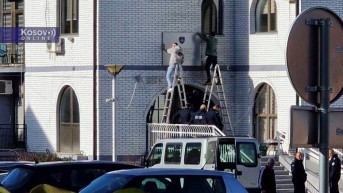
"In Kosovo, not only Serbs are unsafe, but this also applies to members of peace missions. Authorities in Pristina are increasingly demonstrating disrespect for international institutions. The Albanian political elite in Kosovo wants membership in the UN, yet at the same time, they show contempt towards UNMIK members and symbols of the United Nations".
Edited by: Milos Garic
The presence and role of United Nations representatives in Kosovo, under the mandate of UN Security Council Resolution 1244, have long caused discomfort and overt hostility among Albanian political representatives. This has been particularly evident since 2008, following the unilateral declaration of independence, and in recent months, UNMIK has come under direct attack from the current authorities in Pristina and Kosovo police forces.
The removal of UN flags and signs in northern Kosovo municipalities, along with raids and searches of UN offices, coupled with violent entries into administrative buildings of the Serbian community, including the removal and destruction of local signs in the Serbian language and Cyrillic script, are indicators of the entrenched negative attitude of the Albanian political elite towards international obligations and documents that state the current administration in Kosovo is temporary and under the protectorate of the United Nations.
In a bizarre twist, the United Nations finds itself under a double target by Kosovo Albanian politicians, who on one hand show disrespect and contempt towards UNMIK personnel, while on the other hand seek and expect to be admitted to membership in the top global organization.
The recent actions of the Kosovo authorities, including the removal of UN flags and signs, according to Srdjan Barac from the Center for Social Stability, have only exposed and revealed the true state of affairs on the ground.
"The international order failed the test in 1999, and the echo of that mistake is still heard today, with the removal of the UN flag being another clear indicator of this. Representatives of Albanian nationalist political elites in Kosovo and Metohija do not respect international institutions, the UN, EU, or others, nor do they respect international law or even their own laws and decisions of their Constitutional Court. The only thing they respect is the law of force. For now, their force is the US, to which they erect magnificent buildings, name streets after, and fly flags. But I believe there is a short path from removing the UN flag to removing US flags," Barac assesses for Kosovo Online.
In his view, the era of absolute allegiance of Kosovo Albanians to the US "is slowly passing, their paths are diverging".
Divergence of Albanians and the USA
"It wouldn't be the first time that Americans brought someone to power, trained, armed them, and then went to war with them, from Saddam Hussein, Manuel Noriega, to Slobodan Milosevic. However, it would be the first time if they were to accept their mistake in time and abandon a project that has obviously failed. The US wants an aircraft carrier pleasantly wrapped and camouflaged in the false state of Kosovo, while Albanians want a Greater Albania. It seems that this course is diverging, and everyone is slowly becoming aware of it, but that still doesn't mean that the policy of supporting the independence of the so-called Kosovo will be discontinued. It will be difficult to defend the behavior of the Pristina authorities, and that will undermine their authority, but it's a chance for Serbia to illuminate that with spotlights," Barac points out.
Biljana Sahrimanjan Obradovic, an analyst at the Center for Strategic Analysis, tells Kosovo Online that by removing UN symbols, the authorities in Pristina "are trying to artificially avoid the status of a territory under protectorate".
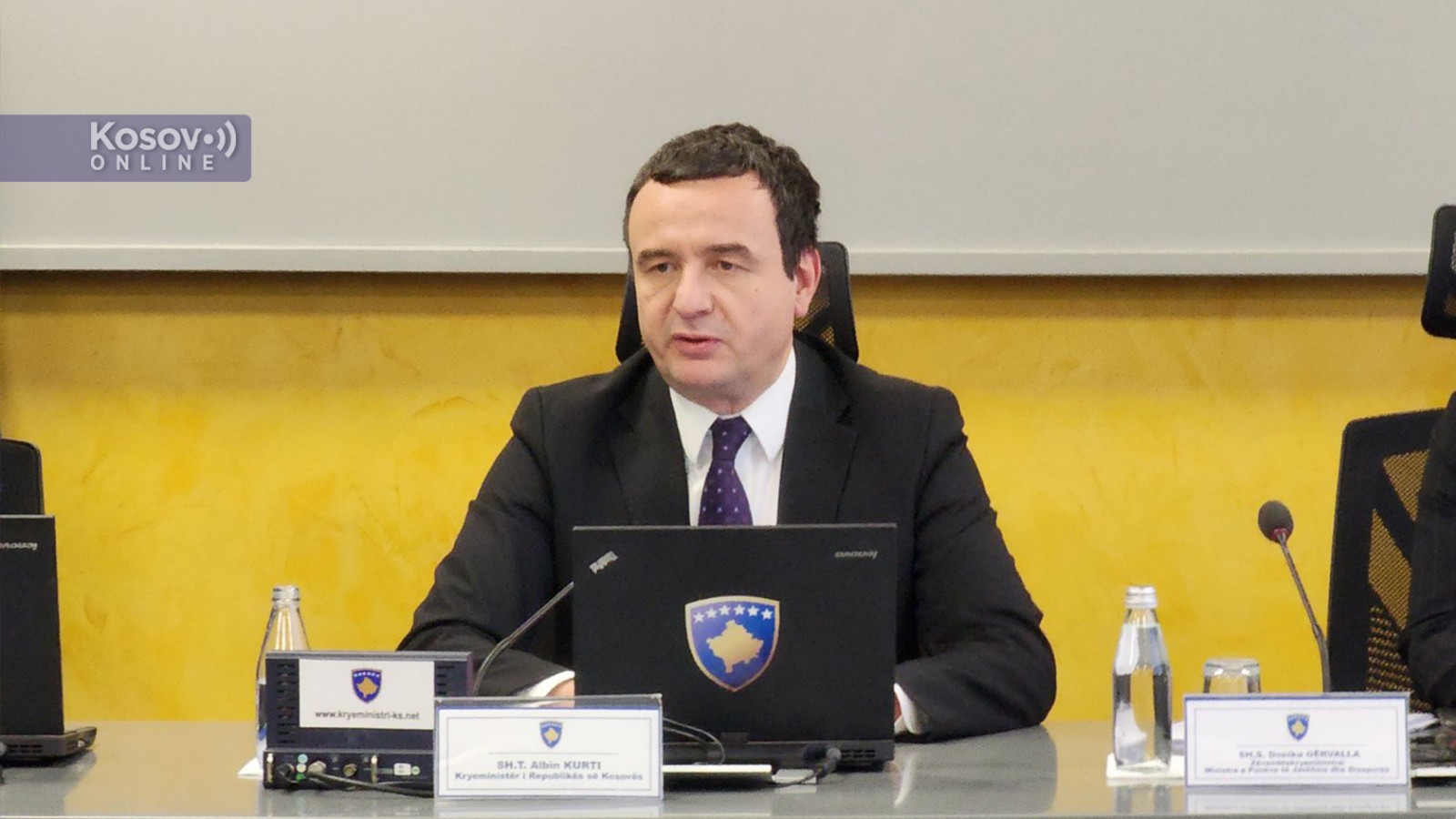
"Albin Kurti, lacking concrete results, needs symbolic excesses. From Resolution 1244 to the self-proclaimed independence and Ahtisaari Plan, the vacuum of power has been filled by the so-called Pristina institutions, which are completely ethnocentric rather than multi-ethnic. The tasks of these institutions are not the normalization of life, but exclusively the consolidation of Kosovo's Albanian-dominant statehood. In such an environment, the role of international organizations, and primarily the authority of UNMIK and EULEX, has been transferred to administrative bodies under Albanian control. We have the absurd situation where Kurti does not recognize UN symbols, while persistently seeking membership in that organization," Obradovic notes.
She emphasizes that the UN Mission was considered a guardian of the "status quo" regarding Serbian interests, while the UN itself, often incorrectly, is perceived as a protector of Serbia's statehood.
"In essence, where international trusteeship bodies are established, effective control ceases. In order for the Serbs to avoid the status of modern stateless persons and orphans, the strategic posture of President Vucic plays a crucial role, as he seeks to preserve the Serbs and the role of the UN in accordance with Resolution 1244. In an environment when the Brussels Agreement was signed, there was optimism for establishing a sustainable system with full autonomy for the Serbian community, which is also a result of the Ahtisaari Plan, or now the constitution of so-called Kosovo. From a security perspective, we witness increasingly unfavorable trends every day. By removing the signs, it is clearly communicated to the Serbs that they are left to Kosovo, rather than custodial institutions under Resolution 1244. From that resolution to today, a series of agreements and acts have been signed that essentially define "open issues", while Kurti selectively takes only the frameworks favorable to him," Obradovic points out.
Kurti is bothered by anything that is not Albanian
According to her, Kurti compromises Kosovo's international affirmation with his current actions.
"Would there be a transfer of authority to the Pristina administration without an agreement in favor of the Serbian community? Of course not. Therefore, Kurti compromises Kosovo's international affirmation, as continuously stated by the Quint ambassadors. The latest in a series of statements from the US Embassy in Kosovo speaks to this. The fight for the institutionalization of Serbian interests is the main point of crisis, which we are now witnessing through attempts at violent changes on the ground," Biljana Sahrimanjan Obradovic concludes.
Aleksandar Djurdjev, President of the Serbian League, notes that Albin Kurti shows that he is not only bothered by everything Serbian in Kosovo, "but also everything that is not Albanian".
"The recent events in the southern Serbian province, where his police force, actually an occupying force that exists and operates outside international law, removed the flags of the United Nations and UNMIK signs, speak volumes about the extremist, chauvinistic, and cultural-racist nature of Albin Kurti's regime. His obsessive idea of creating the so-called Greater Albania, with himself at the helm, has found a new victim, namely the UN institutions in Kosovo, but it will not be the last because Kurti, in his megalomaniacal madness, will eventually turn against his sponsors and creators of the so-called Kosovo independence. He already ignores serious warnings, which are no longer requests but unequivocal warnings, from the State Department and the European Union, to stop his arbitrary actions such as banning the dinar, which is contrary to the spirit of dialogue and negotiation," Aleksandar Djurdjev emphasized.
According to him, not only Serbs, on whom Kurti has long declared open season, are unsafe in Kosovo, but also representatives of peacekeeping missions, and even Albanians who are slowly but surely realizing that Kurti's actions are leading them into the abyss.
"It is no wonder that by the middle of this year, the departure of over 30% of the population of so-called Kosovo to Western Europe is expected because they see no prospect in that area, which, thanks to Kurti and his ilk, has become Europe's black hole, a breeding ground for terrorism, crime, and the harassment of innocent civilians. Serbia must use all diplomatic channels to present the true picture of events in Kosovo to the world, especially now that Kurti is targeting the UN peacekeeping mission there. Despite the gravity and complexity of the situation, I believe that the words of President Vucic, who stated that Serbia would ultimately prevail, will indeed come true," Djurdjev concluded.


comments