
Krasniqi: EU should have become involved earlier in resolving status of Serbian judges and prosecutors
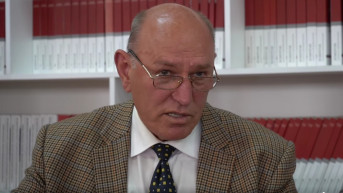
Law professor Kol Krasniqi told Kosovo Online that the recent decisions by the Kosovo Judicial Council and Kosovo Prosecutorial Council concerning Serbian judges and prosecutors did not imply abandoning the relevant agreements or the principles of a multiethnic judicial system.
Krasniqi said that the decisions instead represented a rejection of the automatic and collective reinstatement of Serbian judges and prosecutors who had left Kosovo institutions in an organized manner in 2022.
“Their resignations were part of a coordinated political action and, consequently, produced legal and institutional consequences. Judges and prosecutors exercise state authority and must be independent of any political or ethnic influence, as well as of authorities outside Kosovo’s constitutional order. Therefore, it cannot be demanded that, after almost four years, they collectively return to their positions as though their resignations had produced no legal consequences. However, Kosovo remains obliged to preserve the multiethnic character of its judicial system. The fairest solution would be to announce new, open and transparent competitions, to which former Serbian judges and prosecutors could also apply individually, with their integrity, professionalism, impartiality and independence from political influence being assessed,” Krasniqi said.
He also believes that the EU cannot dictate to the Judicial Council and Prosecutorial Council how they should decide.
“Their independence means independence not only from the Kosovo Government and political parties, but also from Belgrade, Brussels and any other external authority. The European Union can make recommendations, call for the implementation of agreements and mediate in reaching new agreements, but the final decision rests with the competent Kosovo institutions, in accordance with the Constitution and the law,” Krasniqi said.
Nevertheless, he stressed that the European Union should have become involved much earlier.
“For almost four years, the legal status of these resignations remained unresolved. As facilitator of the dialogue, the EU could have helped establish a legal, individualized and transparent mechanism for their gradual reintegration into Kosovo’s judicial system, instead of now, after four years, calling for their collective and automatic return,” he said.
At the same time, Kosovo institutions have not always followed European Union requests for prior coordination.
“This includes the closure of parallel structures and branches of the Serbian Post, the implementation of regulations on cash transactions, the issue of the dinar and certain actions concerning the bridges over the Ibar River. The European Union has also called for concrete steps toward establishing the Association of Serb-majority Municipalities. However, a lack of coordination does not automatically make an action unlawful. Kosovo has the right and obligation to enforce the Constitution and laws throughout its territory. But even when a decision is lawful, the manner, timing and proportionality of its implementation can affect intercommunity relations and relations with the European Union, the United States and other Western allies. Responsibility for the stalled dialogue cannot be attributed exclusively to Kosovo. Serbia supported the withdrawal of Serbs from Kosovo institutions, opposed Kosovo’s membership in international organizations and failed to ensure full accountability for the armed attack in Banjska. The European Union should therefore assess the implementation of agreements according to the same standards and hold both sides accountable,” Krasniqi said.
Finally, he said that Eva Palatova’s concluding message could be understood as a diplomatic summary of her experience and as an expression of concern over the need to improve communication, coordination and trust between Kosovo and the European Union.
“Her call for a constructive approach should not be interpreted as a position against Kosovo, but as advice aimed at advancing its European path. However, cooperation should be a two-way street. The European Union should take Kosovo’s concerns regarding sovereignty, the constitutional order and Belgrade’s influence seriously, while Kosovo should better coordinate its actions with its strategic partners and strictly adhere to legal procedures. In this case, the solution should not be the automatic and collective return of former judges and prosecutors to Kosovo’s judicial system, but a new, transparent and individualized recruitment process. This would protect judicial independence, ethnic equality, the integration of the Serbian community and the strategic partnership with the European Union,” Krasniqi concluded.


0 comments