
After the UNSC session: How will evidence of systematic persecution of the Serbs affect further developments in the crisis in Kosovo?
"The political West can hardly escape its own responsibility for the current situation in Kosovo. They created and 'raised' something that does not function according to the rules of the civilized world. Therefore, concrete action from the US and EU is expected to prevent systematic attacks on the rights of the Serbs".
Edited by: Milos Garic
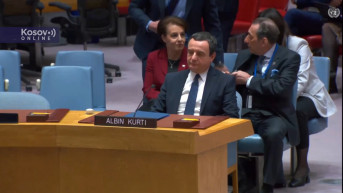
As could have been anticipated, even after last week's UN Security Council session and the explicit demand from the State Department for the Kosovo Government to retract its unilateral decision to abolish the dinar, Albin Kurti has not backed down from his policy. Kurti returned from New York to Pristina with a "lump" in his throat, but he agreed only to throw new "dust in the eyes" of Western allies, with alleged readiness to give the Serbs a short period to adapt to the new draconian rules, with an unequivocal message that the decision of the Central Bank of Kosovo remains in force.
Even to the most fervent Pristina partners in Berlin and London, it is clear that behind Kurti's facade of "rule of law" lies a perfidious intention of persecution and ethnic cleansing, by completely hindering the basic conditions for the life of the Serbs in Kosovo. President Aleksandar Vucic presented clear evidence of this during the meeting at the East River, and Security Council members almost unanimously agreed that the actions of official Pristina are causing great harm to the process of normalization of Serbian-Albanian relations and the easing of long-standing tensions.
After everything, before the UN building in New York, and above all before the Serbs in Kosovo, the question remains – what will happen next? Will Western intermediaries in Kosovo, primarily American and German diplomacy, react concretely to Kurti's arbitrariness, and will the current Albanian leader continue with his extreme policy towards the Serbs, which is already producing dramatic consequences through the displacement of disenfranchised and intimidated people?
The breakup of the partnership between Pristina and the USA?
James O'Brien, Assistant Secretary of State for European and Eurasian Affairs, stated yesterday that the State Department was very concerned about the decision of Kurti's government not to allow the use of the dinar in Kosovo and that with this stance, Pristina had called into question its partnership with the United States. O'Brien reiterated that Kosovo should retract the decision to ban the dinar and added the most direct warning to Albin Kurti so far.
"I am not making vague threats to the public. I would say that if they do not treat us as a partner, we will not treat the Government of Kosovo as a partner either," O'Brien stated, explaining that the United States advised the Kosovo Government not to carry out such actions and that it had decided to implement them without taking into account the advice of key partners.
However, the political West can hardly escape its own responsibility for the current situation in Kosovo. They have created something that does not function according to the rules of the civilized world. They "raised" someone like Kurti, and therefore, it is primarily their shame when he simultaneously represents and compromises them today. Kurti is their partner, and it is neither fair nor possible when they try to blame Serbia and Vucic for his misdeeds. But, this is little consolation for the Serbs in Kosovo. They will still have to endure the injustice and arbitrariness of a man who behaves absolutely irresponsibly, in the manner of an unrestrained despot at the helm of Kosovo's authorities.
Responding to the question of what had changed after the statements made at the UNSC session and in the days following, political analyst Ivan Miletic says Kosovo Online that what was different from before was the tone of the ambassadors in the Security Council, all of whom condemned the unilateral actions of the administration in Pristina.
"They called for de-escalation and referred both sides to dialogue under the auspices of the EU. It doesn't matter whether it was Malta, Guyana, South Korea, Japan, the USA, France, or Great Britain. A large number of speakers showed interest in this issue globally, and their synchronized approach sends clear messages to Albin Kurti himself that if he continues with his current policy of force, instilling fear, institutional violence, non-cooperation, and arbitrariness, he can only expect further condemnation and hardening of the stance of the global public," Miletic points out.
According to his interpretation, there is a noticeable distancing of the USA from Albin Kurti's current policy.
"Kurti's excuses about some sovereign decision, about an anti-colonial struggle against Serbia as a colonial power, prevention of smuggling of counterfeit currency, the demand for the signing of the Ohrid Agreement at the session itself, and other such justifications have only met with cold reception, lack of understanding, and disapproval from numerous members of the UN Security Council. There is also noticeable distancing by the US Ambassador to the UN from such behavior by Albin Kurti, who insisted solely that the UN was not the place where Belgrade and Pristina should seek solutions, but rather a negotiation process under the auspices of the EU," Miletic notes, who has extensive experience in monitoring international relations.
What is clear from this UN Security Council session, he believes, is that Serbia has a stable position on the international scene, while the administration in Pristina is receiving less and less understanding for its actions, which it justifies by some "anti-colonial struggle, events from 25 years ago, and everything that constitutes a distant past in the modern world". He points out that the Serbs in Kosovo "unfortunately are hostages to such aggressive policies by Albin Kurti".
Kurti will become even more radical
"Kurti's dream of Greater Albania is more important to him than any European integration and improving the lives of the inhabitants of Kosovo and Metohija. History shows us that as March approaches, the risks of new aggressive and incident-prone situations increase, which Albin Kurti can serve to all of us in the Western Balkans. This will increase tensions in Kosovo and endanger peace and stability, especially of the Serbian community, particularly south of the Ibar River. Isolated and marginalized enclaves and communities are the easiest target for the arbitrariness of Albin Kurti, who has already received a warning from KFOR that incidents will not be tolerated in northern Kosovo. The fact that his aggressive policy is not only directed towards the Serbian community is best shown by the raid of the Kosovo Police on the premises of the Gora municipality, which shows that every minority community that does not fit into Albin Kurti's policy is a target, with Greater Albania being his top priority," Miletic points out.
He warns that precisely for this reason, one should be prepared for the radicalization of Kurti's policies.
"Kurti built his profile on the political scene back in the 1990s as an apprentice and disciple of Adem Demaci, whose basic policy has always been the internationalization of the Kosovo issue through the creation of incident-prone situations. There remains only hope that the Albanian community in Kosovo will show that repression and conflict against minority communities are not what they support and that public pressure will push Albin Kurti back into the negotiation process, and to fulfilling what has been agreed upon so far, primarily the establishment of the Community of Serb-majority Municipalities, which is established in the Ahtisaari Plan and the Brussels Agreement," Ivan Miletic concludes.
In the meantime, in Pristina, there is dissatisfaction among parts of the Albanian political elite with the reactions that Kurti's policies have produced in the West.
Former Kosovo Minister of Interior Zenun Pajaziti emphasized that due to the recklessness of Prime Minister Albin Kurti, the decision to abolish the dinar had been included in the dialogue process between Belgrade and Pristina, assessing that such populist moves by the current government would cost Kosovo dearly. Pajaziti told ABC News that the decision to abolish the dinar had been thoughtless and unreasonable, like many before, and that the consequence would be further escalation of the situation in Kosovo and the continuation of the exodus of young people.
Turning point for further developments
Political analyst and director of the National Academy for Public Administration, Dejan Miletic, sees the extraordinary session of the UN Security Council initiated by Serbia regarding the alarming situation in Kosovo and events that are in direct contradiction with UN Security Council Resolution 1244 and the UN Charter as an important moment in the struggle to preserve the sovereignty and territorial integrity of Serbia.
"We can state that this session marks a turning point in the events regarding Kosovo and Metohija, in the sense that it represents a direct indictment for Kurti, his clique, and all those who aid this criminal regime. President Vucic managed to point out numerous facts in his speeches, which, with their clarity and irrefutability, serve as a serious warning that serious crimes, mass violations of human rights, usurpation of institutions, lack of justice and rights, as well as systematic endangerment of the survival of the Serbs, are occurring in Kosovo. All of this together constitutes clear evidence of deliberate, planned actions aimed at the expulsion of the Serbs, and that those who do not react or directly support Kurti's policy of violence are participating in a joint criminal enterprise. Confronting the members of the Security Council with all these facts cannot leave anyone indifferent and leads to a situation where nothing can be the same as before. Not reacting to Kurti's unilateral moves and his usurping clique, or even providing direct support to their actions, amounts to siding with the criminal side," Dejan Miletic points out.
When these facts are properly systematized and presented, he adds, it is not surprising that there is a change in the atmosphere in the international community towards Kurti's regime and the promotion of violence as a legitimate policy.
"Up until this extraordinary session of the UN Security Council, such actions were tolerated and somewhat swept under the rug. Particularly encouraging is the reaction of US diplomacy, as the unilateral actions of Kurti's regime are interpreted as a direct undermining of their role. For the first time, sharp diplomatic tones can be heard, indicating an even more serious shift in US policy towards current Albanian representatives in Kosovo and their criminal activities. We can note that the efforts of our diplomacy to expose the policy of violence by Albanian representatives and institutions and to demonstrate their criminal nature, forcing the international community to finally respond to the suffering of the Serbs, are yielding gradual but sure results that will represent a stable path towards preserving the Serbs and the Serbian state in Kosovo and Metohija in this time of high global instability and unfavorable international political circumstances," Dejan Miletic concludes.


0 comments