
After the Victory Parade in Beijing: The new world order has already begun its history
Written by Zeljko Sajn for Kosovo Online
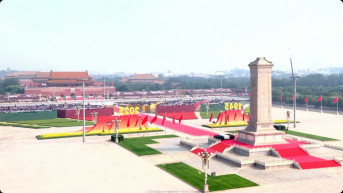
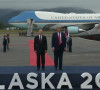
At a time when many in the West still speak of the “danger of multipolarity,” striving to preserve a crumbling system, the fact is that the new world order has already begun its history. It is no longer just an announcement but a reality unfolding before our eyes. The process is visible, symbolically presented at the military parades in Moscow and Beijing, and factually confirmed at the meeting between Putin and Trump in Alaska. Its pillars are three powers—Russia, China, and the United States—building the framework of a new global balance.
Unlike the 20th century, when the Balkans were synonymous with a “powder keg,” the 21st century offers the possibility for the Balkan region to become a platform of stability. Serbia, as the successor to Yugoslavia’s antifascist struggle, has already shown its readiness to be part of the new era. Its participation in the military parades on Moscow’s and Beijing’s squares carries both symbolic and political weight.
First, it was a strong symbolic gesture confirming the historical role of Yugoslavia, of which Serbia is the successor, in the victory of World War II. Participation in the People’s Liberation Struggle placed Serbia among the countries that made a tremendous contribution to the defeat of fascism, something recognized today, eight decades later, by both Moscow and Beijing.
The invitation to President Vučić to participate in these commemorations was an acknowledgment of our historical tradition and contribution to the antifascist struggle, which Moscow and Beijing regard as an important legitimization of Serbia in contemporary processes. In addition, meetings and agreements on the margins of these events carried practical significance—the opening of new channels of economic cooperation with China, as well as alignment with the positions that Russia and the United States are building within the concept of the new world order.
For the EU, it was almost unbelievable that the Balkans—and above all Serbia—are becoming increasingly involved in processes where Moscow, Beijing, and Washington play key roles. Germany and France, which for decades considered the Balkans as their “domain,” now face the reality that their geopolitical initiative has come too late. This is why there is a risk that part of the European elite might attempt to repeat the “Ukrainian scenario” in the Balkans, through Kosovo and Metohija, in order to halt the further expansion of Russian, Chinese, and American influence.
In contrast, Serbia’s role in the new architecture of power can be entirely different. From a country described for decades as the “powder keg of the Balkans,” Serbia today has the chance to become a pillar of stability and a constructive actor in shaping peace in Southeastern Europe.
The open doors of Moscow and Beijing for Serbia, along with Washington’s signal that it is time for a balanced approach, indicate that the three carriers of the new world order—Russia, China, and the United States—are ready to recognize Serbia as a significant subject in shaping the Balkans’ position within the new global project. If Americans, Russians, and Chinese succeed in restoring the authority of the UN, it would represent a major success for Serbia in achieving the goal defined by Resolution 1244—the preservation of territorial integrity and sovereignty of the entire state.
Today, Serbia stands before a historic opportunity: in both Moscow and Beijing, doors are wide open for it to express its interests and aspirations within the new world order—not as a passive observer or “powder keg” used in others’ plans, but as an independent leader of the Balkans.
One cannot exclude the possibility that the EU, as a reaction to its lateness, may try to provoke a new “earthquake” in the Balkans—similar to the Ukrainian-Russian conflict, but this time through Kosovo. In contrast, the three carriers of the new world order—Russia, China, and the United States—are expected to strive to include Serbia as a significant subject in shaping the new Balkan project within global stability. Unlike the Yalta era, when London decisively drew the Balkans’ borders, today the situation is entirely different. Moscow and Beijing, with Washington shifting its course, are clearly showing readiness to offer Serbia a place in the architecture of the new world.
This chance does not come often. If missed, the Balkans could once again be used as a detonator for others’ ambitions. On the other hand, if seized, the region could for the first time become a pillar of peace, with Serbia an indispensable factor in the new global architecture.

0 comments