
New World Order
Written by: Zeljko Sajn for Kosovo Online
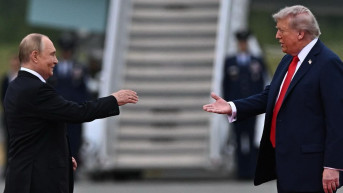
Following the historic meeting of European leaders in Washington, organized by President Trump, which came immediately after his bilateral talks with President Putin in Alaska, it became evident that the encounter went far beyond the scope of the war in Ukraine. Although formally presented as a meeting on Ukraine, it marked an absolute shift in Trump’s foreign policy and a recalibrated diplomatic skill in shaping the New World Order.
History shows that new world orders have almost always emerged after major wars—especially on European soil, and in nearly every century. The Peace of Westphalia is regarded as the foundation of the international system of sovereign states. In the 17th century, under Cardinal Richelieu, France introduced a modern approach to international relations based on the nation-state. In the 18th century, Britain developed the concept of the balance of power. In the 19th century, Metternich’s Austria reintroduced the so-called European concept, which Bismarck’s Germany overturned by transforming diplomacy into ruthless power politics. Henry Kissinger argued that no state, not even the U.S. in the 20th century, could justify interference in the internal affairs of other nations.
If we accept Kissinger’s assessment, we can better understand the U.S. diplomatic hypocrisy—embraced faithfully by Europe in partnership with NATO—ever since Gorbachev “handed over” the keys of the Warsaw Pact to President George H.W. Bush, in return for verbal assurances that NATO would not expand eastward. The result of this transatlantic cooperation and NATO strategy has been what may be called U.S. foreign policy of strategic ambivalence. Its consequences included the dissolution of socialism, the redrawing of borders after NATO’s bombing of Yugoslavia, and the Russian “special military operation” in Ukraine. The outcome: neither Yugoslavia nor Ukraine exists in their former form.
The unipolar dominance of the U.S. during and after the Cold War spurred the rapid economic rise of China, the reassertion of Russia’s role in global politics, cracks within the Euro-Atlantic structure, and the rise of new blocs such as BRICS, all generating multipolarity—or relative balance of power—in international affairs.
Professor Milenko Kreca has argued that multipolarity, as an expression of balance, positively affects the atmosphere of international relations by opening space for more effective implementation of international law and diplomacy.
President Donald Trump, recognizing that Russia and the BRICS countries had entered a stage of profound economic, political, and military development, initially sought to sanction Russia through secondary measures. Yet his actions increasingly shifted toward peace-building and resolving military conflicts—conflicts largely initiated by his predecessors, with primary responsibility for the Ukraine crisis resting on Joseph Biden and his administration.
In Alaska, Trump made two historic moves. The first was a fundamental shift in U.S. foreign policy—not only in U.S.–Russia relations but on the global stage. The second was a demonstration of the highest form of respect toward the Russian Federation and President Vladimir Putin. In negotiations, Trump avoided rhetoric that could be perceived as humiliating to Russia, knowing it could undermine the process and escalate conflict. Putin, in turn, demonstrated his skill in judging what could be accepted from seasoned American diplomacy.
The essence of Trump’s diplomacy with Putin drew from Kissinger’s “testament”: history will remember that Putin and Trump agreed to adjust Yalta-era borders through direct talks. For Kissinger, diplomacy must prioritize national interests and the maintenance of international order—even if this requires difficult compromises. This agreement revealed that new territorial compromises are on the table.
Kissinger also stressed that Russia is sensitive to perceived threats near its borders and strategic interests, often seeing NATO expansion as a provocation. According to BRICS diplomatic sources, Russia’s strategic goals include maintaining influence in regions it considers vital for its security and national interests. This could extend over the former territory of Imperial Russia, potentially encompassing all of Ukraine except the areas whose citizens voted in referenda to join the Russian Federation.
Trump, meanwhile, by hosting European leaders and President Zelensky in Washington after his talks with Putin in Alaska, placed them in what was described as a “vassal position,” pressing them to accept the Trump–Putin deal. While this displeased European leaders, they realized it opened a path to peace aligned with the objectives of Putin’s special military operation. Trump understood the historical perspective, strategic goals, and negotiation style, applying Kissinger’s pragmatic approach while recognizing Russia’s core demands: great power status, security, and historical significance.
The contrast with European leaders could be seen in Washington, reminiscent of the Paris Peace Conference of 1919. Europeans sought to restore the system through familiar methods, while Americans saw the problem in the failures of European politics rather than in permanent geopolitical rivalries.
Trump, in his pursuit of peace with Putin, avoided repeating the mistakes of his predecessors, implicitly accepting Putin’s thesis that the conflict is not ideological but geostrategic—a message Putin himself recently promoted. In Alaska, the two leaders agreed that natural resources and the UN Charter would serve as the foundation for balanced relations in a New World Order without hegemonies.
Although Europeans attempted to impose conditions on Trump in Washington, he countered by expressing readiness to attend a Putin–Zelensky meeting if invited, noting that peace ultimately rests in the hands of Zelensky and the Europeans.
The most visible disagreement with Trump came when Italian Prime Minister Giorgia Meloni demanded the preservation of European unity, which will face reform after peace in Ukraine—along with NATO. The road to peace will likely bring turbulence, particularly in Europe.
At the conclusion of the Alaska negotiations, and with European leaders’ reluctant acceptance of a subordinate role, the most significant outcome was that a global nuclear confrontation—the outbreak of a third world war—was averted.
0 comments