
Anti-Americanism among Albanians: How Hovenier angered Kurti's followers from Self-Determination?
"Kurti is going all in. There is no longer any room for rational decisions. According to Kurti's reasoning, Albanian patrons in the USA should fulfill their obligations and act as contractors for his Greater Albania interests."
Prepared by: Milos Garic
The ongoing crisis regarding the bridge on the Ibar, as well as the previous one related to the closure of nine postal offices in northern Kosovo, has not only further strained the already very tense relations between the authorities in Pristina and the Serbian community, but also highlighted a significant disagreement within the Albanian public, led by Albin Kurti, with the policies and positions of the United States.
Harsh and offensive comments on social media directed at U.S. Ambassador Jeffrey Hovenier, following his warnings to Albin Kurti over recent decisions, indicate that there is a dose of anti-American sentiment within the extreme segment of the Albanian society in Kosovo that can no longer be concealed, no matter how much the government officials, including Kurti himself, try to maintain the narrative of the closest ties between the Albanian and American people in public.
It seems that since Kurti came to power, what has been simmering over the past few years as Albanian "disobedience" toward their biggest helper and sponsor—the United States—has grown into open opposition and hostility after the latest warnings from Washington regarding the dangerous and unilateral moves by the authorities in Pristina.
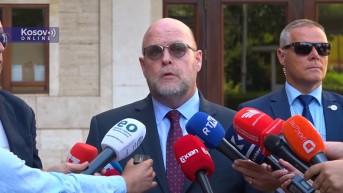
"I have to say that the quality of our partnership is not what we had hoped for on some of the issues related to how Kurti is handling the north and how he is conducting the dialogue. It's not just about me... Kosovo says it is our partner. Kosovo tells us it is the country with the most pronounced pro-American stance in the world. Therefore, I hope that the country with the most pronounced pro-American stance in the world will listen to the specific requests of the U.S. government not to put NATO at risk, including American soldiers," Jeffrey Hovenier was quite clear in an interview a few days ago.
Kurti's Inverted Proxy Logic
Fearing the damage that could occur to relations with Washington, individuals from other political parties have reacted. For instance, following Ramush Haradinaj last week, Driton Selmanaj, a member of the Democratic League of Kosovo, also spoke out, warning of the consequences after the "attacks organized by the Self-Determination movement with its Facebook army against the U.S. Ambassador."
"The coordinated attacks by Self-Determination through the Facebook army on Ambassador Hovenier are unacceptable and extremely harmful to Kosovo," Selmanaj stated, among other things.
No matter how much they swear by their "love" for the United States, it is clear that a significant portion of Albanian society is uncomfortable with any restriction or limitation on their intentions, which Albin Kurti articulates and implements in their name, particularly regarding the revocation of Serbs' rights and the creation of conditions for a "Greater Albania."
Self-Determination MP Alban Bajrami thus warned U.S. Ambassador Jeffrey Hovenier that he should stay in the embassy and not interfere in the issue of the bridge on the Ibar, as "he does not conduct meetings on it, but in the embassy."
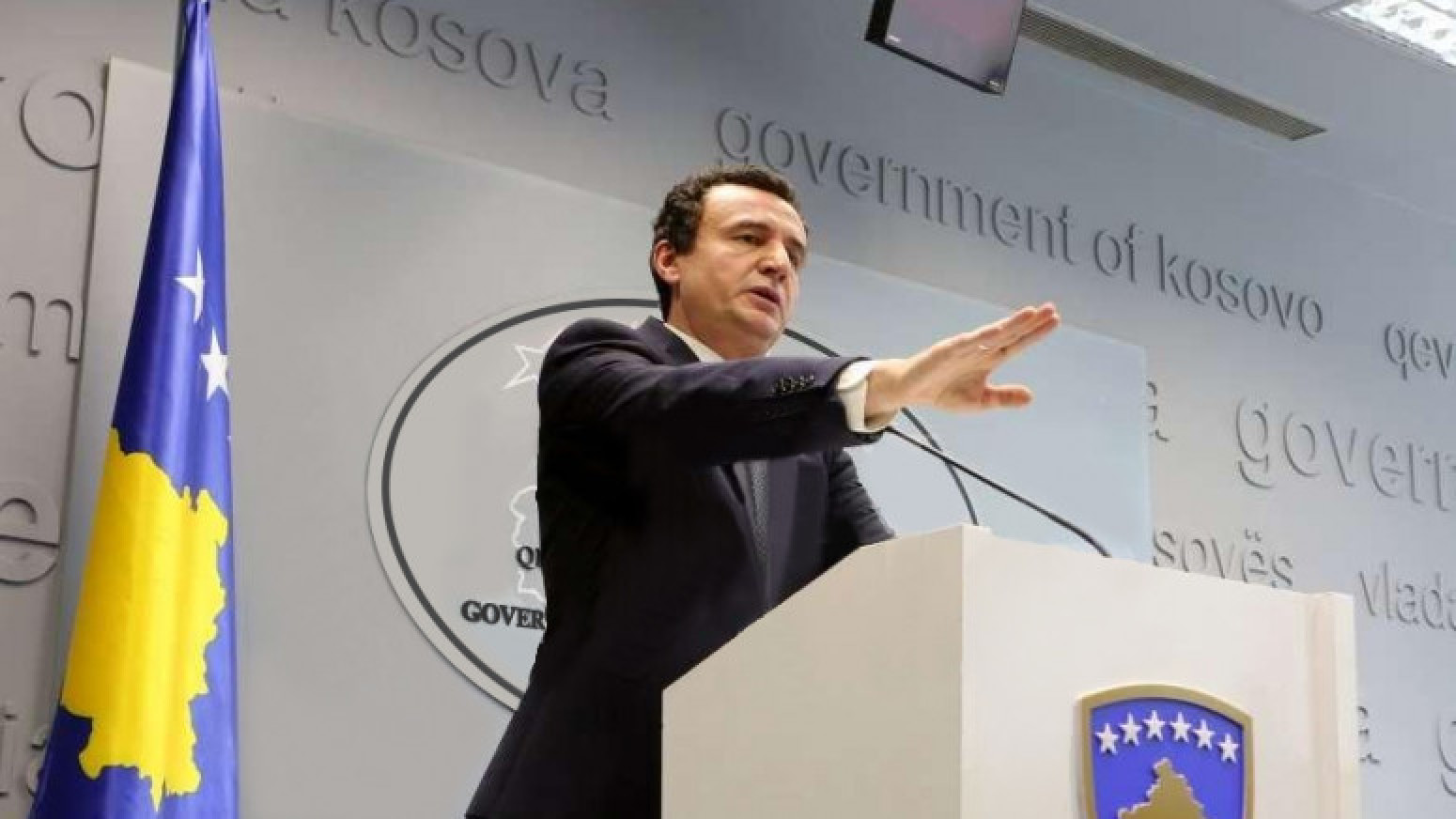
How can we explain this rather intriguing phenomenon, where the side that received absolute support in achieving its extreme separatist ambitions—at the expense of international law and its parent state—now openly defies its greatest sponsor?
“To fully understand the policy of the provisional institutions of power in Pristina, we must analyze two factors that drive it. On the one hand, there's the Albanian mentality when it comes to political orientation, and on the other, the individual characteristics and habitus of Albin Kurti himself, who indeed behaves in a way that doesn't conform to the standards of politicians in Europe,” explains political philosopher Dragoljub Kojcic for Kontekst.
He points out that, regarding Albanians as a whole, they are a young nation without the experience of a long political struggle, but circumstances have worked in their favor.
“They took advantage of the opportunities presented by international circumstances when a part of Western society and the Western political community was against the Serbs, and they used them as useful agents. As for Kurti himself, he is simply a politician who exclusively practices his political fantasies, but there is one area where he is relatively successful. That is, after decades of successful lobbying and bribery, Albanians have ingrained themselves in the American deep state, leading them to believe that there are still obligations Americans owe them. However, Kurti crosses a certain line and behaves according to a reversed proxy logic,” Kojcic emphasizes.
This concept is particularly interesting in what it entails.
“If in the past, the small players were the agents for the big ones—like how Albanians acted as agents for the West against the Serbs and against Yugoslavia—now Kurti sees it as time for a reverse payment. According to this reasoning, their patrons from the American state should now act as agents for Kurti's interests. And there is no longer room for any rational decisions. He is going all in, especially during this moment while the U.S. presidential campaign is ongoing, and before a firm foundation for a new American national strategy is established. Kurti is trying to exploit this transitional period to force those he considers indebted to him to support him in every one of his insane ideas. This includes, for example, the current situation with the opening of the bridge, which he is determined to achieve at any cost, even at the risk of endangering the safety of American soldiers,” Kojcic notes.
History Repeats Itself
Hegel observed that history tends to repeat itself, first as tragedy, then as farce. In the case of Albanians in Kosovo, clear parallels can be drawn with their behavior during the time of socialist Yugoslavia.
"They were the only national minority that had its own academy of sciences. They had high schools and a university. Their politicians were influential in the Communist Party. They even had Sinan Hasani as the head of Yugoslavia after the death of Josip Broz Tito. Yet, they were simultaneously dissatisfied, undermining the state, and seeking secession. This is the same political logic that Kurti continues, now using all the circumstances and tools at his disposal to achieve his goal. They once exploited Broz's favor and weakness towards them; today, it's the Americans. All of this is built on the foundation of institutions that the Serbs provided them during Yugoslavia. Kurti is now driving that bus. From a conductor, he wants to become the driver," says Kojcic.
Historian Luka Jovanovic from North Mitrovica is surprised by the statements coming from Pristina officials directed against EU leaders and the diplomatic corps in Pristina, especially those calling on the authorities in Pristina to refrain from aggressive actions against the Serbian population in northern Kosovo and Metohija.
"The so-called President Osmani has suddenly become active, even going so far as to call EU officials racists simply because they called for discussions about the Mitrovica bridge rather than unilateral actions. Certainly, the attacks by Self-Determination's internet army on Ambassador Hovenier are the most surprising. I think that now even EU officials and Ambassador Hovenier realize what happens to those who, in Kurti's state, call for dialogue and the peaceful resolution of any issue," Jovanovic notes.
He adds that caution is still needed in assessing the situation.
"Perhaps this is just another Pilate-like move by the West, where they will again claim that they tried everything, that the officials in Pristina do not listen to them, and that they cannot control them. Meanwhile, Kurti will continue pushing through the Mitrovica bridge and provoking the Serbs into another day of dangerous unrest, during which he will accuse them of undermining the constitutional order," Jovanovic concludes.


comments