
Casual playing with promises
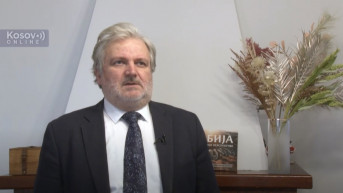
Writing for Kosovo Online: Dragan Bisenic, a journalist
The dialogue has led precisely where it was planned to lead – to leave the Community of Serb-majority Municipalities as a bargaining chip in the presumed final stage to be exchanged for the recognition of Kosovo's desired independence. This is precisely what the letter sent by Macron, Scholz, and Meloni shows. They talk about how the CSM should have been established ten years ago and should have been functioning by now. Josep Borrell and Miroslav Lajcak, on the other hand, have provided a very detailed description of the role that the Community of Serb-majority Municipalities should play in this stage of negotiations. "The implementation phase should progress so that both sides simultaneously fulfill their obligations step by step, on the principle that both sides must do something to get something. Now the focus should be on improving the full implementation of the Agreement without conditions or delays", the European mediators stated. In this "step by step" approach, the CSM is something that the Serbian side should "get", in return for fulfilling a whole set of demands placed before it. So, to "get" something that was "already obtained" by the Brussels Agreement of 2013.
A certain sense of urgency is added to this by a passage from the same statement, which, in a somewhat threatening tone, leaves no room for different interpretations, as European officials added that their expectations regarding the implementation of the Agreement on the path to normalization "must be met".
"We now expect Kosovo and Serbia to quickly agree on the details in the EU-facilitated dialogue. In the absence of progress in normalizing relations, both sides risk missing important opportunities. We welcome the engagement of both sides in yesterday's talks in Brussels. We take into account the comments of the two leaders of Kosovo and Serbia on the European Statute for the establishment of the Community of Serb-majority Municipalities in Kosovo and their expressed readiness for implementation", summarizes the outcome of the latest Brussels meeting.
The leaders of the three leading European Union countries had an identical tone in their message, calling for "quick progress in the implementation of the Agreement on the normalization process, for Kosovo to initiate the procedure for the establishment of the Community of Serb-majority Municipalities, as prescribed in the draft Statute, and for Serbia to de facto recognition". Other formalities, including those related to the adoption of these decisions, should not stand in the way of progress on this issue," the joint statement by Emmanuel Macron, Olaf Scholz, and Giorgia Meloni stated.
This message followed the EU Council meeting during which a new round of separate talks with European mediators took place, involving Serbian President Aleksandar Vucic and Albin Kurti. Here, the formulation regarding the CSM is much milder, only in the initial stages, as Kosovo is only expected to "initiate the procedure", but not to establish the CSN. This may suggest the assumption that the formulation of "establishment" is left for another occasion, for another "step" that is expected or requested from Serbia in the "quid pro quo" approach of European mediators. If there was talk of a "new approach" by the EU to this dialogue, then this is likely the novelty.
The dialogue initially started with very general principles, which led to the harmonization with the Brussels and Ohrid Agreements. Now, it seems to be moving into the specifics, where "service for service" is sought, and where the details predict the taking of specific steps and deadlines for their fulfillment. In this tactic, why not try another delay of the formation of the CSM, especially if it is the most significant motivation for the Serbian side to accept any agreement? The Pristina side has set numerous obstacles to the realization of the idea of the CSM, from installing mayors in northern Kosovo through quasi-elections, to now, allegedly, activating the "democratic mechanism" of their removal through a "civil petition". Until real elections are held in northern Kosovo, every move regarding the CSM will be just a new "initiation of the procedure". Therefore, casual playing with promises continues. As long as it remains this way, the Serbian side should not refrain from doing the same. Hypocrisy can have many faces.
From the very format of this meeting, where talks were conducted separately, it is evident that it was far from a final agreement, and it, by all accounts, should have, at the very least, redirected the previous course of "crisis management" of events in Kosovo towards diplomatic forms. In that sense, it can be assumed that the expectations for this meeting were not high. Therefore, the call by European leaders for "de facto" recognition of Kosovo, while not new, comes as a certain surprise. It also carries a certain polemical potential. Given that it came from the meeting of the European Council, which coincided with the presence of both sides' delegations in Brussels, it could have been expected that the EU Council would announce some stance on the dialogue. It wasn't, presumably because the statement would have to be adopted unanimously, which is difficult or impossible to achieve as long as there are five EU countries that do not recognize Kosovo at all, plus Spain, which presides over the European Union until the end of the year. Therefore, it is clear that countries that do not recognize Kosovo in any way could not call for its recognition. Macron, Scholz, and Meloni met with all the dialogue participants, and it is likely that they made the same request in those talks.
Reiterating the demand for "de facto" recognition, while appearing standard, essentially engages in a debate with the statements of Kosovo's Prime Minister, Albin Kurti, who demanded that all documents be signed to ensure Kosovo's recognition by Serbia both "de jure" and "de facto". In this case, let's recall the Brussels and Ohrid Agreements from the beginning of this year. These agreements do not provide for Kosovo's recognition by Serbia, which helped the political forces in Kosovo to conclude that the European proposal is not a final agreement because it does not provide for mutual recognition. In that sense, the "de facto" recognition that Macron, Scholz, and Meloni are beginning to imply once again means that there will not be "de jure" or official written recognition of Kosovo. That's as far as the European perspective is concerned. As for the Serbian perspective, Serbian President Aleksandar Vucic reiterated what he said back in March of this year, that "we will not recognize the independence of Kosovo, either de facto or de jure". "Serbia cannot accept Kosovo's membership in the UN, nor Kosovo's independence. We are fully prepared to form the CSM," the President of Serbia said after the meeting in Brussels.
He actually anticipated these demands three years ago when he said that Serbia would be asked for "de facto or de jure recognition of Kosovo", that the "goal is to get Kosovo into the UN", and that it was "just a matter of time when they will ask Serbia for it, whether in three or six months or a year, but it will definitely happen, and then there will be tremendous pressure on our country".
From then until now, statements about the Community of Serb-majority Municipalities, EU membership, and anything that would confirm the seriousness of European intentions in the eyes of the Serbian side have not gone far. Recently, the European Union has been flirting with announcements of accelerated prospects for the Western Balkans, which, once made, are quickly refuted.
The German Chancellor, after a long time, provided a more comprehensive assessment of the previous talks, in which he did not agree that the talks in Brussels were unsuccessful or failed. "In this truly grim situation, we were able to make progress. I do not share your assessment that the negotiations have failed. I think that, if we make a political assessment, I believe you can agree with me. Now we have the statements of Kurti and Vucic that they will implement the measures from the documents we have prepared, the Basic Agreement, the Ohrid Agreement, and now the concept of a concrete draft for the establishment of the Community of Serb-majority Municipalities. It has been clearly stated, and it is the right step," the German Chancellor said in response to the journalist's statement that the negotiations had failed.
Scholz emphasized that the international community would strive to make it happen. "This is not a matter where, in the end, we can talk about who has the most points, but it is about creating a peaceful future for the citizens of Kosovo and Serbia. Both Kosovo and Serbia want to join the EU, and we want to make that happen," the German Chancellor emphasized.
Since Germany and its Chancellor appear in the role of chief negotiators in the crisis in the Middle East, to which Scholz's assessment of a "grim situation" probably referred, the attention devoted to the Kosovo issue means that Germany indeed attaches great importance to it.
A part of that importance is probably due to the four-day visit of the President of the European Commission, Ursula von der Leyen, who is visiting North Macedonia, Kosovo, Montenegro, Serbia, and Bosnia and Herzegovina. As announced, she would discuss bilateral cooperation and, in particular, present the details of the EU Growth Plan for the Western Balkans, which had been specified at the last European Council meeting. These are accompanying measures aimed at improving the atmosphere among Western Balkan countries, including relations between Belgrade and Pristina. However, the real content is on the other side, where the reliability and credibility of the European Union need to be demonstrated through the implementation of previous agreements.
0 comments