
Bisenic: Pristina reckons that stubborn and aggressive behavior can pay off
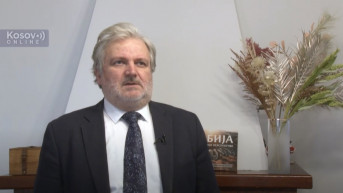
Journalist and diplomat Dragan Bisenic, commenting on the messages from the NATO summit in Vilnius, told RTS that the most important thing for the NATO Alliance and the international community was the de-escalation in Kosovo and that the processes were no longer going in the direction of a possible confrontation.
Bisenic states that it has been declaratively prepared and that everyone is ready to accept it, but that there is still no progress when it comes to the Community of Serb-majority Municipalities.
He points out that the behavior of Pristina, which is stubborn and aggressive, can sometimes pay off and it seems to him, as he says, that this is simply buying time until the next crisis comes.
Bisenic points out that the summit in Vilnius, the capital of Lithuania, has two central topics, it is certainly Ukraine, internal issues concerning NATO, but also that due to the circumstances, Kosovo was also discussed.
He assesses that NATO's warnings have existed practically since the beginning of the crisis, since May 28, when NATO announced itself and when it called for de-escalation, and when it expressed its readiness to maintain order and peace in Kosovo, with, of course, its participation in the forces of KFOR.
"When we add up everything that has appeared these days, statements from the Albanian side, Kurti, then Miroslav Lajcak's statement from yesterday, and then some news coming from unnamed sources, it is assumed that everything is ready for the so-called de-escalation, that is, for all sides to do certain steps that are needed to stop the demonstrations, that is, the protests of the Serbs in Kosovo," Bisenic points out.
At the same time, yesterday Miroslav Lajcak met with Besnik Bislimi, and after that, it was announced that the government in Pristina was ready to withdraw Kosovo forces by 25 percent from municipal buildings and that extraordinary local elections would be organized after the summer.
Bisenic comments that this is not actually what is expected from the Albanian side, that it is not about "whether this or that percentage will be withdrawn".
"It is about bringing things to the status quo ante. The way it was before the beginning of the crisis. In fact, we can conclude that the meaning of all these crises is the slight movement of the boundary, the movement of the boundary that should eventually lead to the collapse of the Brussels Agreement in the part concerning the Community of Serb-majority Municipalities. If you withdraw 25 out of 100 policemen from the north of Kosovo, and there should not be even one out of 100, then you have again not fulfilled the requirement. But in these circumstances, you know, the behavior which is stubborn and aggressive can sometimes pay off," the diplomat believes.
He clarifies that actually, no one will bother to focus exclusively on that small question "Is it this percentage or that percentage", but that everyone wants to focus on the big picture, as they themselves say.
"That big picture means the signing of a comprehensive agreement on normalization, different deadlines are set. Since this crisis took a month and a half, it will probably take a whole two months, so it means that in the later months, it all needs to be condensed and brought to some order. So those are the ambitions," Bisenic points out.
He indicates that the most important thing for NATO and the international community is de-escalation that the processes are no longer going in the direction of a possible confrontation.
This means, he states, that the Albanian mayors withdraw from the four municipal assembly buildings, that the Serbs stop protesting and demonstrating, that the Kosovo Security Forces also withdraw to a certain extent, and that new elections be prepared.
"All this is declaratively prepared and ready, and everyone is ready to accept it, but there is still no progress, it seems, when it comes to the Community of Serb-majority Municipalities, about creating the atmosphere and conditions for the creation of the Community of Serb-majority Municipalities. It seems to me that this is simply buying time until the next crisis comes,” Bisenic says.
Bisenic believes that all those who expected that Ukraine would be accepted into NATO under the current conditions, that is, that it would be given guarantees that it would be accepted into NATO, are naive people, that is, unrealistic.
"It is clear that the US and NATO do not want to enter into a direct conflict with Russia, because the involvement and inclusion of Ukraine with the war in NATO practically means that the entire NATO would be in conflict with Russia. And no one will do that," the journalist emphasizes.
He also states that it can be assumed from the current processes that there are some contacts between Russia and the US at a certain expert level and that, as he points out, not at a medium, but at a rather high expert level to start and find a diplomatic solution, because the current counter-offensive in Ukraine has not yielded results.
"If it is not successful, then the question of Ukraine's membership in NATO will simply be misplaced, as Secretary General Jens Stoltenberg said. So, everything depends on what will happen in the next month or two on the Ukrainian front,” Bisenic concludes.

0 comments