
Compilation of the week
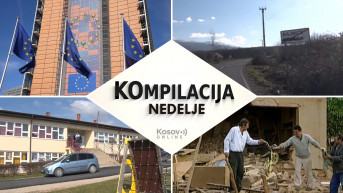
Waiting for a solution regarding dinars. That would briefly summarize yet another week in Kosovo. On the threshold of the next, with hope and apprehension, we look towards Brussels and Strasbourg. There is no doubt about the emotion with which we view the spring of 1999. It doesn't hurt any less today. In this week's compilation, besides emotions and memories, we have also included significant messages and even greater misunderstandings.
If they had put a dinar in the "piggy bank" every time they mentioned it, enough would have accumulated this week to at least pay off some overdue debts.
"We did not ban the dinar, but the only means of payment is the euro," Kosovo Prime Minister Albin Kurti said. Although it is being talked about, the dinar is not actually the topic, clarified US Ambassador to Kosovo Jeffrey Hovenier. The topic is the Central Bank of Kosovo Regulation and its consequences.
So, we end this week without progress and without dinars.
"There is no agreement regarding the dinar," Serbian President Aleksandar Vucic concluded even before the end of the week.
Maybe next week there will be. The new week brings new discussions and the possibility of finding the best, or at least a compromise between what both sides believe is correct.
"The Serbian side would like it to be dinars, the Kosovo side would like it to be euros," Dragisa Mijacic from the National Convention for Chapter 35 reminds of the months-long unsolvable formula.
This is a difficult task even for the best students. Although they would like to deal with other topics, money is unknown in every equation.
"This is one of the most difficult decisions since 1999," Zivko Zivotic, director of the primary school in Bostan in the Kosovo Pomoravlje region says.
And they should be trusted because if anyone remembers that year well, it is the citizens of Kosovo.
Even if they didn't remind us in school, we would have remembered that spring this week anyway. And 25 years later with the same emotions and sound in our heads.
"I remember the bombs, the sound of windows breaking; I remember hiding under the table with my brother, embracing him," Djordje Borisavljevic from Gracanica says, who was five years old during the bombing.
The older ones have been contemplating for decades whether things could and should have been different. A possible answer is now offered by Vuk Draskovic, the former foreign minister.
"Unfortunately, we have never missed an opportunity to miss an opportunity," Draskovic says, recalling the decisions that preceded the bombing.
Of course, there is another perspective on the opportunity to live differently. Thus, the citizens of Pristina are grateful for everything they received in 1999.
"We got everything we wanted from the bombing. Thank God they bombed us and saved us," say some of those we asked to look back 25 years.
They and their neighbors are witnesses to decades of searching for a way out of various wars, traumas, and crises. They are searching for a path towards a better society. However, it is much harder to find that direction if the signs along the way, like new signposts throughout Kosovo, are scribbled and incomprehensible.

comments