
The Council of Europe's Self-Destructiveness
Written by Dragan Bisenic for Kosovo Online
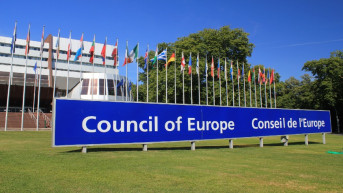
The Council of Europe has approached the archetype model of political compromise, if one exists or ever will. This organization, created by the initiative of British Prime Minister Winston Churchill, once had the capacity to be a truly exemplary association of European respect and appreciation for high democratic standards, but after the recommendation of the Political Committee, it is preparing to become the first international organization to legalize its actions against the foundations of its own existence. The Council of Europe relied on democratic principles and fair approach to European states with the clear goal of raising democratic standards and ensuring uniform protection of the rights and freedoms of all people on the European continent.
Since Kosovo was taken as a serious candidate for membership, it can be said that the organs and "Leitstaaten" (leading states, German) have done enough to discredit everyone's membership in this once prestigious organization. In the evolution of the self-destructiveness of the Council of Europe, the policy of "Kosovo in - Russia out" may best demonstrate distortions in understanding what promotes the European perspective and its future. In this self-ironic endeavor, it was not difficult for the Council of Europe to consciously engage in violating its own Statute for the first time and destroying political consensus when it comes to admitting new members.
The Committee of Political Affairs recommended that Kosovo* be invited to become a member of the Council of Europe. Approving the draft opinion during a meeting held today in Paris, based on the report of Dora Bakoyannis (Greece, EPP/CD), the committee welcomed the "comprehensive list" of obligations given by the Kosovo authorities in writing and emphasized that "membership would lead to strengthening human rights standards by providing access to the European Court of Human Rights for all those under the jurisdiction of Kosovo".
The full Assembly - which brings together parliamentarians from 46 member states of the Council of Europe - is expected to discuss the Committee's recommendation on Thursday, April 18th˚ during its upcoming spring plenary session, when it will vote on the final opinion on Kosovo's membership request. The final decision on membership is made by the Committee of Ministers of the Council of Europe, which will be held in May.
The statement of the Committee on Political Affairs stated that membership in the Council of Europe would "catalyze momentum for Kosovo to continue to advance human rights, democracy and the rule of law and address open challenges and issues of importance", citing issues such as the gap between normative standards and their effective implementation, the need to improve the protection of the rights of minority communities, and fostering a climate conducive to trust, reconciliation, and inclusion.
The Committee hailed as a "major step forward" the implementation of the Constitutional Court judgment in the case of the Visoki Dečani Monastery, adding that the establishment of the Association of Municipalities with Serbian Majority should be a "post-accession obligation" for Kosovo which will help ensure the protection of the rights of Kosovo Serbs and that expropriation is carried out "in strictest adherence to the law" and in full accordance with the Ahtisaari Plan.
Noting the worsening security situation in municipalities in northern Kosovo, the Committee pointed out that the "risk of open violence in Kosovo is too real" and assessed that security depends on "protecting the rights of the Serbian community, de-escalating tensions and normalizing relations between Kosovo and Serbia".
Acknowledging the "unprecedented circumstances" of the application, since 12 member states of the Council of Europe do not recognize Kosovo as a state, the Committee called for "diplomacy, dialogue, and compromise" and called on the Committee of Ministers to ensure that Kosovo's membership is "without prejudging the views of individual member states regarding the statehood of Kosovo".
This call by the Political Committee addressed to member states of the Council of Europe and the Committee of Ministers to "ensure membership for Kosovo without prejudging the views of individual member states regarding the statehood of Kosovo" sounds grotesque, as it requires states that do not recognize Kosovo to forget about that stance and to recognize Kosovo in the Council of Europe or because of the Council of Europe. The decision of one body of the Council of Europe to directly engage in violating the principles of the Helsinki Charter and to seek the help of states that adhere to those principles only further degrades the Council of Europe and reduces it to an unnecessary demonstration of the pale shadow of former valuable European ideals.
In her report, Dora Bakoyannis ignores the question of whether Kosovo meets the requirements for accession to the Council of Europe under its Statute, which in Article 4 refers to any "European state", summarizing that she did not deal with it. She relies on the opinion of two "eminent legal experts" that the assessment of statehood is a political decision, but they therefore considered that international presence in Kosovo, although clearly existing, has no executive powers, that the Kosovo authorities exercise jurisdiction over the territory and population of Kosovo, and that Kosovo has international relations.
The lawyers referred to the advisory opinion of the International Court of Justice, which found that the declaration of independence of Kosovo is not contrary to international law, including UN Security Council Resolution 1244, ignoring that this is only a derivative of the opinion of this court, but not what the court actually answered on the question posed. If they had wanted, they could have seen that in the Council of Europe itself. Thus, in the report of the member of the Parliamentary Assembly of the Council of Europe, Alain Destexhe, on the democratic approach to issues of self-determination and secession from 2017, the Human Rights Committee of the Council of Europe concluded that "in light of the complex and highly politicized nature of the legal issues at stake, and the highly diverse nature of the relevant practical situations, the Committee on Legal Affairs and Human Rights considered it impossible to assume the role of arbiter and to define universally applicable, generic guidelines". In its opinion, the ICJ does not answer the question of the right to secede from the state. The Court considers that questions relating to the scope of the right to self-determination and the existence of any right to "secession" fall outside the framework of the question posed.
Dora Bakoyannis in the report affirms the view that recognition is "the prerogative of states" and that as a result, the final assessment of whether Kosovo is a "European state" within the meaning of the Statute of the Council of Europe will be up to each member state when voting for Kosovo's membership. It is a curiosity that Kosovo is allowed to be admitted not on the basis of the Statute of the Council of Europe, under which all other states were admitted, because it would prevent it, but on the basis of "internal rules" which "accept that this decision does not require unanimity, but that it can be made by two-thirds of its members", as recommended by Bakoyannis.
This is an absolute paradox in the operation of the Council of Europe. All states have so far been invited to membership based on consensus and agreement of all members. Now the Council of Europe is supposed to function with opposition to the call for membership, which is neither small nor negligible. There has been a great turnaround on this issue, even among those states that are proponents of the idea of Kosovo in the Council of Europe, such as Germany. This testifies to how reluctantly they engage in this risky operation. The German memorandum sent to members of the Parliamentary Assembly of the Council of Europe (PACE) in April 2022, which was disclosed by the European Stability Initiative, suggested that Kosovo formally cannot even apply for membership; that it should only be invited based on the consensus of all members; that such consensus was unthinkable due to Serbian opposition; and that Kosovo should be offered better alternatives - in consultation ("Abstimmung") with Serbia - to membership. But now Kosovo's admission is proposed, despite the division in the Council of Europe that is on the horizon.
In the Council of Europe, there are 12 states that do not recognize Kosovo. When Kosovo's application was taken into consideration a year ago, out of 46 member states, 33 states expressed support for Kosovo in the Council of Europe, while 13 states did not vote in favor of this decision, of which 7 were against and 6 abstained. Hungary, Romania, Cyprus, Spain, Azerbaijan, Georgia, and Serbia represent the largest number of states ever opposed to the admission of a candidate country to the Council of Europe. It is clear that abstaining from voting by Bosnia and Herzegovina, Greece, Slovakia, Moldova, and Ukraine was not a principled stance. All these countries have problems maintaining their territorial integrity, some do not control part of their territory, and some have significant minorities in their population, not to mention the decades-old dispute between Greece and Macedonia.
It can be expected that such a voting structure will be retained both in favor and against decisions, which is an extremely unfavorable ratio for the further functioning of the Council of Europe. This is a proportion that introduces the Council of Europe into a serious division. Disagreement on such a fundamental issue, what states are, what secession is, and whether the Council of Europe can voluntarily call entities into membership that do not have state capacity, would inevitably lead to very sharp debates, arguments, challenges, which the political and legal apparatus of this organization, and especially its General Secretariat, would not be able to easily defend.
This was, incidentally, the minimum majority required for the acceptance of the application, just two votes more than the necessary 31.
What this distorted procedure for admitting Kosovo to the Council of Europe should show is that Serbia agrees to Kosovo in international organizations, unless it decides to leave the Council of Europe. This should be the basis for further annexation of Kosovo to other associations, primarily NATO, and then the European Union. The NATO Parliamentary Assembly has already accepted Kosovo.
Serbia has the opportunity to reopen the issue of Kosovo in new circumstances, when secession is seen in a completely different light. A debate in the Parliamentary Assembly in which representatives from 13 states that do not recognize Kosovo or did not vote for its admission participate is something that is needed by the Council of Europe at this moment, but also by Europe. Serbia can certainly coordinate its approach in the Parliamentary Assembly with states that do not recognize Kosovo, to act in accordance with that in political and practical terms in the Council of Europe. The same applies to political groups, since party affiliation is an important form of action in the Council of Europe. Although Serbia does not have a formal majority, it can do enough to make this bite quite bitter.
The Council of Europe, by affirming its "broken consensus" and its future overruling of some states, enters the zone where the experiences of the former Yugoslavia would be necessary for it. In that case, Kosovo is the right candidate. Just as Kosovo broke Yugoslavia on the questions of majority and minority, so Kosovo can break the Council of Europe on the same question.


comments