
Elections across Europe, including in Kosovo, an opportunity to trust those who do not pursue hypocritical policies
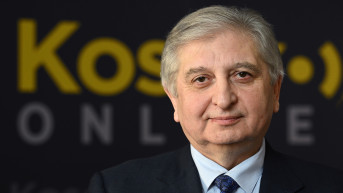
Written for Kosovo Online by Zeljko Sajn
In today’s parliamentary elections in Kosovo and Metohija, six Serbian parties and initiatives are participating with a single, clear goal: restoring Serbian representatives to the system’s institutions as a first step toward revitalizing UN Security Council Resolution 1244 and guaranteeing Serbia’s territorial integrity and sovereignty. Legitimate elections in Kosovo and Metohija could balance international relations and ease tensions in this Serbian province, which, like the rest of the world, is joining the creation of a new global multipolar order, machinery that has already been set in motion and is unstoppable.
While the world is exhausted by fragmented wars and fears of a potential Third World War, the international order established at Yalta after World War II is crumbling before our eyes, and we are witnessing the birth of a new, multipolar international order. With Donald Trump assuming leadership in the United States, an important discussion is expected with Russian President Vladimir Putin, which, beyond ending the war in Ukraine, will certainly include negotiations on the foundations of a new international order, just as Roosevelt, Stalin, and Churchill once did.
The President of the Russian Federation has already spoken at the 16th BRICS Summit in Kazan, as well as at his annual press conference in Moscow, about creating a new multipolar world based on the utilization of natural resources, restoring the authority of the United Nations, and building relationships based on international law, without hegemonic actions and selective adherence to the UN Charter. This approach is supported by more than half of the world.
On the occasion of the 80th anniversary of Yalta, Russian Foreign Minister Sergey Lavrov wrote in an op-ed:
"Speaking on October 5 at the Valdai Club session, Russian President Vladimir Putin clearly advocated for strengthening international law based on the UN Charter and outlined six principles for establishing genuine multipolarity: openness and interconnectivity of the world—without barriers to communication; respect for diversity as a foundation for collective development; maximum representation in global governance structures; universal security in the interest of all; fair access to development resources; and equality for all, rejecting the dominance of the ‘rich or powerful’."
He then highlighted Putin’s words that the essential task ahead is not to build a new world from scratch by erasing the past, but to construct it on a solid existing foundation – the UN Charter.
"The key now is to prevent its destruction through opportunistic, selective manipulation of its principles and to ensure that all countries fully adhere to it in its entirety. If members of the global community find the determination to return to the origins and translate their UN Charter commitments into practical action, humanity will have the opportunity to overcome the devastating legacy of the unipolar era," Lavrov emphasized, quoting President Putin. He added that the preparations for the “Summit of the Future,” to be held next year at the initiative of the UN Secretary-General, will reveal the extent to which world leaders are ready to recognize their collective responsibility for the future of the world.
"If we desire peace and prosperity based on equality and solidarity, leaders bear a special responsibility to achieve compromises in shaping our shared future for the common good," UN Secretary-General Antonio Guterres stated at a press conference ahead of the 78th UN General Assembly session, whose mission is precisely to seek consensus rather than divide the world into “democracies” and “autocracies.” "Russia, along with like-minded nations, is fully prepared to contribute to this effort," Lavrov concluded.
What is certain is that all leaders who have acted hypocritically regarding the Brussels, Dayton, and Minsk agreements will lose their right to a further political or statesmanlike career. Among them are Germany and France – Scholz and Macron– who misled all of Europe, not just governments and peoples, by failing to honor these agreements. Not only did their predecessors, Hollande and Angela Merkel, admit that the Minsk agreements were used to prepare Ukraine for war with Russia, but even Theresa May and Jens Stoltenberg have accused Russia of threatening world peace. In this context, the Brussels Agreement on normalizing relations between Belgrade and Priština was not supported for its intended purpose but was instead used to heighten tensions while giving Kurti maximum support, effectively enabling him to revive Adem Demaci’s ideology of creating a so-called Greater Albania.
Therefore, new elections across Europe, including those in Kosovo and Metohija, offer voters a chance to correct past mistakes and place their trust in those who are not inclined to pursue hypocritical policies, regardless of their origins.
The failure to honor the Minsk agreements, as we know, triggered Russia’s Special Military Operation in Ukraine, which the Biden administration fully supported financially and militarily. The new US administration, under Donald Trump, has announced a 180-degree shift in American policy, implementing an institutional system without military force and opening dialogue with new political figures. This is particularly evident in Germany, where Elon Musk has supported the current opposition. Regarding Kosovo, Richard Grenell has pointed out that Kurti was a tool of those who bought peace to prepare for war in Europe, including the conflicts in Yugoslavia – Serbia and Kosovo.
In his historical analysis of the Yalta world order and the path to a new multipolar world, Sergey Lavrov also addressed the NATO bombing of Yugoslavia:
"When the principle of self-determination contradicts Western geopolitical interests – as in the case of Crimea, Donetsk, and Lugansk People's Republics, and the Zaporizhzhia and Kherson regions joining Russia – it is not only disregarded but also harshly condemned, with people being sanctioned for their choices. However, when self-determination serves Western interests, it is upheld as an absolute 'rule.' One only needs to recall how Kosovo was seized from Serbia, without even holding a referendum."
"The ongoing deterioration of the situation in this Serbian province is deeply concerning. The delivery of weapons to Kosovo and NATO’s assistance in creating an army represent a blatant violation of UN Security Council Resolution 1244. The entire world is witnessing how the tragic history of the Minsk agreements is repeating itself in the Balkans. These agreements envisioned a special status for the Donbas republics, yet Kyiv openly sabotaged them with Western support. Likewise, the European Union now neither wants nor is able to force its Kosovo proteges to implement the 2013 agreement between Belgrade and Pristina on establishing the Community of Serb Municipalities in Kosovo, which would grant special rights for language and tradition. The EU was the guarantor in both cases, and the outcome appears to be the same. ‘As the sponsor, so the result.’"
Compared to the Clinton and Biden administrations, Trump has yet to fully outline the US-Russia negotiations on defining the final contours of the new multipolar world that should secure global peace. However, statements from two of Trump’s close associates – Blagojevich and Grenell – indicate that US policy is shifting closer to Belgrade and Vucic rather than Pristina and Kurti.
"This is a great opportunity to change American policy toward Serbia and Kosovo. The way Kurti’s government treats Serbs in Kosovo and Mitrovica amounts to ethnic cleansing. Kurti’s goal is to expel Serbs from Kosovo. Once this is explained to policymakers, and they are already becoming aware, when President Trump has the chance to focus on this region, and with Richard Grenell’s influence, Serbs have reason to hope for change," Blagojevich told Tanjug.
Pointing out that Trump is changing US policy toward Serbia, Blagojevich stated that Democratic presidents have historically pursued anti-Serbian policies:
"They supported Kosovo, not Serbia. Their hostility was evident through USAID and how they spent American taxpayer money to meddle in domestic politics in countries like Serbia. Those days are over. Trump has already changed this and will dramatically reshape foreign policy even further."
Meanwhile, Trump’s special envoy for strategic missions emphasized that Albin Kurti and his government do not enjoy US trust.
"The Trump administration has worked and will continue to work toward peace for everyone in the Balkans, but we need reliable partners. Kurti's government was not trustworthy during Trump's first term, nor during Biden's term. Both Republicans and Democrats have consistently criticized Kurti for taking unilateral actions that destabilize the region. The EU and NATO have done the same. The international community is united against Kurti. American companies are expanding their business in Albania and Serbia, but not in Kosovo, because of Kurti. Kurti has also opposed every US initiative proposed by Presidents Clinton, Bush, Obama, Biden, and Trump. The rhetoric Kurti now uses, claiming he is close to the US and better than all previous Kosovo governments, is absolutely false. Do not be deceived," Richard Grenell said.
Therefore, representatives of the Russian and American administrations are coming closer in their positions on the Kosovo issue, but a compromise is yet to be decided. First and foremost, it is essential for Serbs to have their representatives in the system’s institutions. Sometimes, even a single voice holds the power to change the world.

0 comments