
Does it make sense to put Serbia in a dilemma - Kosovo or the EU?

"Apparently, Von der Leyen, Michel, and Borrell don't seem to care much about pressing global issues, so it's not surprising that there hasn't been much talk in Davos in recent days about the upcoming elections for the EU Parliament, but rather about the possibility of Trump's return to the White House"
Written by: Milos Garic
That Serbia will be faced with a choice between potential EU membership and maintaining the stance of not recognizing Kosovo as a state has been clear for a long time. Germany, as the leading EU country, defined this as a key condition for Serbia's "European path" even before Albanian political representatives unilaterally declared independence in 2008, contrary to UN Security Council Resolution 1244, and well before Serbia struggled to "earn" the status of an EU candidate in March 2012.
In the meantime, there have been many contradictory statements, different promises, slogans like "both Kosovo and the EU" at one point, imprecise interpretations, and other attempts to throw "dust in the eyes". Even former Chancellor Angela Merkel participated in this.
During her last official visit to Belgrade in September 2021, she stated that the Kosovo issue should be resolved at the end of the European integration process.
"Some issues will be resolved at the end of the European process. Not all EU member states have recognized Kosovo. The issue must be resolved for EU members to respond affirmatively, but discussing the end of the process makes no sense before other things are resolved. I am in favor of a roadmap where all other issues are resolved first," Merkel said at the time.
At that moment, it seemed that Germany would not impose "recognition" as a key requirement for Serbia for some time, but things soon changed. Since Olaf Scholz took office as chancellor, and especially with the appointment of the "Green" representative Annalena Baerbock as the Head of the Ministry of Foreign Affairs, Berlin no longer leaves any doubt.
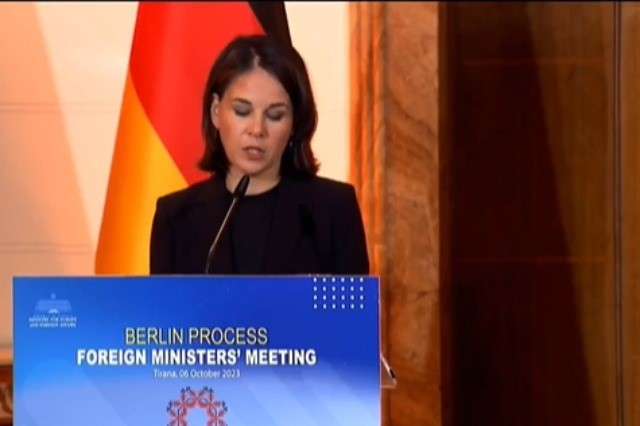
"The Chancellor said it was inconceivable for any country to become a member of the European Union without mutual recognition. At the end of the normalization process, it is clear to us that there will be mutual recognition. When former Minister Baerbock was in Belgrade, she said that the end of the comprehensive agreement must include mutual recognition. I don't understand the surprise; there is no change for us," the German Ambassador to Pristina, Jorn Rohde, emphasized recently.
No surprises, no dilemmas
Rohde is correct; the German stance is no surprise. However, it is also not surprising that there is no change in Serbia's position of not recognizing the forced and unilateral secession of its southern province. This has been reiterated many times in recent months, particularly by Aleksandar Vucic, the country's top official.
Considering that there has been a significant question mark over the EU enlargement narrative for seven or eight years, numerous disagreements within Brussels itself, the ongoing "dialogue" between Belgrade and Pristina, and additional complications arising from conflicts in Ukraine and the Middle East, the question arises as to why the Germans are already insisting on the stance that Serbia faces the ultimate choice of "Kosovo or the EU". In the end, is there any real dilemma?
Aleksandar Mitic, a research associate at the Institute for International Economic and Political Studies, says this has been known since December 2007.
"At that time, a decision on the coordination of the unilateral declaration of Kosovo's independence was made at the EU Summit in Brussels, which occurred on February 17, 2008, and the subsequent recognition of that coordinated unilateralism by most EU member states. Simply put, as long as Kosovo is an 'independent state' for the majority of EU members, Serbia can't join the Union without relinquishing Kosovo and Metohija. Everything else is PR and demagoguery," Mitic notes for Kosovo Online.
The vast majority of Serbian citizens, as Mitic points out, have no intention of giving up Kosovo, not even for the sake of the EU.
"Let's remember the manipulation called 'Kosovo and the EU', which was crafted in Javier Solana's cabinet. Its goal was to influence the domestic political scene in Belgrade, serving as cover for Belgrade at the time to transfer the issue of Kosovo and Metohija from UN hands to the EU, with all the catastrophic consequences we are witnessing today with the 'Franco-German plan' for Serbia's renunciation of Kosovo. According to all research, the vast majority of Serbian citizens clearly refuse to give up Kosovo and Metohija for potential membership in an international organization whose members neither want nor can carry out the enlargement process. Moreover, as shown by the latest survey by the European Council on Foreign Relations, only 25% of respondents among EU citizens expressed a desire for Serbia's accession to the Union," Mitic concludes.
Looking at things this way, it would be much better for the European Union to invest more effort into objectively and efficiently influencing the normalization process between Belgrade and Pristina without determining status, as it doesn't have such a mandate.
However, after numerous displays of weakness in that regard and following the Kosovo Government's recent decision to continue in the direction of "non-normalization", this time by discontinuing payment transactions with Serbia and banning the use of the dinar, it seems that another embarrassment for the current EU bureaucracy is imminent.
Messages from Davos
Empty statements and verbal reprimands after unilateral escalatory actions by the authorities in Pristina have been seen many times before, achieving nothing. The Kosovo crisis is a severe patient with many open wounds, and European "doctors" are treating it with herbs and chamomile tea. Of course, such an approach benefits the side that has de facto control of the terrain and all the mechanisms of power at its disposal.
Therefore, it turns out that the Serbian side is in great error when expecting help from Miroslav Lajcak and other EU officials. Whether Albin Kurti is truly too big of a "bite" for them, or they are just following a pre-established agenda that aligns with all Albanian goals in Kosovo, is not as important anymore.
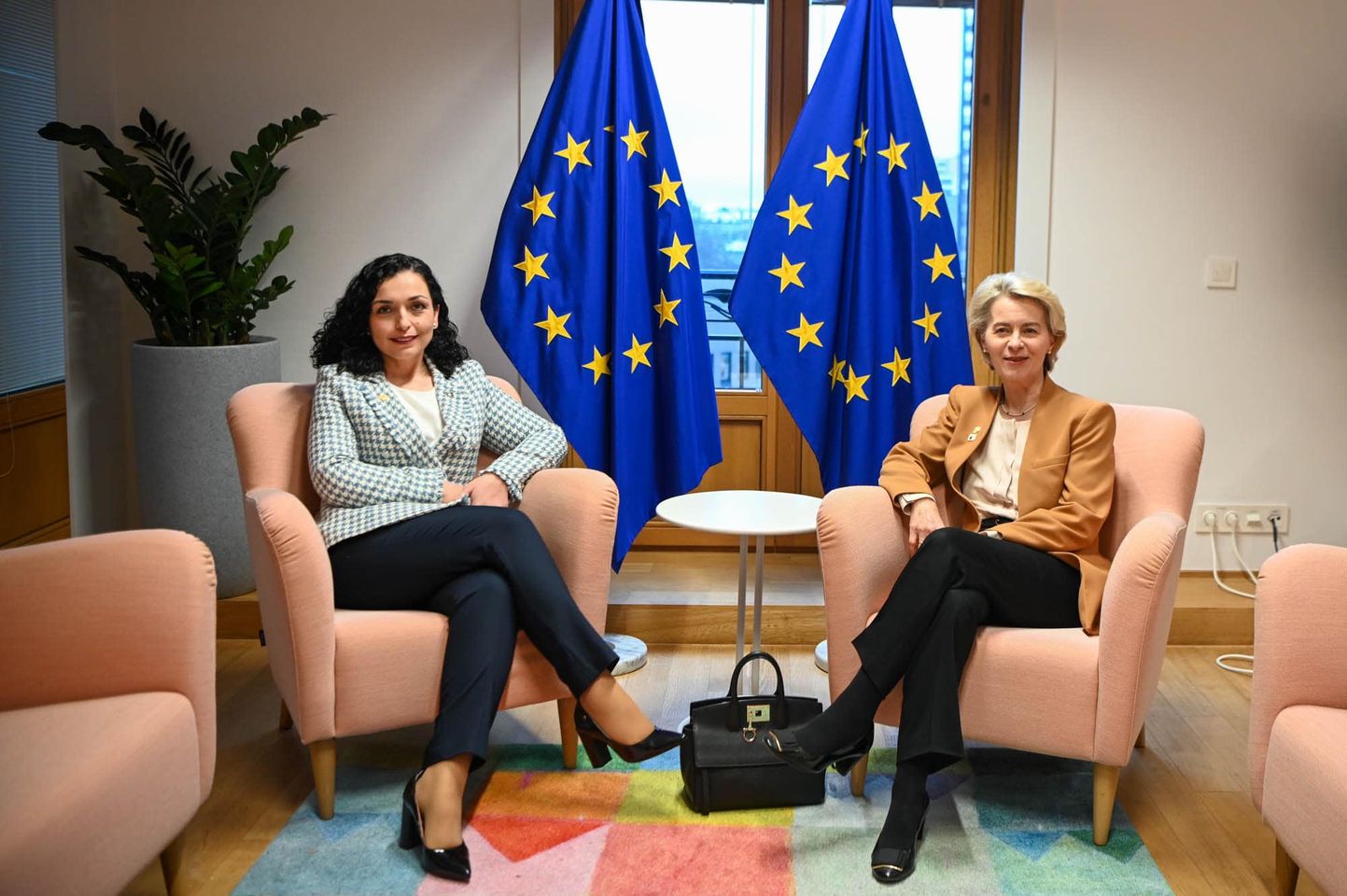
The fact is that Von der Leyen, Michel, and Borrell don't concern themselves much with key global issues, so it's not surprising that there hasn't been much talk about the upcoming EU parliamentary elections in Davos in recent days. Instead, the focus has been on whether Trump could return to the White House. Zelenskyy also realized this and came to Davos primarily to connect with those who make decisions. An interesting scene was his meeting with the assembled bosses of BlackRock, Vanguard, JP Morgan, and other financial mega-corporations that hold royalties from the future Ukraine.
Vladimir Vuletic, a sociology professor at the University of Belgrade, believes that posing the dilemma of "Kosovo or EU" for Serbia is a way of pressuring broader goals to be realized and that Serbia voluntarily limits its territorial space.
"Such a demand is justified by the alleged principled stance that aims to avoid tensions within the EU. This could be somewhat true as precedents like that already exist, as in the case of Cyprus. However, for the EU, the admission of Serbia is not of fundamental importance because it is not about expansion, considering that Serbia and the entire Western Balkans are in the vicinity of EU members. The admission of these countries to the EU wouldn't bring significant benefits that the EU doesn't already have, so it's a stalemate. For Serbia, EU accession without Kosovo could only be in its interest if all Western Balkan countries were immediately and simultaneously admitted to the EU, guaranteeing no further border changes, with the simultaneous possibility for Serbia to monitor the respect of the human rights of the Serbs who would remain outside Serbia," Vuletic points out for Kosovo Online.
Bad policy and lost authority
For such a solution, he says, there is not much sympathy in the EU.
"Well, then there is not much sympathy in Serbia for accepting such a dilemma that, moreover, does not guarantee that there will be no further demands for border changes. If Serbia were to accept Kosovo's independence, regardless of what is offered in return, there is no guarantee that a movement would not emerge in Vojvodina seeking independence, given that both Vojvodina and Kosovo were autonomous provinces within Serbia. Also, there is no guarantee that Bosniaks in Sandzak would not seek independence because, based on ethnic principles, the Albanians in another part of Serbia gained such independence, and so on. Since no one can guarantee that border changes respect any principle other than the principle of the current political will and the interests of the US and NATO, Serbia is not motivated to trade any part of its territory and is therefore determined in its stance of not recognizing Kosovo," Vuletic concludes.
As for the future of the EU, nothing is currently known with certainty. The EU Commission, parliamentarians, and other Brussels services today have little say on any of the serious global issues. They have squandered their authority over the past decade with very problematic political decisions.
The Brussels Agreement between Belgrade and Pristina in 2013 was guaranteed by Baroness Catherine Ashton on behalf of the EU, but it turned out that Brussels had no intention of implementing it to the end. Peace talks in Minsk, according to admissions from the highest levels in Berlin, were conducted from the beginning with the conscious deception of one side about the implementation of the agreed. It turned out after several years in Ukraine that Russia, as the largest and most powerful European neighbor, could not forgive that.
Such behavior can be "effective" for a while, but not forever. Relations with Russia have "broken down", so South Africa, Saudi Arabia, India, Brazil, and even Ukraine now have many reasons to listen to messages from Brussels with great reservation.
Colossal changes are taking place on a global scale, and key decisions, as it stands, will not be made in Brussels but at other addresses. This should be kept in mind when scaring Serbia with chapters and conditions like "Kosovo or EU".

comments