
Erosion of opportunities for full independence
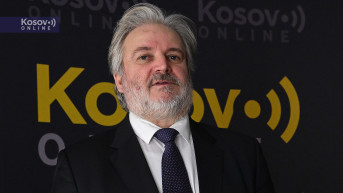
Writing for Kosovo Online: Dragan Bisenic
Since the beginning of the Ukrainian conflict, it seemed that circumstances favorable to achieving full independence for Kosovo were dramatically changing in favor of Pristina. It was clear that regardless of whether Russia achieved its goals or not, Serbia's position remained weakened and burdened by its relationship with Russia. This impression was particularly strengthened after Western assumptions considered necessary and sufficient for Kosovo's independence changed, with Serbia's acceptance of that independence conditioned only indirectly.
It could be expected that the prolongation of the war in Ukraine would shift a part of the burden onto Serbia in two directions: pressure to impose sanctions on Russia and the "normalization of relations with Kosovo," otherwise referred to as the concept of "de facto" recognition of Kosovo. In that sense, these expectations have not failed. The second year of the Ukrainian conflict began with a forced rhythm in which Serbia's relinquishing of blocking Kosovo's membership in international organizations emerged as the essence of the "small solution" of Kosovo's recognition. In this idea, it is no longer essential to gain recognition from a majority of UN members; the goal has become breaking the resistance to Kosovo's independence among five EU members. In return, ten years after the Brussels Agreement, under which it was supposed to be effective and functional, in contractual terms, the Community of Serb-majority Municipalities has been offered to Serbia again, which Pristina should form.
The erosion of Pristina's chances during the past year had four distinct phases, each showing different manifestations. In the first phase, the acceptance of the Brussels Agreement and the Ohrid Annex presented an idyllic image of complete success, which was disrupted by a new phase beginning in May with interventions by the Kosovo Police in Serbian municipalities, increased repression against the Serbian population, and the refusal of the US and EU to support Pristina's unilateral decisions. Autumn brought a kind of rehabilitation of Pristina's positions. The end of summer and the beginning of autumn were marked by intense linkage between the Kosovo and Ukrainian cases. Ukraine was included in the Western Balkans context, thereby gaining candidate status, although some Western Balkan countries have been waiting for that status for almost two decades. At that time, there were considerations from the Ukrainian side regarding recognizing Kosovo, but it did not happen, and it probably will not happen, as there are not many ways to avoid considering the Kosovo case as a precedent for Crimea and other territories seeking a change in their status. The Russian Ambassador in Belgrade, Aleksandr Botsan-Kharchenko, stated that "no nation that thinks will accept the thesis that Kosovo is a special case." According to him, in South Ossetia and Abkhazia, "people followed all the events in Kosovo thinking about their situation." It is logical to assume that they will continue to follow Kosovo's example.
Meanwhile, dissatisfaction with Pristina grew, with accusations against European mediators, especially Miroslav Lajcak, who was attributed a "pro-Serbian" stance, and a similar fate befell Josep Borrell. Nevertheless, Kosovo received visa liberalization from New Year's, which Serbia made functional with its gesture of goodwill. Specifically, only because of this move by the EU, Serbia accommodated and accepted Pristina's license plates, for which the army was even put on the highest level of combat readiness.
Pristina failed to seize this opportunity to improve relations with Belgrade but only a few weeks later responded with further escalation and unilateral actions by banning the use of the dinar in Serbian municipalities in the north. This could now truly cost Pristina.
The abolition of the dinar as a means of payment in northern Kosovo was the last straw and convinced Americans and Europeans that the current Kosovo Government does not accept the Community of Serb-majority Municipalities. Hence, there were very strong reactions from officials like Secretary of State Antony Blinken and James O'Brien.
The decline in Kosovo's prospects for full independence, however, began precisely with its continuous, and now seemingly permanent, refusal to create the Community of Serb-majority Municipalities. No progress has been made on this front. Kosovo does not want to establish the Community of Serb-majority Municipalities, even though the EU and the US have been repeating for months that it is an "urgent" or "most urgent" task. It can be said that Kosovo's prospects for independence are in administrative proportion to its readiness to form the Community of Serb-majority Municipalities.
Even the US Envoy Gabriel Escobar went into detail, almost pleadingly explaining what the CSM could look like, and then Albanian Prime Minister Edi Rama announced the European proposal for the Community, but nothing has changed. Not even the revelation that the author of the CSM concept is the current US Ambassador to Belgrade, Christopher Hill, who devised it in one of his proposed agreements in 1998. It is likely that the current Assistant Secretary of State for Europe, James O'Brien, also participated in this. Even these facts and the active involvement of the author of this concept do not help the Kosovo Government change its stance. All this has brought the dialogue to the brink of meaninglessness and collapse.
Kosovo's leaders have been striving with all their might to transpose the analogy of Moscow and Kyiv onto the relations between Belgrade and Pristina, portraying the President of Serbia as Putin, and the Kosovar leaders alternately as Zelenskyy. It was claimed that Serbia has long been planning the "annexation of Kosovo." This was refuted by NATO officials and KFOR commanders, even though the situation in northern Kosovo was very tense and almost dramatic at times. It was expected that in the current circumstances, with Russia largely isolated from the Western world, this comparison would be understood by everyone and formulated in favor of Kosovo, to the detriment of Serbia. However, this calculation was incorrect. This comparison did not resonate deeply in Washington or Brussels.
Recently, the reputable Russian newspaper "Izvestia" stated in an editorial that the relations between Serbia and Russia were "at the peak of their partnership": trade is growing rapidly, political interaction increasingly resembles an alliance, and the leadership of the two countries is trying to overcome as many barriers as possible on this wave. However, Belgrade and Moscow have not found themselves in their most stable positions because this "new old partnership" resembles more successful crisis management, and at critical moments, both countries have been able to recognize reliable "partners in distress" in each other.
It seems that Belgrade has managed to slow down or soften the analogies between Kosovo and Crimea that were common in Russian politics and public discourse until recently. Ten years ago, the Russian President seemed to desire the same scenario for Crimea as what happened with Kosovo. As early as 2014, the President of Russia assessed that the process of recognizing Crimea as a part of Russia would be "long and boring" and emphasized that such issues could be "resolved quickly" if there was political will, as was the "case with Kosovo." In an analysis by "Izvestia," Kosovo is marked as a "precedent" that Russia can invoke in pursuing its policy, but it is noted that this "quite irritates Belgrade." Serbia is praised for remaining practically the only European state that has not imposed sanctions on Russia and remains practically the "sole partner of Moscow on the continent."
Two years after the start of the war in Ukraine, it seems that these expectations have not been met, and Kosovo's abilities for independence are degrading along with the understanding of Western partners, which is approaching the edge of abandoning the previous concept. Just a day before February 24th and the anniversary of the war in Ukraine, the US Envoy for the Balkans, Gabriel Escobar, went even further in shaping new alternatives for Kosovo, but ones that are outside the inevitable independence. Until now, it seemed that the US had completely defined the issue of Kosovo's independence, regardless of what the world thought, and as for Serbia, every dialogue should lead to only one goal – mutual recognition.
Asked whether the US would stop supporting Kosovo in the international arena, Escobar referred to a statement by the US Ambassador to Pristina, Jeff Hovenier, emphasizing that unilateral actions maked it difficult for Kosovo to integrate into the transatlantic community.
"I think Ambassador Hovenier put it best when he said that this complicated our ability to help Kosovo integrate into the transatlantic community. So, whenever we talk about Kosovo with other partners, especially those who do not understand, they are concerned that Kosovo is not doing what the facilitated dialogue of the European Union requires, which represents the entire European Union, and why it must move forward. In other words, it makes it very difficult for us to be able to support Kosovo for many things, including NATO, candidacy for the European Union, the Council of Europe, and a range of other organizations. So it's not that we decide what the consequences are, the consequences are self-evident," the US Envoy emphasized.
So, Kosovo has managed to lose the US support for integration into Western European and transatlantic organizations, which is otherwise the purpose of the current dialogue led by the European Union - at least in terms of the strongest supporters of Kosovo's independence. This is a completely different perspective on Kosovo's reality, which begs the question of what it would be and in what direction it would lead.
No one has exactly defined this new perspective, but it has been suggested several times this summer that NATO and KFOR are intensively studying the militarization of the situation in Kosovo if necessary. There are other options as well because ultimately, the US can also abandon Kosovo, just as it did with Afghanistan, where investments and stakes were incomparably higher and more significant. Forecasts indicate that the Ukrainian conflict will continue, so Kosovo could become a part of its overall context and thus a part of a general solution.

0 comments