
FEUILLETON 25 Years of NATO Bombing of Serbia (38): Boris Johnson, Djindjic's Political Fate, and the Mysterious Swede
Written for Kosovo Online by: Dragan Bisenic
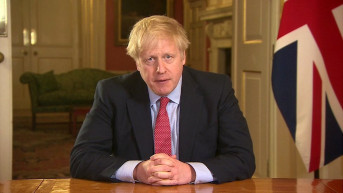
The recent British Prime Minister Boris Johnson was a war correspondent, reporting from the Federal Republic of Yugoslavia during the NATO bombings, a fact that is nearly forgotten today.
Johnson's dispatches from Belgrade in the spring of 1999 were published in the "Daily Telegraph," but even 25 years later, they remain an interesting read. It's hard to accuse him of engaging in unconstructive propaganda.
Johnson called the attack on Yugoslavia, which lacked the approval of the UN Security Council, a "miserable war."
"War is stupid. War is hell. But there has never been a war so incredibly incompetent in aligning methods with goals," he said. Unlike others, he did not try to downplay NATO's actions. "NATO managed to behead a priest as he crossed a bridge in broad daylight on the holiday of the Holy Trinity. They killed a child while she was sitting on a potty. Of course, this was not intentional, in the sense that some bearded man in Mons did not target this priest or this child. But it could be said that it was intentional because NATO dropped bombs from 15,000 feet in the secure knowledge that civilians would be killed."
Johnson concluded that particular article by saying that if there were to be a NATO 'victory parade' at the end of the war, there should be a man behind Clinton and Blair in their carriages whispering in their ears 'not just about their own mortality, but also about the mortality of the people they claimed to protect.'
Condemning the violence of Serbian paramilitary formations against Kosovo Albanians, Johnson refused to engage in Serbophobia, which was so fashionable in Western circles in the 1990s. "Call me a fool, but it seems to me that I like most of the Serbs I have met, and I feel sorry for them," he wrote in an article titled "The Serbs will blame us and they will be right."
The war against Yugoslavia was, of course, led by the Labour government in Britain, so Johnson's strong criticism of the way it was conducted can be seen (at least partially) as partisan politicking, since Johnson was already a man with a big perspective in the Tory party.
But in Belgrade, Johnson saw things, witnessed them, and was affected by them. "It was particularly sad to walk down a street in the suburbs, where the dead and injured were being taken out to see the collateral damage. It was especially sad to walk down a street in the suburbs, where the dead and injured were being carried out of houses. I felt a surge of anger that my taxpayer money was being used to fund this destruction, and I'm afraid I apologized pathetically, in a mumbling way. It's hard to be in an ancient European capital, under bombardment, and not oppose the bombardment," he wrote.
Johnson reported differently about the events in Srebrenica. In a 1997 article, he wrote that "the Muslims are not such nice guys either."
However, just a few years later, Johnson changed his tune. At a party with a mutual friend, just a few days before the illegal invasion of Iraq in 2003, he was asked if he believed the joke that Saddam Hussein had weapons of mass destruction that could be assembled and launched within 45 minutes, Johnson paused and then replied, "You have to admit that Saddam is not a very nice guy."
In the foreword to his 2006 book "Have I Got Views for You," Johnson recanted much about his war reporting from Belgrade: "I think, in retrospect, that I failed to see the forest for the trees; and that led me to approach the second Gulf War more openly." He continued, "You can say what you want about Blair. But he participated in the overthrow of two tyrants, Milosevic and Saddam, whom (John) Major had left in power."
Johnson quickly abandoned his journalistic unconventionality for advancement in his political career, which is understandable, given that he reached the very top of the British political ladder. When he became prime minister, the Labourites dug up his 1997 texts about the massacre in Srebrenica, in which he described "these Muslims" as "not exactly angels."
Writing two years later for the Ottawa Citizen, Johnson condemned what happened, describing it as "the worst massacre on European soil since the Third Reich," but argued that it would have been difficult for the West to intervene in the conflict. "Well, I say, the fate of Srebrenica was terrible. But they weren't exactly angels, those Muslims," Johnson wrote.
In a letter, more than 100 Muslim organizations and community representatives called on Mr. Johnson to apologize, claiming that his attendance at events commemorating Srebrenica "without reflecting on your previous comments represents an insult to the victims and their families."
In a letter with 30 other parliamentarians, Labour MP Tony Lloyd said that "there is no justification for any form of blaming the victims of genocide for its commission." At Downing Street, these remarks were dismissed and responded to by stating that Johnson's comments had been taken out of context.
But the very next day, Johnson came to Parliament with a Srebrenica symbol and gave a video statement condemning "the worst crimes that Europe has seen since World War II." Johnson particularly emphasized that he was "proud of the role Britain has played over the past 25 years in fighting for justice, including the work of British judges, lawyers, and prosecutors." He, however, did not mention the word "genocide" at all. Johnson's messages were also supported by the opposition leader, Keir Starmer, who had also worked on cases under the jurisdiction of the Hague Tribunal.
Johnson's Foreign Minister, Dominic Raab, who had previously worked as a lawyer for the Foreign Office involved in the work of the Hague Tribunal for the former Yugoslavia, also released a statement noting that he was an officer of the Hague Tribunal between 2003 and 2006.
An interesting episode with Johnson is described in his book by then Federal Secretary for Information, Goran Matic.
Matic writes that Johnson, when they met, "acted confused and absent," but that when they started talking, "he acted differently from other journalists."
"Journalists usually have a certain system of conversation. They act seriously, trying to extract as many views that are considered official in the media. In passing, they try to locate weaknesses or to nominate themselves for a conversation with Sloba and Mira. Boris behaved unconventionally. We didn't even talk in the form of an interview. It was an exchange of opinions," described Matic. The climax in this "exchange of opinions" was the moment when Johnson asked Matic if he knew how to sing a "Beatles" song? How does the text "Ob-la-di, ob-la-da" go?
When Matic began to sing, Johnson continued and sang the second stanza. He didn't publish anything from that, but openly criticized Blair's policy.
This war, not only shaped the political career of Boris Johnson, it also significantly influenced the political scene in Serbia. In the opposition, two currents formed that opposed the president of the FRY, Slobodan Milosevic, and his majority. On one side was the Democratic Party of Serbia led by Vojislav Kostunica, and on the other was the president of the Democratic Party, Zoran Djindjic. Kostunica was a strong opponent of the NATO attacks, while Djindjic saw the NATO bombing as a complementary move to remove Milosevic from power. Immediately after October 5, 2000, the two of them would play key roles in the state, but contradictions and irreconcilable differences would remain.
During the bombing, Djindjic was in Montenegro because he believed his life was endangered in Serbia. After appearing in foreign media asking for the removal of Slobodan Milosevic, he found himself in a very bad political situation by the end of May. In Belgrade, it was expected that he would be removed from the position of president of the Democratic Party very soon, perhaps within the next two days.
Djindjic had given several interviews to foreign media - CNN, BBC, and others, demanding that President Milosevic be sent to the Hague Tribunal and asserting that "Yugoslavia must make intensive efforts to regain the world's trust, which is being lost in Kosovo." These and other similar views are seen as support for NATO, especially during the heavy bombardment of several cities where local authorities were dominated by the Democratic Party – such as Nis, Novi Sad, and Pirot.
Last week, Djindjic, along with the President of Montenegro, Milo Djukanovic, visited Germany and spoke with German Chancellor Schröder. Due to this visit and previous interviews, the daily newspaper "Politika" published an extensive comment describing Djindjic and Djukanovic as "former political figures trying to gain a new lease on life aided by bombs." Both are described as "confusions in the Western alliance," particularly emphasizing Djindjic's absence from Belgrade.
Since the beginning of the NATO attacks, Djindjic was in Montenegro, although in an interview last October, after the first NATO threat of bombing, he stated that he would "lead the resistance to NATO's bombing of Yugoslavia."
Vuk Draskovic, a former coalition partner in the "Together" coalition, says Djindjic left "his party and people at the most tragic moment for our country." The leader of the Serbian Radical Party, Vojislav Seselj, says that the return of Djukanovic and Djindjic should not be allowed. These steps are causing reactions among members and the leadership of the Democratic Party in Belgrade.
Former DS Vice President and former Minister of Information in the federal government of Milan Panic, Miodrag Perisic, says "Djindjic did not meet the expectations of the membership and must answer many of our questions." Other officials condemn Djindjic for essentially not declaring against the bombing of Belgrade, "the capital to which he was the mayor."
Miodrag Perisic has raised the question of Djindjic's responsibility. "I believe that Djindjic will no longer be the president of the Democratic Party. He has been the president of the Party for more than five years without any results and must go," emphasizes Perisic.
From the party leadership, there were signals that Djindjic's dismissal was already prepared, and that Djindjic could be dismissed very soon. After the breakup of the coalition with Vuk Draskovic's party, Djindjic had to leave the position of Mayor of Belgrade. The Democratic Party did not participate in the last elections, and it was a big mistake that the party was marginalized. As a result of such politics, there have been several initiatives within the Party in recent months to remove its president.
In Djindjic's absence from Belgrade, several DS bodies and more members are preparing public statements to distance themselves from Djindjic's behavior. The Presidency of the Democratic Party prepared a document from several points to "clarify the DS's stance towards NATO's aggression on Yugoslavia." It is emphasized that Yugoslavia has a legal right to self-defense, and it is a constitutional and moral obligation of all citizens of Serbia and Montenegro. The state leadership must lead a policy towards peace and the best interest of the people and the state. "For us, the imposition of the secession of Kosovo and Metohija and the unlimited privilege of NATO forces prepared in Rambouillet is completely unacceptable. Equally unacceptable for us are the ideas of an international protectorate for Serbia and a trial similar to the Nuremberg process," states one of the points. The last thing is that the Democratic Party is the main subject of the fight for democratic changes in Serbia, but under bombardment, the highest national, state, and civic goal is the defense of the country and the stopping of aggression. "After the cessation of aggression, we believe that our fight for reforms will be accepted by most people in free elections," concludes the prepared document.
This conflict within the Democratic Party ended after the signing of a ceasefire when Djindjic narrowly defeated his rival, DS Vice President, Slobodan Vuksanovic, at the DS Assembly.
In the meantime, diplomatic negotiations continued. The American Senate rejected a measure that would prohibit the use of ground forces in Yugoslavia without Congress's permission. The measure that would limit the use of ground forces "is the worst signal we could send in the midst of a conflict," said Michigan Senator, Democrat Carl Levin.
NATO commander Wesley Clark in a report to Alliance Secretary-General Javier Solana stuck to the version that the bombing of the Chinese embassy in Belgrade was due to inaccurate maps. The report claims that the maps were poorly updated, and that certain locations were wrongly added, said an anonymous official of the Western military alliance.
Russia, it is said, also used other, unofficial channels to let the President of Serbia know that it could no longer expect more from it.
"The New York Times" immediately after the cessation of the bombing described the role played by Swedish financier, Peter Kastenfelt, in the final round of talks with the President of Serbia, a day after The Financial Times first reported on his involvement. Roger Cohen wrote that Kastenfelt, with the knowledge of the German and Finnish governments, conducted secret negotiations with the President of Yugoslavia, Slobodan Milosevic, which, "helped the Yugoslav to reconcile with the peace agreement announced on June 3," citing statements from German and Swedish officials.
Kastenfelt, a London investment banker close to the Russian government, allegedly secretly entered Serbia on May 29 and stayed in Belgrade until June 4. He met with Mr. Milosevic before Finnish President and European Union envoy Martti Ahtisaari arrived on June 2 for concluding talks. During the conversation with Milosevic, Kastenfelt drafted a memorandum in which he outlined the positions the West would not change and those that were negotiable.
"The memorandum was delivered to Mr. Milosevic by his head of security," said a person closely familiar with the visit. "This proved decisive and opened the way for a swift agreement with Mr. Ahtisaari."
His role - which officials said was known to the United States – expressed concern of some top Russian officials that Russian envoy for the Balkans, Viktor S. Chernomyrdin, was not making progress, and a sense in the German and Finnish government that a "secret channel" could be useful," the paper explained.
The chief diplomatic advisor to German Chancellor Gerhard Schröder, Michael Steiner, said he met with Kastenfelt twice - on May 26, three days before the secret mission, and on June 7, after his return. But Steiner said that the sole purpose of the meetings was to gather information and exchange opinions, insisting that Kastenfelt's visit had little impact on diplomatic efforts.
"What led Mr. Milosevic to accept our conditions were two things," said Mr. Steiner. "First, the rising cost of increasingly strong NATO bombings. Second, the fact that he realized that Russia would not abandon its ties with the West to save him."
State Department spokesperson, James P. Rubin, dismissed the idea that Kastenfelt played a significant role.
"Milosevic did not need a secret meeting to know what NATO's conditions were," said Rubin. "He could watch TV. So, there was no channel that provided essential information on what he needed to do. The idea that these discussions changed his stance is pure and complete nonsense."
Another of Schröder's foreign affairs advisors, Karl Kaiser, said that Kastenfelt played a central role in convincing Milosevic that the agreement could look better than what was offered at the peace negotiations in Rambouillet.
Kaiser, who organized meetings with Steiner, and Kastenfelt first met and discussed the Kosovo war at an East-West Institute meeting in Berlin on April 9 and 10, just over two weeks after the bombing began. John Kornblum, the U.S. Ambassador to Germany, also attended.
Peter Kastenfelt, who once worked for the investment bank Dillon Read and then owned the London financial company Archipelago Enterprises, is close to Chernomyrdin but is also a trusted person of Russian President Boris Yeltsin.
Mr. Kaiser said that although it was clear that Serbian forces would have to withdraw from Kosovo and NATO forces would have to be allowed to deploy there in any resolution mode, the timing of these moves and their link to stopping NATO bombing had become more flexible. Considering the statement of the Group of 7 industrialized nations in early May, where Russia and the West first presented the terms for a settlement, Kaiser and Kastenfelt saw other points that could be used in discussions with the Serbian leader.
The first was that the sovereignty of Yugoslavia over Kosovo was reconfirmed. The second was that the call for a revision of the status of Kosovo after three years, which was in the Rambouillet plan, was not explicitly in the G-7 statement.
The third was that the composition of the "international forces" in Kosovo was partially open for discussion. And the fourth was that the forces would arrive under the mandate of the United Nations, unlike the NATO presence at Rambouillet.
German officials said that Kastenfelt's visit was organized by high-ranking Russian military officials, who established contact with military and security services in Belgrade. He came to Serbia via Sofia and the Gradina crossing, and stayed at the Intercontinental Hotel in Belgrade. All this was shown in a BBC documentary about the war against the FRY.
An important date in the history of the Royal Danish Air Force (RDAF) is May 30, 1999. On that day, Danish F-16s dropped bombs on an enemy target for the first time in their history. The target was in Serbia; a country more than 1,500 kilometers from Denmark, with which Denmark was not in a legal war. Instead, what the RDAF participated in was a "humanitarian intervention" intended to stop a potential Serbian genocide in the province of Kosovo," assessed Danish military experts.
During Kastenfelt's stay in Belgrade, Milosevic sent a letter to German Chancellor Gerhard Schröder. In that letter, Milosevic stated that he was ready to withdraw forces from Kosovo and accept the "presence of the United Nations" in the Serbian province. Milosevic also demanded an immediate halt to the 70-day NATO bombing if a resolution was to be achieved and made it clear that significant differences with the West remain.

0 comments