
FEUILLETON The foreign factor and the construction of the Albanian nation (10): National symbols of independent Albania
Writing for Kosovo Online: Dragan Bisenic
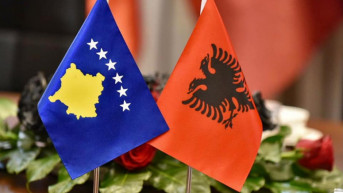
Lajos Thalloczy played a crucial role in the creation and development of Albanian national symbols. The goal of the book he wrote in 1896 under the pseudonym "Gheg" was not only to create and shape history but also to create potential symbols for the community. Alongside this book, he prepared a plan for the flag and coat of arms in 1897. Milorad Ekmecic, in his book "The Creation of Yugoslavia", revealed that Thalloczy created the Albanian flag and the coat of arms from the 14th century, a black double-headed eagle on a red background.
Ekmecic found a document, a receipt showing that Thalloczy paid 15 gold forints on November 25, 1897, to a Vienna painter for the painting of the Albanian flag and coat of arms.
The decision of the London Conference on July 29, 1913, determined that the new Albanian state should adopt a set of symbols to replace Ottoman symbolism. The question was what the Albanian symbols should be. Although there was a strong awareness of common ethnic origin, most Albanians leaned toward religious affiliation: Catholics, Orthodox, or Muslims. The religious symbols they used also served as state symbols; Albanian Catholics used the gold and silver flag of the Vatican without the papal tiara. It was the flag of the Austro-Hungarian cultural protectorate. Muslims could use imperial symbols, as the sultan was also the caliph, so some of his symbols consisted of both religious and state elements, while Orthodox Christians could use a range of Greek symbols or the Slavic tricolor.
In Thalloczy's conception of Albanian history, the historically modern predecessor of contemporary Albania was the independent Albania from Skanderbeg's period, so the state symbols had to be adapted to this historical precursor and contemporary model. Thalloczy collected all sources related to the coats of arms used by Skanderbeg. In his concept, he thought of the state/dynastic coat of arms, the main element of which was the black double-headed eagle on a red background. The first and most important source of Skanderbeg's coat of arms was the work of Marin Barleti, "De vita, moribus ac rebus praecipue adversus Tureas gestis Georgii Castrioti etc." Another source of Skanderbeg's coat of arms was the seal he used because Skanderbeg's father, Ivan Castriothi, did not have the right to use the double-headed Byzantine eagle. Two copies of this seal were found in the archival collections in Vienna at that time. This seal depicted an uncrowned double-headed eagle with a six-pointed star between its heads.
According to Thalloczy's proposal, the coat of arms of the new state could be based on either Barleti's description or Skanderbeg's seals. There was also a third option: Thalloczy himself gave the task to the imperial advisor and heraldist Ernst Krahl to create the coat of arms, which he did. In this version, the Albanian coat of arms was placed on a disc shield with a black double-headed eagle on a red field with spread wings. A red tongue extended from the beaks.
Heraldry depicted an eagle with spread legs and wings on the tail. The shield has a closed princely crown, with a single-barred cross on it, and a six-pointed gold star shining between the two heads of the eagle. The red field and black double-headed eagle are Albanian symbols, the crown is a mark of princely position, and the star can be an Illyrian symbol and one of the symbols of Skanderbeg's seal. Thalloczy did not necessarily insist on the gold color of the star and agreed to the silver color, but to avoid the combination of German imperial colors, he proposed gold, and also to enhance the resemblance to German black eagles.
The success of the coat of arms design is indicated by the fact that it was under the control of a great power—the International Control Commission. At the request of the Austro-Hungarian commissioner of the Commission, Aristotel Petrovic, Ballhausplatz, just before the arrival of Prince Vidi, sent the coat of arms design to Durres so that the new state emblem would welcome the chosen monarch at the ceremonial reception. No written or pictorial evidence has been found so far that the coat of arms was used.
Thalloczy also prepared the design for the princely coat of arms in Vienna. It differed from the state coat of arms in that one of the elements of the complex family coat of arms of the Vidi family, featuring a colorful peacock, was placed on top of the old "state" shield. The royal insignia was made even more effective due to the highly ornate coat of arms. Thalloczy also designed naval flags for ships engaged in maritime trade. The flag had three stripes: red – black – red with a six-pointed silver star on the black stripe. This was also a badge of Essad Pasha Toptani. The flag was used as a state emblem, as seen in photographs.
Thalloczy described how it came about that the flag he designed was not used on a particularly festive day, when Albania's independence was declared on November 28. Due to typical Albanian-Oriental carelessness, the main item of the day—the "flag" as a symbol of sovereignty—was forgotten. Most people didn't even know what this flag looked like. No one had ever seen or used it. No one had it in Vlore. The great founders of the state looked at each other in confusion. Then my friend Hudayi Effendi spoke up and reported that in Ekrem Bey's bedroom, the Albanian flag was beautifully framed and hung on the bed's wall. He asked if it could be taken despite the owner's absence. Ismail Bey agreed, and so the flag, solemnly given to me by Don Aladro Kastriota in Paris, went to the neighboring house of the Konak into the hands of Ismail Bey, who presented it to Murat Bey Toptani with the order to fly it while he stood by the window next to it," Thalloczy stated.
Upon seeing the flag, the local qadi protested and asked why the national symbol was not quoted from the Quran, but there was a "crow" on it... In the days following this event, some of the Albanians present in the square praised the raising of this flag as Albanian in the following way: "Well, well, you 'educated' people (meaning educated individuals) raised the flag of 'Bab-Krali' (father king = Emperor Franz Joseph), so the slimy Serb and the shabby Montenegrin won't be able to harm us". When asked where they saw a black eagle, they proudly replied, "With the soldiers of Bab-Krali in Pazari Ri (Novi Pazar)".
Because of all this, Thalloczy is the only foreigner who is simultaneously, one could say, the most prominent figure of the Albanian national revival. As Krisztian Csaplar Degovics evaluates, he produced and sowed the seed of Albanian national identity where it took root most fertilely. Degovics concludes that "he knew exactly where to do it, so perhaps it is not by chance that the active participation of a Hungarian historian was necessary for the formation of the Muslim nations of the Balkans into modern nations".
Continuation tomorrow: Nopca's lover and the Albanian issue
comments