
FEUILLETON Henry Kissinger, America, and Kosovo (11): Turning the Serbs from friends into enemies
Writing for Kosovo Online: Dragan Bisenic
Kissinger's statements and views did not go unnoticed. During the week marking the 50th anniversary of NATO in Washington, Congressman Jimmy Duncan from Tennessee delivered a notable speech that drew on some of Kissinger's positions.
Duncan served as a congressman for a full 31 years, from 1988 to 2019. He assessed that President Clinton had put the country in an impossible situation with no good answer.
"As Henry Kissinger said, ethnic and religious struggles are endemic to the Balkans and have been going on there for hundreds of years. We cannot stop them unless we stay there forever at an incredible cost to our taxpayers", Duncan said.
The great NATO party flop
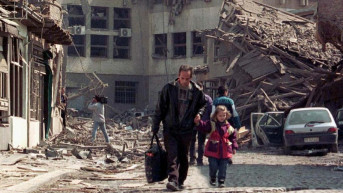
He mentioned that he had been in Belgrade in 1997 and had supported the view, as he said, of many commentators that "our bombings essentially created the refugee situation".
He recalled that on the MSNBC TV station, a question had been posed about the refugee crisis, whether it had been caused by NATO bombs or Serbian forces. "Sixty-five percent of many thousands who called in said the NATO bombing was mostly to blame", Duncan said.
He pointed out that everyone had enormous sympathy for refugees. "But a few hundred thousand Serbs were recently expelled from Croatia. They were then victims of ethnic cleansing, and we did nothing about that. And as many people have pointed out, there are currently small wars or battles going on in 30 or 40 different places around the world. Several of those situations were much worse than Kosovo before we started bombing", Duncan stated.
He then added that "there is obviously some disagreement with the description that the Kosovo Liberation Army is a terrorist organization primarily funded by illegal drugs".
He then commented on the "great party" that NATO had prepared.
"NATO is preparing to hold one of the biggest parties this city has ever seen this weekend. I believe NATO and our President thought Milosevic would buckle after just a few days of bombing, and then they could toast each other at a grand victory celebration for the 50th anniversary of NATO this weekend. What a miscalculation. It was certainly one of the greatest miscalculations in American history. Unfortunately, one that will cost American taxpayers $46,000 per minute and many, many, many billions before it is all over. We will be asked to come up with $6 billion for emergency funding. And if we go into a ground war, the estimate will be $10 or $15 billion, and before it's all over, if this thing drags on, we could spend $40 or $50 billion", Duncan stated.
He then quoted New York Times columnist Arthur Rosenthal, who wrote that the way adults of any intelligence could find out how well they were dealing with a crisis, personal or national, was to ask themselves two questions, “Would we do the same things if given the chance? If not, what do we do to get out of this mess?“
Based on that, Rosenthal asked, "Would we again bomb-bomb-bomb the capital of the Serbs, who considered themselves much more our friends than their enemies? So far, this has produced three great results: eternal humiliation of the Serbs, turning friendship into enmity, and convincing many to rally around a man they hate and fear (Milosevic)".
Rosenthal then asked, "Would we again allow Washington to weaken global human rights movements by instilling fear that they will one day mean more bombing by America?"
Concluding his remarks, Duncan stated that what had been truly done was turning Serbian friends into enemies at a great cost to this country and getting into one of the biggest troubles, so America must negotiate and get out of this mess "as soon as possible".
Kissinger's opponents were not passive either. The Washington Post published a letter from the assistant director of the Balkan Action Council, Kurt Bassuener. The Balkan Action Council was an ad hoc lobbying group on the side of NATO, led by Marshall Freeman Harris, one of the leading advocates of punishing the Serbs and bombing Serbia.
Marshall Freeman Harris supported the idea that the war in Bosnia was Serbian aggression, as he stated in an interview we conducted in Washington on May 23, 1996. At the time, he said that his organization supported the President's policy towards the Balkans. Regarding Kosovo, he said he did not have a clear picture but supported some form of autonomy. "I fear that we will end up with division and population movements because that is the principle we adopted in Dayton", Harris said.
Three years later, in response to Kissinger's views, Kurt Bassuener argued that Kissinger's opposition to US ground forces in Kosovo had been "based on faulty history, his prescriptions for American Balkan policy are morally bankrupt, and would fatally damage the NATO Alliance".
The letter was, incidentally, a faithful template of propaganda leaflets that were sent to the media, a task diligently carried out by Marshall Freeman Harris.
"Tired mantra of national sovereignty"
Bassuener accused Kissinger of agreeing with a "simplistic view that people in the Balkans are naturally predisposed to slaughter each other, making foreign intervention useless" and ignoring long periods of interethnic coexistence in the region, failing to distinguish between perpetrators and victims. Bassuener falsely claims that Kosovo's autonomy was seized in 1989, as changes to the constitution of Serbia were made in the constitutionally prescribed manner, with the consent of all other republics - members of the Yugoslav Federation.
Then, Bassuener states that Milosevic "imposed apartheid on Kosovo for 10 years and a year ago started a comprehensive war against civilians, full of mass murders and mass graves that followed his genocidal war in Bosnia. Yet, Mr. Kissinger makes the stunning claim that Mr. Milosevic is "less the cause of the conflict in Kosovo than its expression".
For Bassuener, the "moral equivalence of Mr. Kissinger extends beyond the Balkans to NATO itself", as he "ignores the moral aspect of the alliance that distinguished it from the totalitarian Soviet bloc". Although the United Nations Charter allows military intervention to prevent threats to regional security, and the Genocide Convention requires its signatories to intervene to prevent genocide, Mr. Kissinger would allow Mr. Milosevic to hide behind the tired mantra of national sovereignty", Bassuener stated.
He then accuses Kissinger of dividing Bosnia, rewarding Serbian aggression there, and leaving Kosovo to burn with malicious neglect from our European allies - because without American leadership, Europe will once again prove incapable of taking appropriate action, leaving Mr. Milosevic free to wage his fourth war in a decade.
Assessing that the United States has already suffered a massive blow to its credibility as a European power, he concludes that the US failure to stop the war in Kosovo will now increase the costs of intervention in a broader and bloodier war to follow, sending a message of weakness similar to Saddam Hussein and Kim Jong Il and irreparably damaging NATO.
"If NATO cannot stand up to a small dictatorship in Europe, what justification does it have for its existence", Bassuener questioned.
Continuation tomorrow: NATO's policy means the fragmentation of the Serbian state

comments