
FEUILLETON Henry Kissinger, America, and Kosovo (9): NATO bombing action against the Chinese Embassy in Belgrade
Writing for Kosovo Online: Dragan Bisenic
Commenting on frequent claims about the existence of a new phase and doctrine of foreign policy - the so-called humanitarian foreign policy, a policy that is supposedly motivated primarily by morality rather than interest, Kissinger said he wanted to pose a few questions about it.
"I believe that theologians have long struggled with the question of a just war. The reason is that purpose is needed in foreign policy. But a sense of measure is also needed, some relationship between goals and means. Some ability to discriminate - and the danger is that if someone is inclined only to general statements, then the sense of measure can easily be lost. Honestly, if I look at history, I think more lives were lost in the Crusades than in wars for national interest. I think it's crucial in defining our foreign policy not to develop a kind of moralism that is an excuse to avoid complicated and difficult decisions", Kissinger pointed out.
Milosevic "guilty"
High-level foreign policy, according to his words, involves very difficult choices. Without a moral compass, these choices cannot be made, as a person is completely insecure without strong moral convictions.
"But, at the same time, it should be kept in mind that the well-being of the people depends on recognizing that history is longer-lasting than anyone within it and that these principles must be connected with the ability to implement them over a longer period and with a certain respect, if I may say so, towards historical experience. I am uncomfortable when people say they have transcended history and are starting an entirely new phase in the development of humankind. Because these are usually calls for periods of great extremism", Kissinger warned.
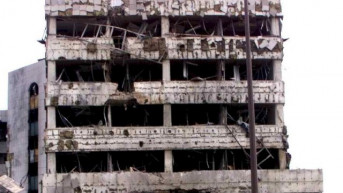
Immediately after these warnings, a very important event occurred that would completely change China's future relationship with the US. Three missiles hit the Chinese Embassy in Belgrade on May 7, 1999. Three Chinese journalists were killed in the incident. Beijing reacted with great dissatisfaction. On the morning of May 8, an emergency meeting of the United Nations Security Council was held at China's request.
The representative of China read a statement from the Chinese Government emphasizing that the attack constituted a violation of China's sovereignty, as well as the basic principles of international relations. China also strongly condemned this barbaric act, and protested sharply, demanding that NATO, led by the United States, take responsibility, and reserve the right to take further measures. The statement further referred to the embassy attack as a war crime.
A US representative stated that the facts had not yet been confirmed but that NATO was investigating the issue. He also stated that NATO had not targeted civilians or embassies, expressing deep regret if NATO were responsible for the incident. However, he asserted that only one person was responsible for the crisis, and that was Slobodan Milosevic.
The Dutch representative emphasized that he did not accept the comparison of "accidental victims" with the systematic killing, rape, and burning of houses for which Belgrade was responsible. The Cuban representative stated that it would not take 20 years to realize that this war had been a mistake.
In any case, mass protests were taking place in Beijing in front of the US Embassy, and the embassy staff was not allowed to leave. In these circumstances, CNN called on Henry Kissinger, not only as an expert on China but also as a person who enjoyed significant trust from the Chinese leadership, to comment on the consequences of the NATO bombing and the destruction of the Chinese Embassy in Belgrade.
Commenting on the bombing and the destruction of the Chinese embassy in Belgrade by NATO, Kissinger assessed on May 11, 1999, that the "Chinese behavior was disproportionately immediate to the provocation" and that it was "very dangerous to provoke the United States by holding our ambassador confined in the embassy", especially an ambassador who was "so dedicated to improving Sino-American relations".
He started from the assumption that the Chinese "rationally conduct foreign policy - that it shows a level of frustration that has now found a point at which it could be expressed". Regarding the administration's policy towards China, he said it was "essentially the right policy - an attempt to establish a cooperative relationship with China", but noted that the domestic debate on China had been very intense.
Kissinger's warning
The administration did what it always does, trying to "steal" as much criticism from opponents and turn it to its advantage by saying - never justifying the agreement or really justifying the relationship based on its values but claiming that we are becoming them - engagement will make them whatever critics want them to be.
Kissinger pointed out that the war in Kosovo seemed extremely threatening to China. He started from the fact that the basis of the initial US relationship with China in 1971 had been the Brezhnev Doctrine in which the Soviet Union affirmed the right to influence the domestic evolution of other countries based on its opinion of what should be correct and good for them.
"So they look at our justification for what we're doing in Kosovo as affirming NATO's right to interfere in the affairs of other countries even when those countries do not physically threaten NATO. This is a principle they find very objectionable. If I look at the president's apology, for example, he apologized as much as possible. But he also said, 'You have to understand why we're acting like this in Kosovo'",
So, they have to sign up to accept this apology of ours, this explanation of Kosovo which they completely reject", Kissinger pointed out the paradoxical contradiction in the Clinton administration's stance towards China. He noted that the relationship between the United States and China had deteriorated from four years ago to the conflict in the Taiwan Strait.
He said he did not want to "teach" the Chinese but did not think that the "way to deal with us is to kick us". At the same time, he warned the Clinton administration to understand that it could not approach this issue "as if this were some primary campaign in New Hampshire where we can, you know, on the one hand, say the right things about how concerned they are, and then pay off any domestic opposition and then say, 'You understand why we're really doing this'.
Kissinger proposed resolving the dispute by having Washington send "some respected person, like Colin Powell, to the embassy, not sending anyone to China now - to bring maps and whatever it is we used, and say, 'This is why we did it. We're sorry about this. This is our explanation. Frankly, I would strongly imply that this is the only explanation you will ever get on this subject because that's all we can do", Kissinger said.
At that point, the host, Charlie Rose, interrupted him and asked if he accepted the explanation that NATO had bad intelligence, and that was why NATO bombs had fallen on the embassy.
Kissinger replied that he believed in it. He then noted that he had been told that some "older Europeans don't believe in this explanation". He dismissed the possibility that he would be the one to convey the apology to the Chinese, as he was not qualified to explain it. He said he would give it to someone technically competent for the bombing, pointing out that they should not be explained the Kosovo problem because that was a separate issue, and they did not have to agree on the bombing and the overall problem it referred to.
Then he concluded that the administration had been better at public relations than the substance of this issue, where it had failed miserably. He compared it to the president spending 9 days in China and only two hours with Chinese leaders. Kissinger was irritated by the headlines of American newspapers that fueled the conflict. "Where will we be in five years when every Asian country can maneuver between us and China if this turns into a real confrontation", Kissinger wondered.
The investigation later found that Colonel William Bennett of the US Army was responsible for the mistake in identifying and defining targets. Bennett was an expert on the deployment of the American Patriot anti-missile system abroad and had worked for the CIA, including in determining and verifying targets in Serbia for NATO bombing in the spring of 1999. Bennett was killed under strange circumstances at the end of April 2009 in Loudoun County near Washington. Although it is not impossible that it was an accidental murder or even a motiveless crime, there will likely remain a shadow of doubt over this death, as well as the circumstances that led to the bombing of the Chinese Embassy in Serbia.
Continuation tomorrow: Mistakes in NATO's actions and expansion

0 comments